
The Light Peaks Through
Taborn/Reid/Smith, Diatribes & Clara Levy, Yoshihide/Malmendier/Škrijelj

Craig Taborn Makes Music—End of Sentence
Few concerts I saw last year matched the visceral power, exploratory edge, and locked-in connectedness like the one I experienced by pianist Craig Taborn, cellist Tomeka Reid, and drummer Ches Smith, who played at the Institut Francais in November. It was actually the second time I’d caught the trio at this same location, but they’d gained serious gravity and rapport since I saw them in 2021. Last month they released their long overdue debut Dream Archives (ECM), and its tracklist is pretty darn close to what the trio played in November, including the tunes by Paul Motian and Geri Allen that appear on the album. Taborn was in a Motian mood in Berlin in November, because they also did a sublime take on his “The Owl of Cranston,” a wonderfully draggy ballad that seems to exist on multiple, parallel planes.
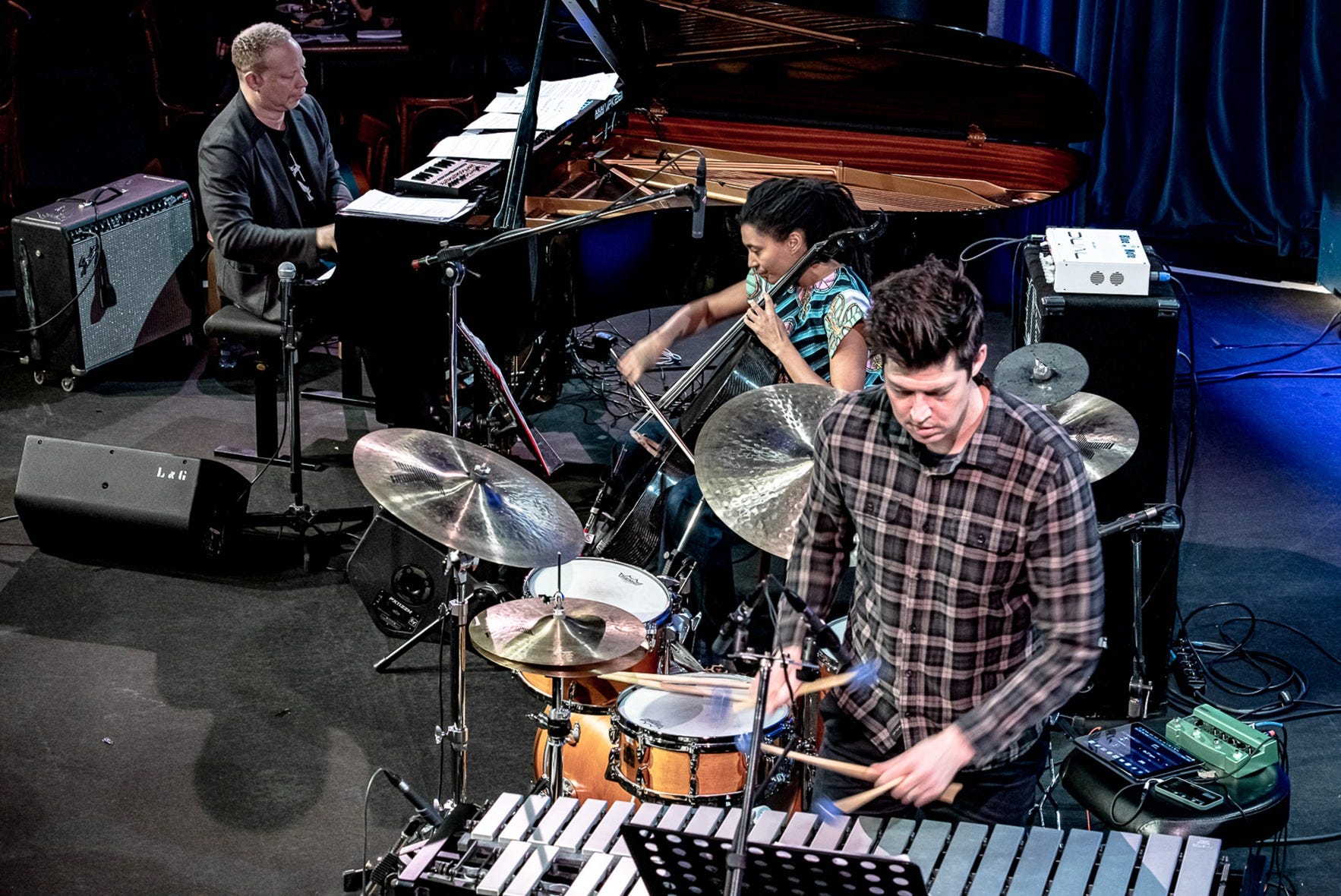
I love the new album and the playing is uniformly phenomenal. But I’m still not sure about the mix, which not only polishes up the raw edges that distinguish the live performances, but too often pushes the cello and percussion into the background. Smith also contributes some superb electronic shapes and patterns all across the album, all of which seem to fit just right. Still, you can hear what the trio is doing and how telepathically linked they are. A lot of the writing I’ve seen about the record makes a big deal about its stylistic mobility, shifting seamlessly from one tradition to another. It’s absolutely true, but I think that thinking diminishes the real accomplishment here; not paying any mind to what genre even means. It’s music. Of course, some of Taborn’s pieces, such as the thrilling, multipartite “Feeding Maps to the Future,” which offers as many potential readings of the title as there are disparate sequences, consciously bops around. There’s a jagged, slashing motif, with a sawing cello line from Reid, that frames the piece, but other sections of the tune ask for a more wide open attack or something more constrained, lurking in limbo, or the illusion thereof. You can hear it below.
A ferocious take on Allen’s “When Kabuya Dances” reveals how the composer anticipated a lot of what the trio is doing here, an episodic shape-shifter that at once conveys jaw-dropping facility and a joyful sense of play. Much of Motian’s “Mumbo Jumbo”— which Allen also played with the drummer and Charlie Haden—honors its formal design while pouring in more harmonically ambiguous, contemplative, and contrapuntal material into its elegant husk. It’s closer to chamber music than anything else, with Smith on vibes and Taborn and Reid braiding lines with astonishing fluidity. The title piece by the pianist is particularly expansive, further dispatching any concerns with purity. Within an often heavy atmosphere, the performance often embraces the most austere, sort of gestural communication, drifting lines, squiggles of noise, decaying tones, and electronic swells that expands, transforming stabs and sighs into short narrative wisps, before we eventually get to a walloping, lopsided groove. Break down into categories all you want, but are you really listening?
Diatribes Re-emerges with Clara Levy
Diatribes is the Geneva duo of d’incise and Cyril Bondi, a pair of restless experimental explorers who’ve explored all kinds of terrain whether in this duo or in any number of projects, both solo and ensemble-oriented. What I’ve heard of their recordings from the 2010s has moved between weird endeavors with chopped-up dub aesthetics, rich drones, noise, and reductionist improv. I’m hesitant to say more, because I’d be making it up. Until last week I’d never heard a thing by them as Diatribes. But they began this year by renewing the project, with their first new recordings in almost eight years. The first three of five scheduled volumes chronicling as many different iterations of the same text/graphic score called “L’apport” (the contribution), with a different collaborator and conceptual theme on each, have all been released through d’incise’s Insub label over the last two months.
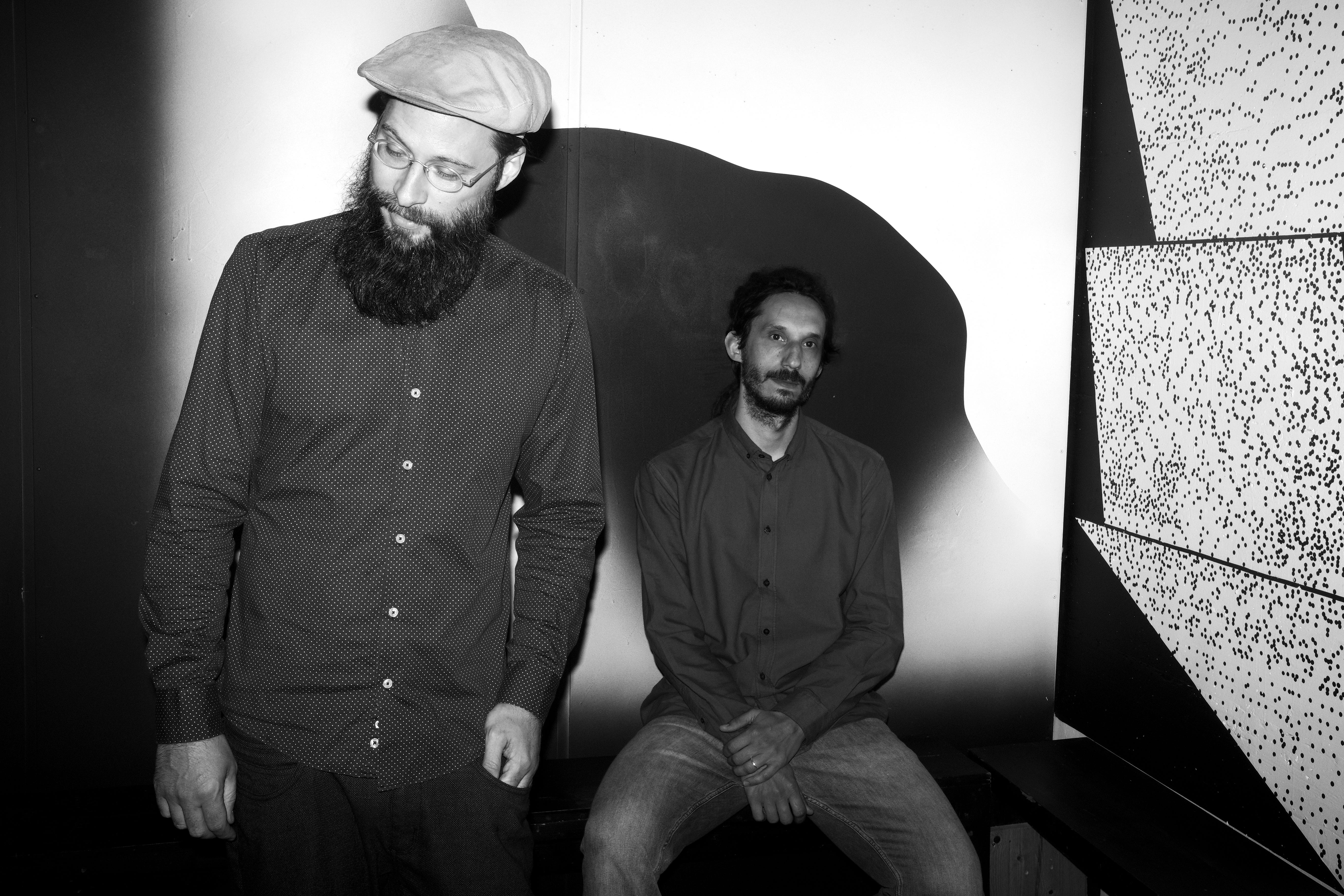
The first title is Apprendre la manière, three part work with hurdy-gurdy and bagpipe player Lisa Barkas that claims to evoke a fragmented evocation of traditional French songs, and hear there’s no missing the more direct impact of Diatribes—the sparse drumming and metallophone rhythms of Bondi and the viscous electronic murk that subsumes the texturally rich, droning lines of the guest musician. The loose rhythmic thrust and palpable start-stop structure makes it all feel like an experimental folk dance, at once celebratory and uncertain. That hesitancy, whether real or imagined, provides a luxuriant tension to complement the beautifully striated lines of Barkas. The second entry is Lâ dèchigeâ, an austere 50-minute piece with cellist Stefan Thut meant to evoke a descent through the Alps that moves casually through reduced gestures instrumental, fragments of Swiss folk songs, and field recordings of a mountain prairie.
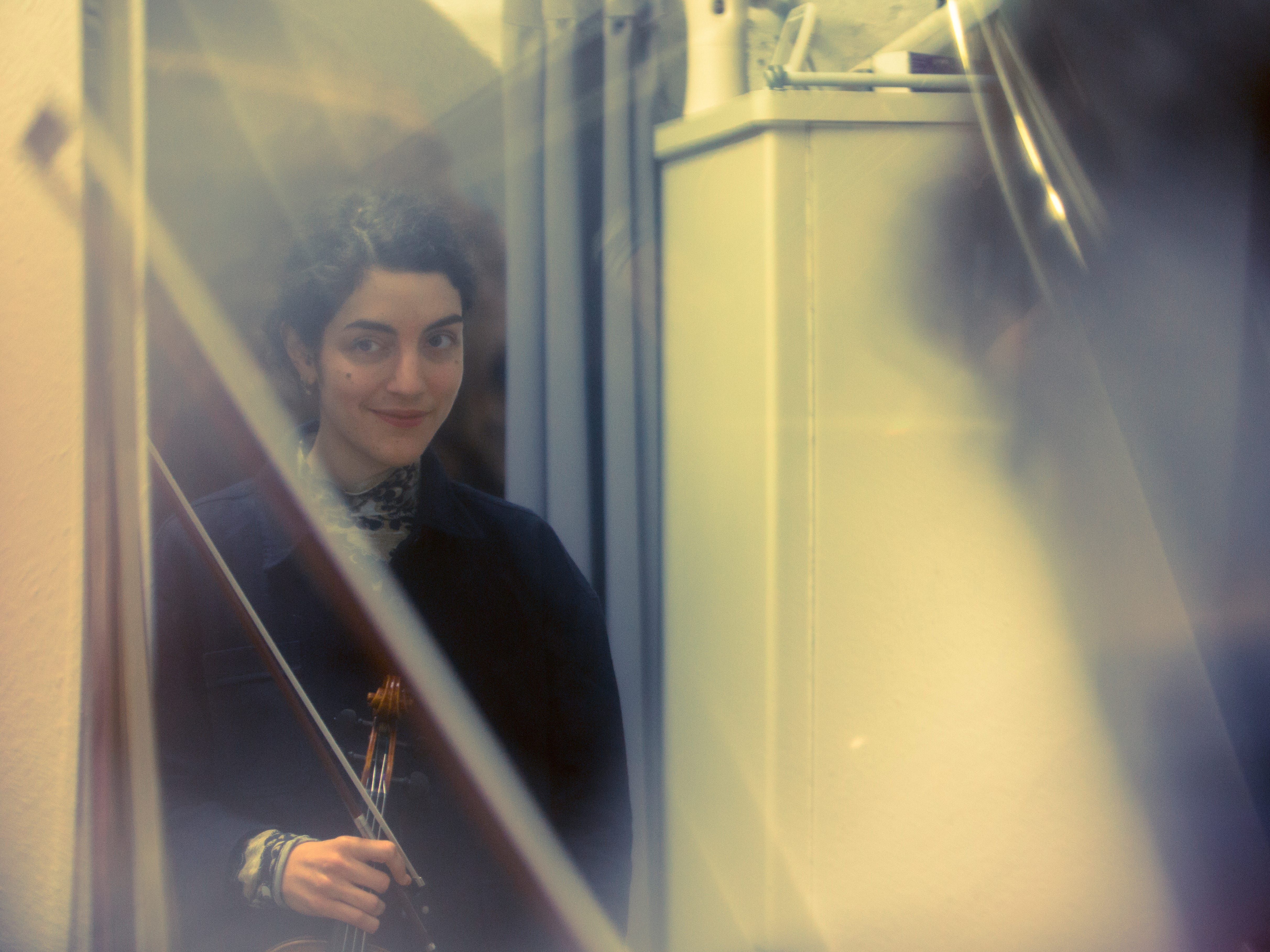
A fourth volume will feature the brilliant French alto saxophonist Jean-Luc Guionnet, while the collaborator for the fifth hasn’t been announced. But my favorite release thus far is with the wonderful French violinist Clara Levy, a bold explorer equally at home with early music, improvisation, and contemporary classic music. She’s a superb player in numerous contexts, but from what I’ve deduced, she’s driven by experimentation. She’ll perform Ke ya me transí, her collaborative piece with Diatribes at KM28 on Thursday, February 19, followed by a solo set featuring her work 13 Visions, which I wrote about in this space in October of 2014. Levy’s with Diatribes deploys a pitch-class from an old Sephardic tune, although she thoroughly transforms those materials, with a deliciously grainy series of viscous, slowly unfolding lines that bring tension to the cool, spaciously deployed vibraphone of Bondi and the shimmering, slightly unstable electronics of d’incise, which cumulatively suggest a delicate balancing act of tone and timbre over its 40-minute duration. The musicians are seriously plugged in and listening closely, sculpting some gorgeously vulnerable sounds that evolve and shift in the most measured, rigorous fashion. Check it out below.
Malmendier & Škrijelj Hide in Plain Sight, with Otomo Yoshihide
Last November I wrote about Bruine, the strikingly original trio of percussionist Tom Malmendier, accordionist Emilie Škrijelj, and Berlin clarinetist Michael Thieke—they played a gig at Exploratorium that I unfortunately missed because I was out of town. Still, I was knocked out by the fascinating soundworld they built from meticulously amplified friction and breath on a recording of their music, a kind of self-contained universe that’s as notable for its installation-like qualities as much as the sculptural tones each musician produced through rigorous extended techniques. This week Malmendier and Škrijelj return to town with a radically different project, a trio with the great Otomo Yoshihide—sticking exclusively to turntables rather than electric guitar—which plays at KM28 on Saturday, February 21. Plenty of improvisers conjure wildly disparate sounds depending on who they’re working with, and the shift from delicacy to ferocity between these two projects is inescapable. Superficially, you’d never expect two-thirds of the personnel in each trio to be identical, but we’re not interested in shallow listening here.
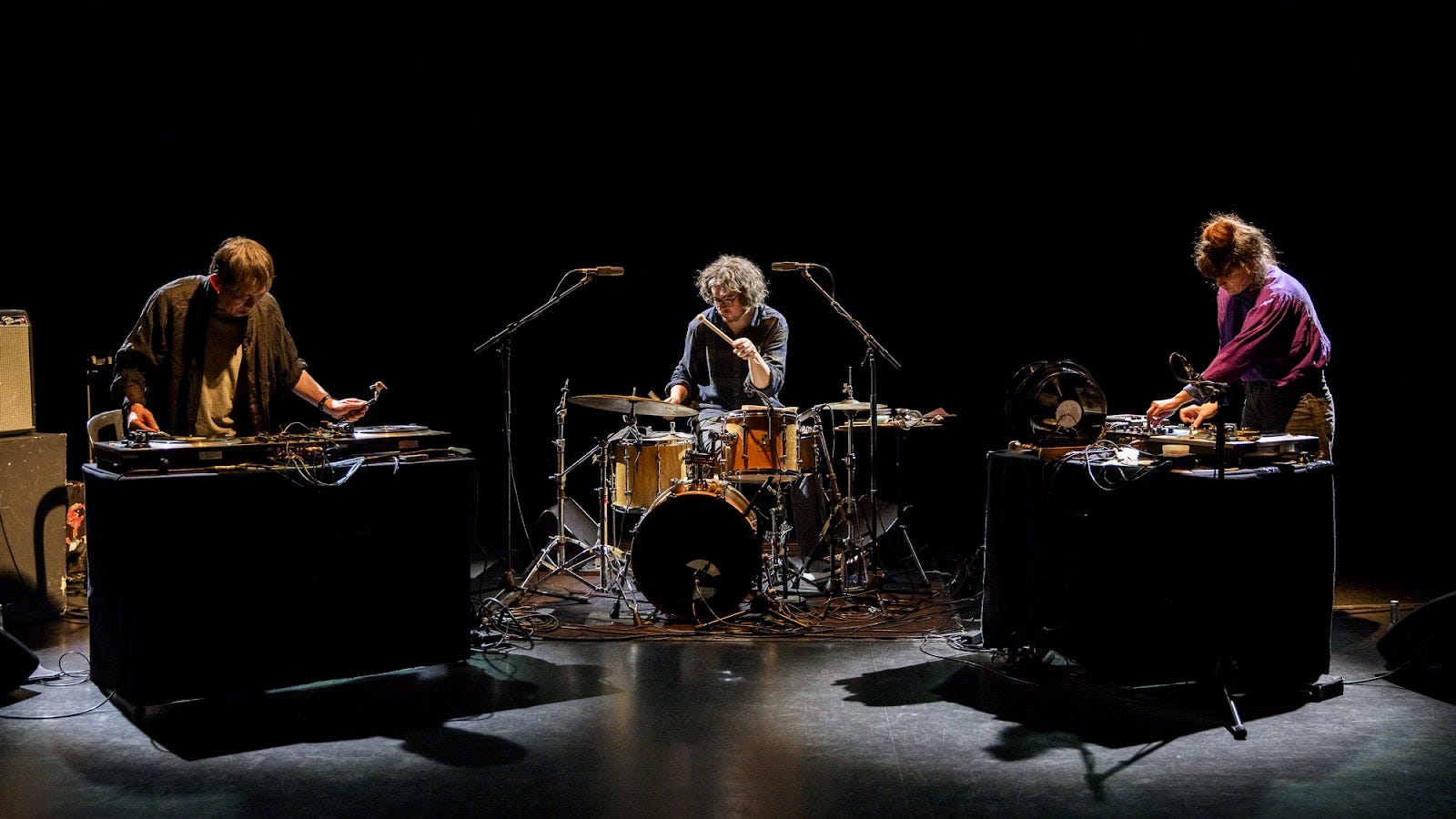
Škrijelj put away her accordion on Weird Morning Meeting (eux sæm), the bruising album the trio with Yoshihide released last year, replacing it with a single turntable, while Malmendier opts for a standard drum kit rather than a roomful of repurposed HVAC parts. The single 45-minute piece, which you can hear below, leaps out of the gate, loudly and boldly. Even after watching a video clip from the performance featured on the album I can’t always tell which of the turntablists is doing what, but I’d say that’s a compliment rather than a criticism, as there’s a palpable sense of purpose and a clear aesthetic definition at play. The turntables are both noise generators here, transmitting a squalling barrage of upper register tones that snake violently across the sound field to pierce and collide with the manic, irregular rhythms Malmendier bashes out. There are certainly moments where we can detect scratching from the turntables, but the listener can rarely nail down any clear source material. Instead the trio produces a visceral attack, like three livewires thrashing and sputtering. About seven minutes in Malmendier is briefly left to his own devices, generating a bracing sheet of metallic splatter from his cymbals, which resets the playing field for his compatriots who quickly build upon his sustained clatter with slippery, high-pitched gestures of their own. The attack is pretty relentless, and the performance definitely evokes Yoshihide’s noise roots, but within the seething maelstrom is a surfeit of detail, both in terms of microscopic spasms and fluid interplay.
While Škrijelj and Malmendier might be using different tools and opting for loudness, I sense the same care and attention to detail they pour into Bruine. So rather than sounding schizophrenic or chameleonic, absently taking on the properties of this collaborator or that, they reveal an impressive consistency within a larger practice. With travel to the US this week I’m sad that I’m forced to miss them again, but with an expanding clutch of collaborators I trust that I’ll get my chance before too long.
Recommended Shows in Berlin This Week
February 19: David Virelles, piano, synthesizer, harmonium, Vicente Archer, double bass, Eric McPherson, drums, and Gilbert Nouno, live electronics, 7:30 PM, Pierre Boulez Saal, Französische Straße 33d, 10117 Berlin
February 19: Sessa; Barney Keen, 8 PM, Mikropol, Nollendorfpl. 5, 10777 Berlin
February 19: Diatribes (Cyril Bondi, vibraphone, and d'incise, electronics) with Clara Levy, violin; Clara Levy, solo violin, 8:30 PM, KM28, Karl Marx Straße 28, 12043 Berlin
February 21: Ensemble KNM plays Morton Feldman’s For Samuel Beckett, 8 PM, Radialsystem V, Holzmarktstrasse 33, 10243 Berlin
February 21: Okkyung Lee, cello, Felix Henkelhausen, double bass, and Marius Wankel, drums; Andrea Parkins, electronics, and Yorgos Dimitriadis, drums, electronics, 8:30 PM, Sowieso, Weisestraße 24, 12049 Berlin
February 21: Otomo Yoshihide, turntables, Emilie Škrijelj, turntable, and Tom Malmendier, drums, 8:30 PM, KM28, Karl Marx Straße 28, 12043 Berlin
February 22: Nathan Ott Quartet (Christof Lauer, tenor and soprano saxophones,
Camila Nebbia, tenor saxophone, Jonas Westergaard, double bass, and Nathan Ott, drums), 3:30 PM, Industriesalon Schöneweide, Reinbeckstraße 10, 12459 Berlin
February 22: Hemisphere 4 Plus (Gebhard Ullman, soprano saxophone, bass clarinet, looper, effects, Liz Kosack, keyboards, Silke Lange, accordion, Anna Viechtl, harp, effects, Taiko Saito, vibraphone, effects, Oliver Potratz, bass, and Eric Schaeffer, drums, percussion), 8:30 PM, Zig-Zag Jazz Club, Hauptstraße 89, 12159 Berlin
February 23: Jowee Omicil, 8:30 PM, Gretchen, Obentrautstr. 19-21, 10963 Berlin
February 23: Jules Reidy, guitar, and Sam Dunscombe, clarinet, electronics, 8:30 PM, KM28, Karl Marx Straße 28, 12043 Berlin