
The Nights Grow Shorter
Aldous Harding, Erosão Percussion Trio, Dog Plug, Eldar Tsalikov & Marcin Masecki

Aldous Harding: Why Scrutinize the Ineffable?
I’m headed out of town this weekend, so yet again I’ll miss a chance to hear Aldous Harding perform, as she plays in Berlin on Sunday, June 21 at Huxley’s Neue Welt. I don’t think there’s any doubt that she’s been my favorite pop singer over the last six or seven years, during which she’s refined her art while making an unshakeable ascent. She’s raised the stakes yet again with her recent Train on the Island (4AD), a record of bottomless detail and nuance. I hadn’t realized the extent to which her work is parsed online, a mystery to be solved, but it’s understandable why someone would try to uncover some kind of meaning from her idiosyncratic lyrics. I’m not denying there are lots of ideas and concepts buried deep within, but I’ve never been left unfulfilled by the strictly musical choices she makes, and the essential role her extraordinary voice plays in those decisions. My instinct is to feel that Harding doesn’t put too much of her own life into these songs—or, at least, I don’t think the inscrutable narrative fragments or images are directly based on her especially autobiographical. I’m totally fine accepting that it might all be a creative act from top-to-bottom, that Harding chooses to imagine every song as a little short film, and she tailors her delivery to fit the requirements of the script. I’m bummed that I haven’t seen her live ever, in part because her performances seem so polarizing, yet her alien affect and a tendency to stare at some point in the distance just seem like other facets of the larger project. It works thanks to an innate musicality, and as much as the vibe or style changes from song to song, each album feels totally coherent and fully-formed.
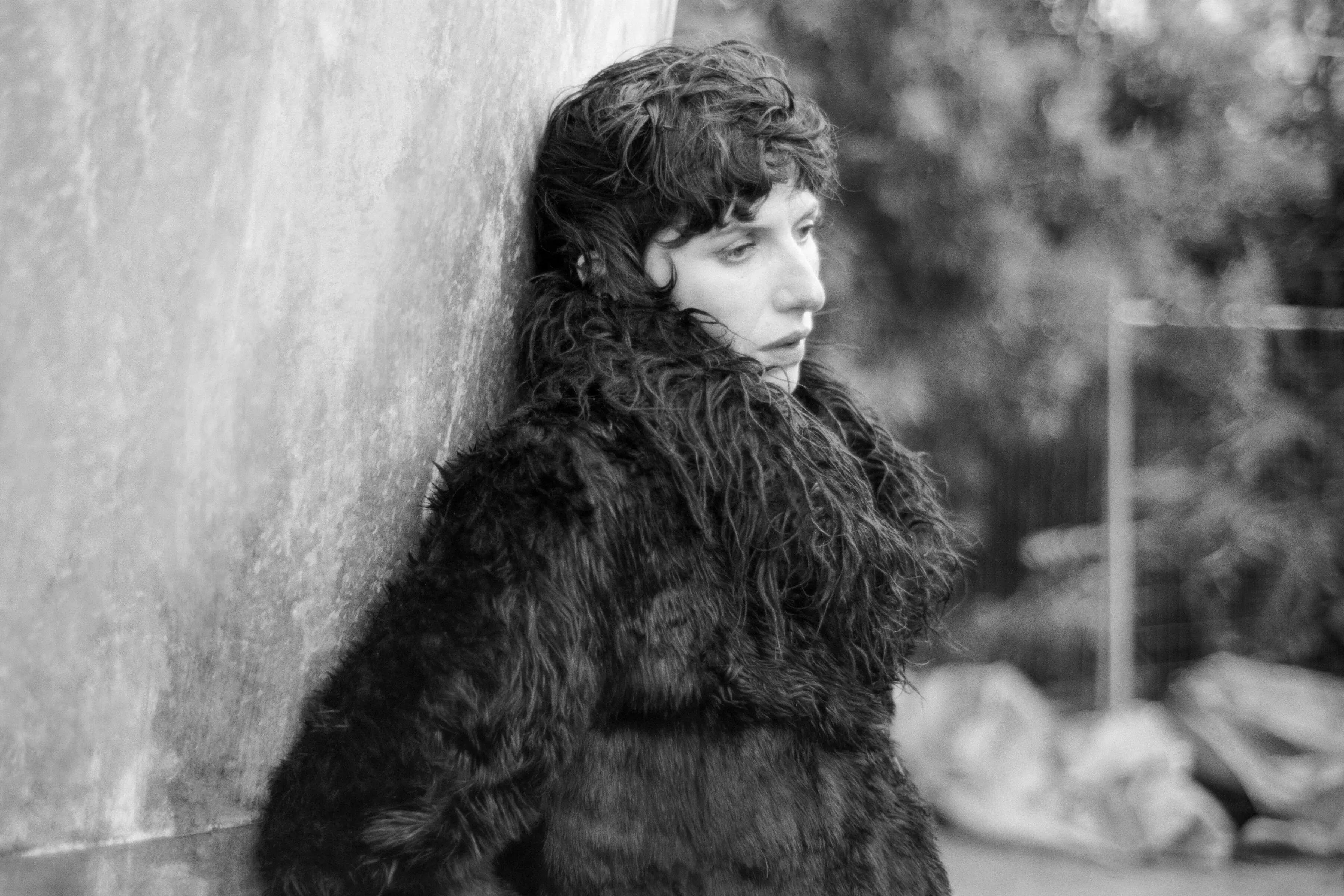
As someone who’s never been particularly interested in musical theatricality, Harding is a clear exception. I felt the same way about P.J. Harvey for a long time. I don’t know of anyone else that modulates the timbre or their voice to embody different narrators with such precision and effectiveness. Maybe she’s always experimented with it, but on the new record I’ve been beguiled by microphone placement, so on the opening track “I Ate the Most” there’s a braid of close miked voices after the initial verse, one low and one high, that make it feel like she’s singing directly in my ear. It’s not merely a sense of intimacy created by the effect, but a canny use of the voice as an essential texture as much as a delivery means for melody. It all feels woozy and unstable despite the warmth of the electric piano riffs and restrained beauty. Every phrase she unleashes on “One Stop” packs a weight. On song after song Harding seems to have engineered and shaped each flourish, layer, and texture, as arrangements perpetually takes unexpected turns. As much as the tunes have a fixed form, Harding never sings the same lines the same way twice. She works over the chorus like Joni Mitchell, playing with the question, “Why wouldn’t I want to meet you,” as if she’s a saxophonist working over a single motif, while simultaneously using the altered phrasing as a simulacrum for indecision. It sounds like she’s searching for an answer to the query in real time. That same passage, albeit more restrained, resurfaces in the song “San Francisco,” as if a readymade that fits more than one circumstance. There’s something a little sinister in the percussive guitars zig-zagging through “What Am I Gonna Do?” that’s mirrored by the presence of voice’s low end, a husky toughness that belies vulnerability. I don’t entirely know what Harding means when she skulks, “I have met my sleeping self / Things she knows keep me around / I hope I’m more than I think about,” but it sure as fuck works musically. On the other end of the spectrum, the voice used on “Riding That Symbol” veers toward her upper register with a gauzy sweetness that feels fragile, almost nervous to reveal, “Don’t lay it on me now / Time has her belt around / You know I don’t go the length of anyone.”
The new album was again co-produced with John Parish, and together they make every layer of each song feel integral in some mysterious way. Most of the songs hit gently, stripped-down to the bare minimum, but meticulously embroidered with subtle flourishes that provide the punch that the core of each song hesitates to unleash. The lean beat of drummer Seb Rochford and the stabs of scuffed guitar articulated in the verses of “Coats” is turned sideways by the infectious chorus of “Big thick coats on the dogs of people just trying to help”—another enigmatic but great-sounding phrase—and a bridge where Harding feels suddenly skittish, nervous. But who knows what’s really going on? I don’t care, because every time I’ve listened to the album I notice new details, the songs lodging deeper and deeper into my consciousness. You can hear “Coats” below.
Mariá Portugal, Finding Music in Every Sound
Drummer, singer, and composer Mariá Portugal has surprised and impressed me over and over since I first heard her debut album Erosão (Fun in the Church) back in 2021. The bulk of the material that she used on the album was from sessions she recorded with close collaborators in her native São Paulo, and when the pandemic basically limited her to home confinement for much of year-long appointment as “improviser-in-residence” for the Moers Festival, she used that time to recompose, arrange, and meticulously finesse the gorgeous experimental bossa and samba tunes. Even before I understood her process, I was already hooked by the strength of the recording. My admiration for her work grew after experiencing her Brazilian collective Quartabê, which over its career has devoted its recordings and performances to a small handful of visionary Brazilian composers: Moacir Santos, Dorival Caymmi, and, coming up, Dona Ivone Lara. The group approaches the source material from a variety of different perspectives, turning to their deep improvisational instincts to radically remake the repertoire, whether creating a new piece from elliptical fragments of different songs, or moving parts around within a single tune. They almost never play anything straight, but the essence of the original stuff always shines through in some fascinating way.
Of course, most of her work on the Berlin scene and the EU in general has been geared to more improvisational contexts leading to ongoing collaborations with the likes of Marta Warelis, Fred Frith, Angelika Niescier, and Achim Kaufmann. She plays in Endless Breakfast with violinist gabby-fluke mogul and cellist Paula Sanchez, Nick Dunston’s Skultura, and most recently Mats Gustafsson’s Fire! Orchestra and Fire! trio. Since conjuring Erosão into existence Portugal has also sporadically led a septet that brings a kind of spontaneous arranging practice to the songs from the album and newer ones, to say nothing of some classic Brazilian tune.
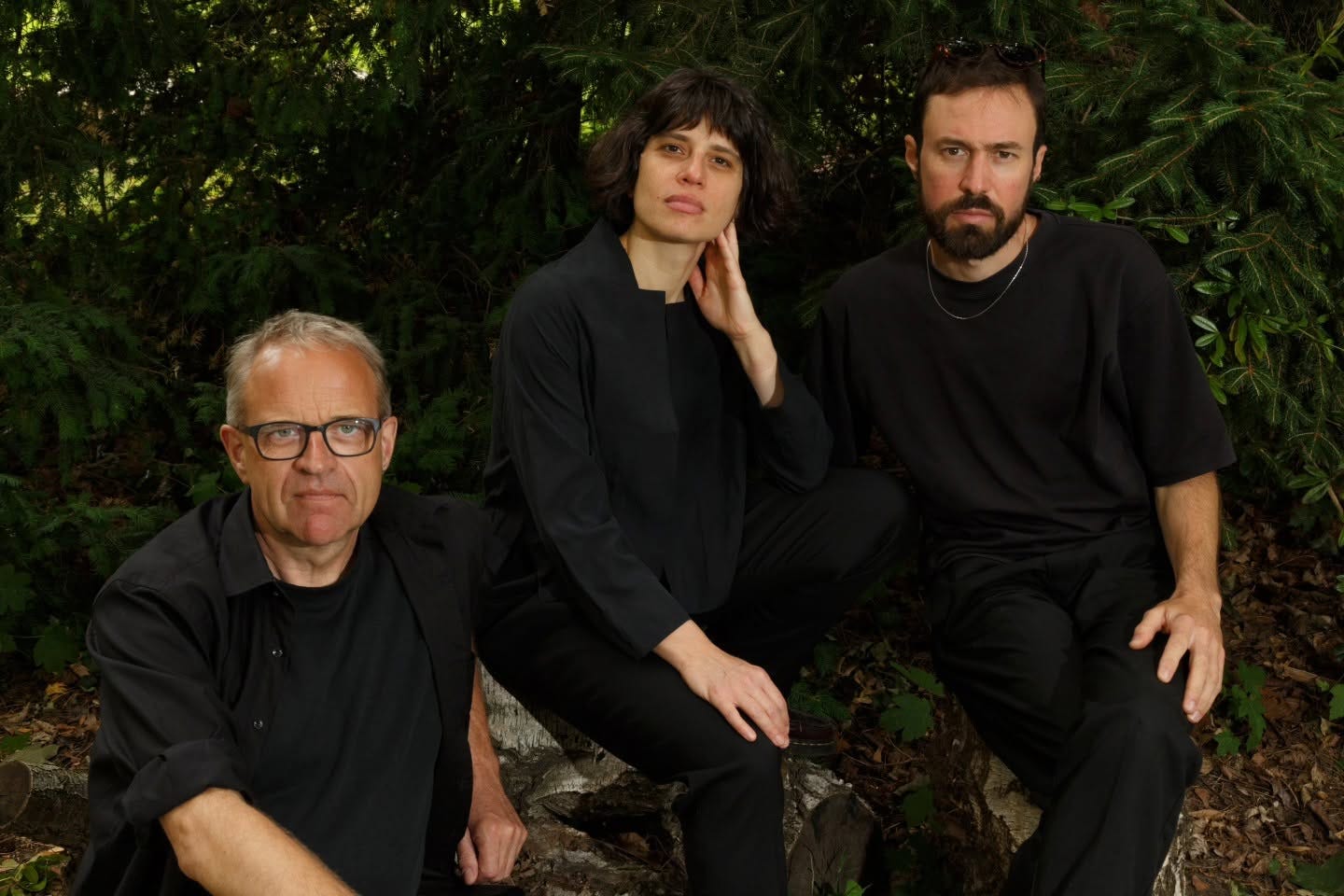
When she started the Erosão Percussion Trio she intended to do the same with Burkhard Beins and Emilio Gordoa, asking two of Berlin’s most inventive percussionists to adapt to her approach. Beins, of course, helped forge the whole echtzeikmusik aesthetic beginning in the late 1990s, while Gordoa, who preceded Portugal as an improviser-in-residence at Moers, has brought new energy to the scene with his own elastic practice. I knew they were great musicians who thrived using the most reuduced materials, but I’ll admit I wasn’t sure how Portugal’s songs would translate within this setting. By the time I caught the trio in the summer of 2024 they had already ditched the original concept, opting instead to create its own repertoire. I wrote a feature story about Portugal for the April issue of the Wire, where Beins shared his own initial skepticism of the partnership:
“I wasn’t aware of her music before and listened a bit to what I found online, which was all more song-based despite having an interesting experimental angle,” he says. “So I was slightly hesitant if I should accept, but it didn’t take her long to convince me through her enthusiasm for her idea of mixing echtzeitmusik and her song approach.”
The concert I saw at Morphine Raum was stunning, but the detail, depth, and variety of the material they developed wasn’t fully clear to me until I heard the trio’s eponymous debut, which dropped in early May, a split release from Kassiani and Fun in the Church. The percussionists don’t limit themselves to any single stylistic world, and as Beins told me, “what I especially like about this, is that we are never trying to fulfill any kind of genre whatsoever.” The opening piece “Sueños en Cirebon” provides a folkloric clatter that evokes a touch of gamelan without any of its instrumental palette, a surging and swelling tumult distinguished by the dancing metallic figures sparkling atop, with an energy that defies cliches about the echtzeitmusik scene right out of the gate. “Cordilheira” does evoke the reduced sounds we might expect, opening with a measured, swirling friction, but then Portugal begins to sing a melody (and lyrics) of her own, a hesitant, delicate chant that slowly grows more urgent, stoked by sudden, jerky gestures and a fixed, enveloping electronic tone that replaces the opening frictive sounds, letting nifty little percussive tattoos caress and poke Portugal’s lovely vocal. The trio’s adaptation of “Correnteza,” a gem composed by Antônio Carlos Jobim and Luiz Bonfá, pours out a blanket of thin, wooden clatter and penetrating metallic tinkling—like a clutch of porch mobiles producing overlapping patterns determined by the breeze—only to ebb away for her patient, reverb-soaked voice and the occasional squeak of a bowed object. The piece never stops evolving, so even if the music follows a form, the details are always morphing. That ephemeral drift toward the unknown even within imperturbable song-like melodic schemes is like little else I’ve heard in recent years. Check it out below. The trio celebrates the release of the album with a performance at KM28 on Thursday, June 18.
The Dark Provisionality of Dog Plug
It’s no secret that some of the most fervent experimentalists in the Middle Eastern music have established a strong creative community in Berlin, whether producing club music, radically updated traditional practices, or conceptual and improvisational work. Within that community a lot of close collaboration occurs, and three of the scene’s most active and original figures have formed yet another alliance as Dog Plug, which is Lebanese slang for jumper cables. Apparently, the device symbolizes the unreliable, necessarily makeshift resourcefulness that’s a requirement of everyday life in the country, when it’s not actually under attack. On its self-titled debut released by Annihaya the group—Mazen Kerbaj on trumpet, electronics, and toys, Maurice Louca on keyboards and electronics, and Tony Elieh on electric bass and electronics—instills its bleak instrumental music with a deep sense of dread and paranoia, evoking some of the spirit embodied in early industrial music.
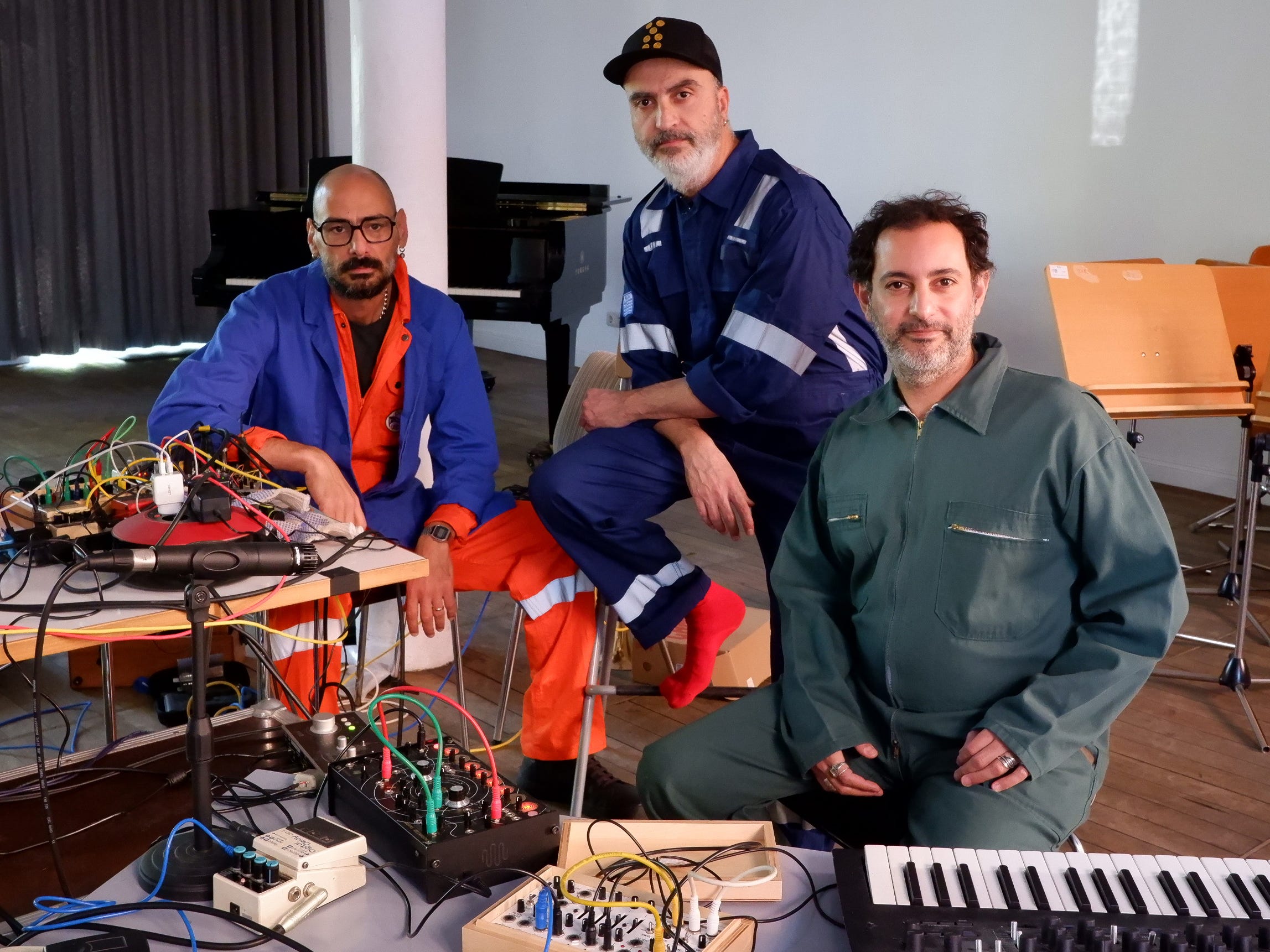
The lacerating, siren-like electronic tones that slash through pulsing yet funereal drone of “Da’eri,” for example, remind me of early Throbbing Gristle. A similarly harrowing vibe is transmitted by cycling, low-end electronics of “Shamm el Hawa,” but Kerbaj, who’s spent decades making sounds with a trumpet despite steadily eschewing any conventional facility for the instrument, uses it masterfully to break up the landscape, first with a few striated, unpitched breaths, before unleashing a series of electronically-altered puffs so terse they suggest splattery percussion. While he’s spinning one particular web of sound, Louca soon arrives to inject another, unspooling deconstructed synthesizer runs that suggests a cubist take shaabi or dabke. Check it out below. I assume the saxophonic cries and acidic squiggles that take control of the shimmering yet meandering gloom of “Turning in Its Ground” are delivered by Kerbaj, outfitting his trumpet, I assume, with a reed mouthpiece and a length of rubber tubing, but it redirects the vibe into something far more cosmic. Dog Plug play at Morphine Raum on Tuesday, June 16, where they’ll be joined by French oudist Gregory Dargent.
Marcin Masecki, Recombiner
Last year clarinetist Eldar Tsalikov, pianist Marin Masecki, and drummer Jan Pieniążek released an album called Monk (BMC), the title of which didn’t exactly herald something fresh. I think there’s a good shot that no single jazz composer has been interpreted more often over the last five or six decades that the pianist, and despite the unpromising album title, this is a marvel that offers yet another reason why Monk’s music remains as magnetic and memorable as ever. It’s malleable as hell, as this trio gamely rips apart the music with no less authority and daring than the recent Monk album from [Ahmed]. Masecki is a virtuosic Polish pianist, famed for the score he composed for the 2018 film Cold War quietly residing in Berlin, and he’s routinely demonstrated an ability to reinvent entire repertoires in dazzling fashion, whether tackling ragtime or Chopin.
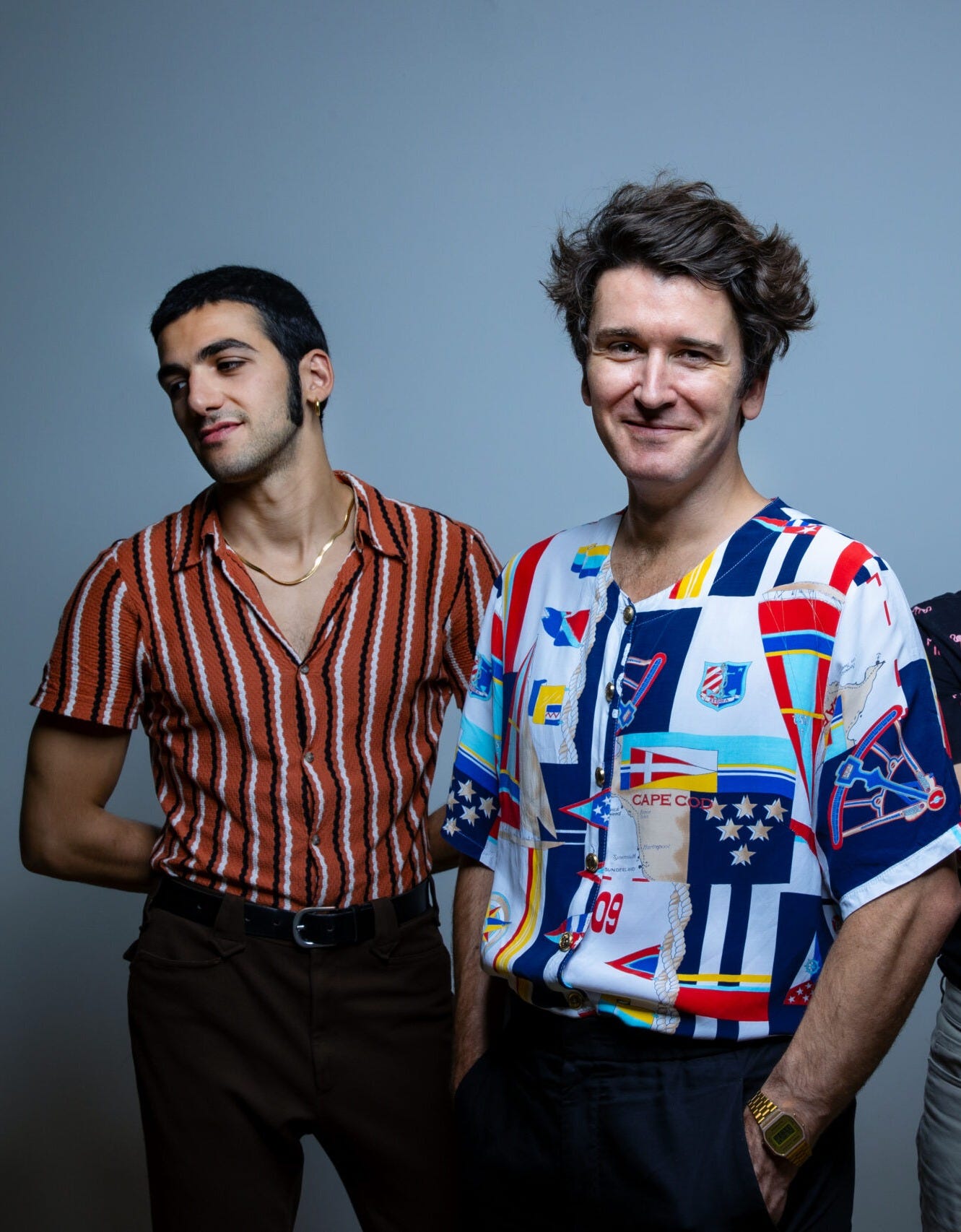
The arrangements contain essential bits of every tune, but the arrangements regularly alter the stylistic touch and historical mode, as much as they toy with the various lines played by the musicians. Tsalikov, whom I know from his boisterous, energetic presence and astute musicality in Nick Dunston’s Skultura—the band with Portugal—but his authority here has impressed me in new ways, as he somehow can evoke swing era practices in his improvisations while unspooling a distinctly modern narrative, sometimes tightly woven into the reharmonized scaffolding of Masecki, sometimes gliding over it. The album concludes with three solo performances by Masecki, one planting a Monk tune in a different stylistic pot, whether highlighting his stride roots or affecting a home music parlor vibe, he doesn’t seem to lack for ideas. Tsalikov and Masecki will play duets at Alter Schwede on Tuesday, June 16, but I can’t tell you what the rep will be.
Recommended Shows in Berlin This Week
June 16: Eldar Tsalikov, clarinet, double bass, and Marcin Masecki, piano, 8 PM, Alter Schwede, Schwedenstraße 11A, 13357 Berlin
June 16: Dog Plug (Mazen Kerbaj,trumpet, crackle synth, toys, electronics, Maurice Louca, keyboard, electronics, and Tony Elieh, bass, electronics) with Gregory Dargent, 8:30 PM, Morphine Raum, Köpenicker Straße 147, 10997 Berlin (Hinterhof 1. Etage)
June 16: Ignaz Schick, alto saxophone, Sofia Salvo, baritone saxophone, Meinrad Kneer, double bass, and Oliver Steidle, drums, 8:30 PM, Kühlspot Social Club, Lehderstrasse 74-79, 13086 Berlin
June 17: Leik (Edith Steyer, alto saxophone, clarinet, Isabel Rößler , double bass, and
Kay Lübke, drums), 8 PM, Alter Schwede, Schwedenstraße 11A, 13357 Berlin
June 18: Sam Prekop & John McEntire, 8 PM, Lido, Cuvrystraße 7, 10997 Berlin
June 18: Avishai Cohen, trumpet, and Yonathan Avishai, piano, 7 PM, Musikbrauerei, Greifswalder Straße 23a, 10405 Berlin
June 18: Erosão Percussion Trio (Mariá Portugal, drums, voice, percussion, Emilio Gordoa, percussion, live electronics, and Burkhard Beins, percussion, electric bass), 8:30 PM, KM28, Karl Marx Straße 28, 12043 Berlin
June 18: Céline Voccia Trio (Céline Voccia, piano, Jan Roder, double bass, and Michael Griener, drums), 8:30 PM, Sowieso, Weisestraße 24, 12049 Berlin
June 19: Jenny Hval; Natali Garner, 8 PM, Kantine am Berghain, Am Wriezener Bahnhof, 10243 Berlin
June 19: The Pitch With Jules Reidy (Boris Baltschun, analog synthesizer, Koen Nutters, double bass, Michael Thieke, clarinet, and Morten Joh, vibraphone, tape delay, with Jules Reidy, guitar), 8:30 PM, KM28, Karl Marx Straße 28, 12043 Berlin
June 19: Dream Big Fish (Julius Gawlik, tenor saxophone, clarinet, Thorbjørn Stefansson, double bass, and Marius Wankel, drums), 8:30 PM, Sowieso, Weisestraße 24, 12049 Berlin
June 20: Teppei Higuchi; Manuel Carbone; The Waves (Rebecca Lane, Margareth Kammerer, and Deborah Walker), 8 PM, Encounters Bookspace, Prinzenallee 60, 13359 Berlin
June 20: Andro Manzoni, sopile, electronics; Carla Boregas, synthesizer, electronics, and Mauricio Takara, drums, electronics, 8:30 PM, Sowieso, Weisestraße 24, 12049 Berlin
June 21: Aldous Harding, Vera Ellen, 8 PM, Huxley’s Neue Welt, Hasenheide 107 – 113, 10967 Berlin
The Harding section gets at something I think about constantly: she writes lyrics that all but dare you to decode them, and then the decoding turns out to be beside the point because the voice has already told you what you needed to know. “A husky toughness that belies vulnerability” is the whole trick in six words—the surface and what's under it pulling against each other in the same line. I'd argue the inscrutability isn't a puzzle withheld so much as a third instrument; you're meant to feel the meaning before you can name it. The microphone-placement detail on “I Ate the Most” is a great catch. Filing this record away to sit with.
What I'm getting from, "Big thick coats on the dogs of people just trying to help..." is that well-meaning people putting enormous protective coats on their dogs is a weird kind of absurdity where nobody is really behaving badly; they're “just trying to help.” The coats may be excessive, unnecessary, or more expressive of the owners’ anxiety than of what the dogs actually need. So you get an idea of care becoming overprotection - help that arrives already wrapped in somebody else’s assumptions. She makes this a personal statement when you hear the other words in the song where you're inclined to think that the dogs occupy her personal position in relationships:
*People care about me, but what they place around me may not be what I need*
or even
*They're helping the creature they imagine, after first dressing it in a form they understand.*
I have a neighbor who makes me feel quite uncomfortable in this way.
Been enjoying this album since discovering it last month. Good, varied instrumentation.