

I landed back in Berlin last week worn out by a couple of weeks in the US, where among other things, I was running Frequency Festival in Chicago. The music was nourishing, as was reconvening with my old, deeply loved community in the city. Nearly a week after returning, I’m finally starting to feel like myself again. Before I get to what’s happening this week I did want to point out that my monthly contemporary music column was published by Bandcamp Daily last week, as was my feature story on the singular Berlin-based Brazilian drummer-composer-bandleader Mariá Portugal in the April issue of the Wire. Aside from her new Erosão Percussion Trio, the article discusses her São Paulo based ensemble Quartabê, which was initially assembled to interpret the music of the sublime composer, arranger, and bandleader Moacir Santos. In the piece I mention that he’s probably known best for the three albums he made in the early 1970s for Blue Note, when he was living in Los Angeles, but I don’t think it’s controversial to say that his greatest work is featured on the 1965 classic Coisas, which has sadly been out-of-print for ages. But the other day Brazilian music specialist Jeff Caltabiano pointed out that the album is currently available as a digital download on Bandcamp, along with a slew of other overlooked Brazilian recordings, from a page called Ovelha Negra. Since there are a bunch of albums from the late 1980s I’m assuming this is some gray area activity and not a public domain cash-in, but if you don’t know Coisas do yourself a favor and hie thee over there and download it fast. You can hear the killer opening track, “Coisa Nº 4,” below.
Zosha Warpeha: Hardanger Expanding
I first heard the music of Zosha Warpeha, a Minnesotan now based in New York, on her stunning debut recording silver dawn (Relative Pitch) back in the spring of 2024. Mixing composed and improvised material, the music did nothing to conceal its roots in Norwegian folk traditions. She plays the Hardanger d’amore, a modern hybrid of the Hardanger fiddle, famously embraced by the great Nils Økland—a five-string instrument with an additional set of resonating strings under the bridge. I was delighted to present a solo performance by Warpeha on the 2025 edition of Frequency Festival which definitely lived up to my expectations, as she brought an outsider’s take on Norwegian cadences and forms with an improvisational mindset. Her geographically distant, temporally late adoption of the tradition seems to give her the freedom to eschew strict fidelity, a quality that’s rapidly grown over the last two years. On last year’s terrific Orbweaver (Outside Time), an improvised duo recording with the Bolivian flutist Mariel Terán—who transforms Andean folk tropes in a manner akin to Warpeha’s manipulation of Norwegian sounds—the pair found a beguiling common ground in skirting around the conventional usage of their given instruments through improvisation and close listening.
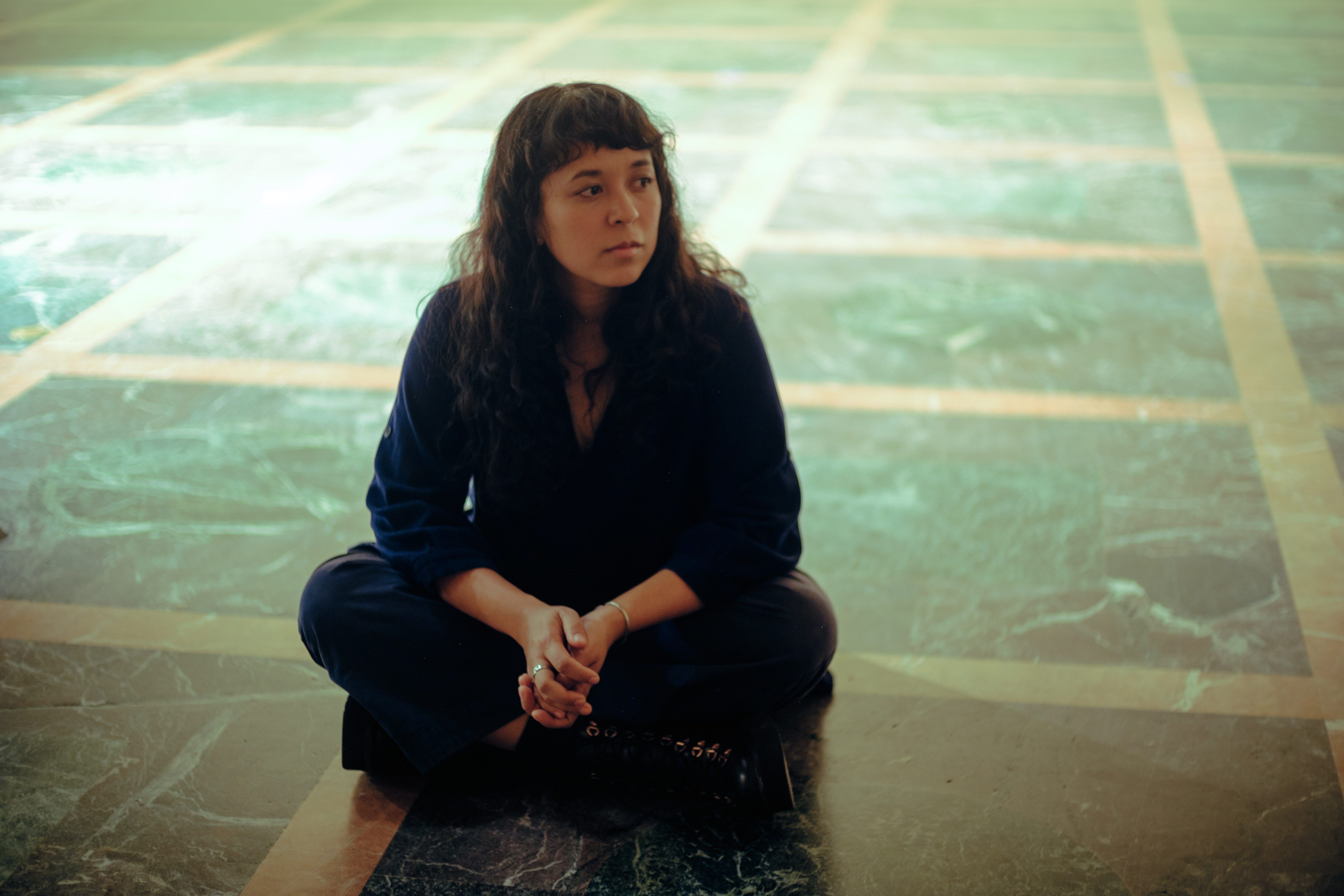
Two new recordings by Warpeha track her music’s growing distance from those Scandinavian roots, and although her instrument can’t help but serve as a constant reminder regardless of how far she pushes things, her evolving practice is more rooted in place, context, and spontaneity than folklore. Later this month Outside Time will release her second solo album, I grow accustomed to the dark—a far starker, less idiomatic expression of her playing. When she performs this material she’s usually moving around whatever space she’s playing in, both walking through aisles and patiently spinning around to give listeners a constantly changing sonic perspective. “Filament,” the first of the album’s two works, is built around an irregularly produced drone briefly silenced by the end of each bow stroke, a slow-motion pulsation that retains a fixed pitch and timbre, while Warpeha deftly activates the other strings in shifting fashion, dancing patiently around that recurring tone, which grounds the piece. Eventually wordless vocals join the fray, a higher-pitched, aspirated series of cries and yelps that thickens the din and complements the delicate tendrils of sound that seem to emanate from that drone. There’s not much in the way of structure to the piece, apart from an easygoing rise-and-fall and loosely episodic shifts in the timbre of the more mobile, mutating lines. Ultimately it feels as much like a recording of a kinetic sound installation than a piece of music. Both works were recorded at New York’s Issue Project Room during a residency Warpeha had there in 2025. It’s pretty clear that she spent a lot of time in the space, becoming intimate with its resonant peculiarities, which play into her sound sculpting. She tends to downplay the telltale qualities of the Hardanger for long stretches, but here and there a sudden, flushed chord reminds us with a radiant transmission of lush, eerie harmony.
The second piece, “visual purple,” revolves around tightly clustered intervals, an aural feast of subtle beating patterns and swarming chords, although it begins with a seesaw of sparse pizzicato notes ringing out in the space. Those patterns grow more complex and faster as the piece unfolds, with her voice entering as a centering device, tracing out a string of melodic sighs, which strangely enough evoke Scandinavian folk more than her Hardanger playing. Five minutes into the piece she begins voicing sensual double stops where the sympathetic strings of her instrument really began to make themselves heard, but as her chords become more active the intervals tighten, quietly recalibrating to shift the focus on those short intervals and the psychoacoustic bounty they unlock. The folkish referentiality drifts away, replaced by a vibratory feast beautifully magnified by the strings under the bridge. Her bow work is primarily a tool for shaping and intensifying that rich drone rather than carving out melody. Eventually her voice creeps back in more forcefully, with a keening tone that loosely evokes the Sámi joik tradition. You can check out an eight-minute excerpt from the piece below. Warpeha makes her solo debut in Berlin at KM28 on Tuesday, March 10, and given the size and acoustics of the space I’m guessing the music will likely differ from what you’ll hear below. She’s sharing the bill with the duo of Jessika Kenney, the extraordinary LA-based vocalist who’s spending the first half of 2026 at the American Academy in Berlin, and Niloufar Shiri, a Twin Cities-based Iranian composer and kamancheh player whose work moves between Persian tradition and experimental practices.
Warpeha will celebrate the release of A Far Within (Relative Pitch), a terrific new trio recording with Berlin-based violinist Biliana Voutchkova and London-based cellist Isidora Edwards, two nights later, March 12, at Sowieso. The fine braid these three very particular musicians create is impressive, forging a genuinely unified sound that nonetheless reveals a dynamic marbling of elements, as if we’re witnessing three clouds colliding. Rather than differentiating or falling apart, new composite shapes are forged. Still, the individual elements are not only still discernible, but they thrive thanks to the astute listening skills of the musicians. The album was recorded by Sarah Hennies at Bard College last September, and I’m guessing it was only the first or second time the trio has played together, and likewise, I’ll surmise they probably haven’t gathered again since, which makes this performance a rare treat. All three musicians are strong improvisers, but their commitment to the whole gives the four extended improvisations an elusive communal feel. Below you can hear what might be my favorite piece, “Seconds and After,” where the mix of string harmonics, extended technique, and the faint washes of ghostly Hardanger resonance come together to provide a kind of glistening sonic fabric of exquisite lapidary detail. The piece develops at its own leisurely pace, those harmonics yielding to different strains of vibrato, all whispery in their groaning elasticity and alchemical blend.
American Strumming
Jana Horn
On first blush the music made by singer-songwriter Jana Horn feels almost inert and stripped bare. Her voice is delicate, hesitant, and guarded. The music seems uncertain, unsure if it wants to be heard, but it’s worth sticking with it because that tentative air begins to dissolve when you let the sounds in. The Texas native wrote these songs after relocating to New York, where she initially had a rough go of things. Once again she’s joined by drummer Adam Jones and bassist Jade Guterman, who does the heavy lifting on the songs, unspooling tenderly beautiful melodic shapes beneath the singer’s spare guitar strumming. Once accustomed to the restraint and minimalist veneer, the music on Horn’s recently released third album reveals its lived-in intimacy. That voice, which seemed reticent at first, is full of vulnerable warmth. On a song like “Come On” an air of unease evaporates with one single phrase. In the second verse Horn moves from hushed sung-spoken delivery to a sudden upper register articulation of the line “Don’t stop, I like that.” Horn uses the most reduced phrasing and projection to hit like a ton of bricks.
That subtlety is masterfully echoed by the lean arrangements, which feel conversational and ambling. Jones sounds like he’s casually making patters as he walks along a jagged path more than he’s deliberately propelling the songs, an approach which heightens the music’s brittleness. There are shadowy clarinet and flute lines added by Adelyn Strei that suggest wisps of guitar feedback one moment, and sibilant, carefully harmonized caresses the next. As tentative piano notes accelerate into a cycling pattern with the bass on “All in Bet,” so does the impact. As with most of the songs, it finds Horn grappling with uncertainty and indecision, but she beautifully pushes forward, rhapsodizing and embracing an ambivalent present with an infectious if muted positivity. Ultimately it’s the way Guterman’s bass lines cradle Horn’s feathery voice that provides the album’s quietly simmering center. She’s on tour with her trio, which performs at Neue Zukunft on Wednesday, March 11, and as I wrote about her previous album, there’s a real punch behind the weightlessness. I’m still wondering how music this rawboned can convey its heart in a rock club, but the focus heard on the record is so steely I’m betting it can transcend the setting. Below you can check out one of my favorite tunes from the record, “Don’t Think.”
Joan Shelley
Horn’s No Quartet label mate Joan Shelley inhabits a more conventional sonic framework, plotting her gorgeous melodies and thoughtful lyrics within a lush folk-rock setting on her latest album Real Warmth. She made the record in Toronto with Ben Whiteley of the Weather Station, who gathered a superb support cast that includes reedist Karen Ng, singer-guitarist Doug Paisley, and Weather Station leader Tamara Linderman on vocals and piano. The arrangements are uniformly beautiful, spinning rustic but vivid counterpoint to Shelley’s gorgeous melodies, among the strongest she’s ever crafted. The tunes were written after Shelley and her partner, the guitarist Nathan Salsburg, moved from Louisville, Kentucky to Michigan, leaving behind the songs she created for the brilliant 2022 release The Spur with a sprawling cast of Chicagoans, in the midst of giving birth to their first child and struggling through the pandemic.
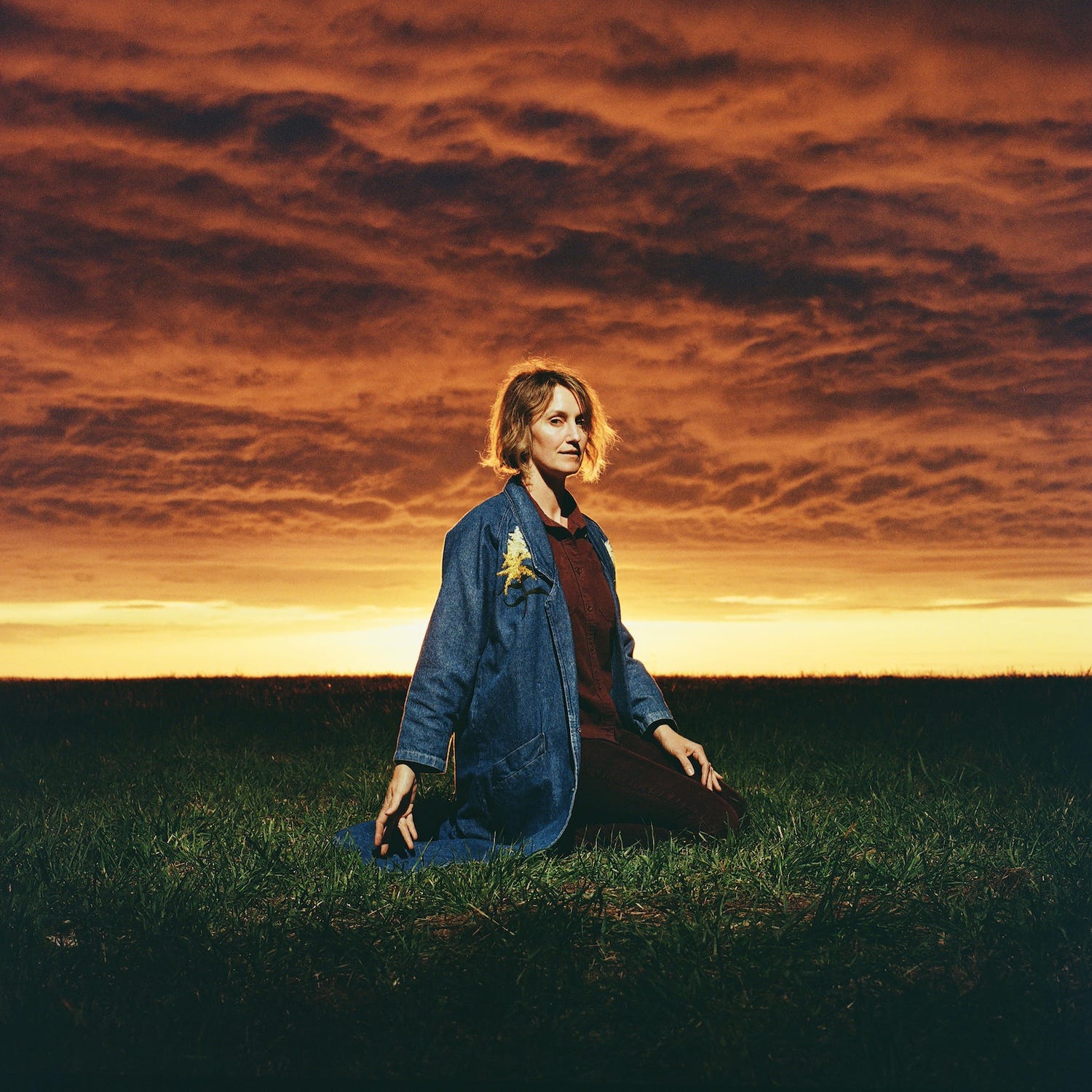
The new record is filled with songs in which the singer has been recalibrated by motherhood, expressing a wildly different sense of purpose, a new worldview. There’s nothing Pollyana-ish about the tunes. Shelley is honest in expressing desire for qualities she felt in simpler times: “New Anthem” laments the loss of romantic spark, but it takes solace in something much stronger, enduring, and deep, and as she quietly celebrates, singing, “Though bruised and burned / My love returns / If you pour honey on my tongue.” In a world that feels increasingly chaotic and unmoored, leaving most of us helpless if not hopeless, Shelley focuses on things within our grasp, the elemental qualities of everyday existence required by any meaningful life. Shelley is in the midst of a rare European tour that brings her and Salsburg to Berlin on Saturday, March 14 to play at something called the Berlin Folk Festival at Festaal Kreuzberg among 14 acts, most of which I’ve never heard of. So while I’m heartily recommending Shelley, but I can’t vouch for the others sharing the bill and I can’t say what time she’ll be hitting the stage. Below you can hear one of the album’s most stripped-down and troubling tunes, “The Orchard,” an evocation of an apocalypse that doesn’t seem so far-fetched today, where she summons the earth’s resilience in the face of man’s destruction.
Recommended Shows in Berlin This Week
March 10: Jessika Kenney, voice, and Niloufar Shiri, kamancheh; Zosha Warpeha, Hardanger d'amore, 8:30 PM, KM28, Karl Marx Straße 28, 12043 Berlin
March 10: Oren Ambarchi, guitar, Fredrik Rasten, guitar, Mike Majkowski, double bass, and Will Guthrie, drums, 8:30 PM, Morphine Raum, Köpenicker Straße 147, 10997 Berlin (Hinterhof 1. Etage)
March 11: James Brandon Lewis Trio (James Brandon Lewis, tenor saxophone, Josh Werner, electric bass, and Warren “Trae” Cruddup III, drums), 6:30 PM, Zig-Zag Jazz Club, Hauptstraße 89, 12159 Berlin
March 11: Jana Horn, 8 PM, Neue Zukunft, Alt-Stralau 68, 10245 Berlin
March 11: Greg Osby with Florian Arbenz Quartet (Greg Osby, alto saxophone, Ivo Neame, piano, Rafael Jerjen, bass, and Florian Arbenz, drums), 8:30 PM, Donau115, Donaustraße 115, 12043 Berlin
March 11: Oren Ambarchi, guitar, Fredrik Rasten, guitar, Mike Majkowski, double bass, and Will Guthrie, drums, 8:30 PM, Morphine Raum, Köpenicker Straße 147, 10997 Berlin (Hinterhof 1. Etage)
March 11: Liz Allbee, trumpet, and Ståle Liavik Solberg, drums; Flaaryr, guitar, electronics, and Tonto, drums, electronics, 9 PM, Neue Zukunft, Alt-Stralau 68, 10245 Berlin
March 12: Will Guthrie, drums, percussion, amplification and electronics; Max Eilbacher performs an interpretation of David Tudor's Pulsers for electronics & tape, 8:30 PM, KM28, Karl Marx Straße 28, 12043 BerliL
March 12: Isidora Edwards, cello, Biliana Voutchkova, violin, and Zosha Warpeha, hardanger d'amore, 8:30 PM, Sowieso, Weisestraße 24, 12049 Berlin
March 12: Camila Nebbia, tenor saxophone, Vinicius Cajado, double bass, and Raiga Hayashi, drums, 8:30 PM, Kühlspot Social Club, Lehderstrasse 74-79, 13086 Berlin
March 13: Klezmatics, 8 PM, Kesselhaus Maschinenhaus, Knaackstraße 97 (i.d. Kulturbrauerei, Gebäude 8) 10435 Berlin
March 13: Nyron Higor; Phylipe Nunes Araújo, 8 PM, Arkaoda, Karl-Marx Platz 16, 12043 Berlin
March 13: Axel Dörner, trumpet, Camila Nebbia, tenor saxophone, Vinicius Cajado, double bass, and Ståle Liavik Solberg, drums; Dasom Baek, daegeum, Richard Scott, modular synthesizer, and Meinrad Kneer, double bass, 8 PM, Richten25, Gerichtstraße 25, 13347 Berlin
March 13: Schmid's Huhn (Stefan Karl Schmid, tenor saxophone, clarinet, Leonhard Huhn, alto saxophone, Stefan Schönegg, double bass, and Fabian Arends, drums), 8:30 PM, Donau115, Donaustraße 115, 12043 Berlin
March 13: Joke Lanz, turntables, and Ute Wassermann, voice, objects, 8:30 PM, Morphine Raum, Köpenicker Straße 147, 10997 Berlin (Hinterhof 1. Etage)
March 14: Achim Kaufmann, piano; Ignaz Schick, turntables, 8:30 PM, Sowieso, Weisestraße 24, 12049 Berlin
March 14: Joan Shelley performs on the Berlin Folk Festival, 4 PM, Festaal Kreuzberg, Am Flutgraben 2, 12435 Berlin
March 15: Shujaat Khan & Ensemble (Shujaat Khan, sitar, Amit Choubey, tabla, Sapan Anjaria, tabla, and Vijay Natesan, mridangam), 6 PM, Pierre Boulez Saal, Französische Straße 33d, 10117 Berlin
March 16: Alexander von Schlippenbach & Barry Altschul Quartet (Alexander von Schlippenbach, piano, Barry Altschul , drums, Rudi Mahall, clarinets, and Joe Fonda, double bass), 7:30 PM, Zig-Zag Jazz Club, Hauptstraße 89, 12159 Berlin
March 16: Godspeed You! Black Emperor, Kristof Hahn, 8 PM, Festaal Kreuzberg, Am Flutgraben 2, 12435 Berlin