
Still Paving Paradise
Bengt Berger, Maggie Nicols, Jeff Parker, Akiyama/Nakamura/Eubanks/Prins

Bengt Berger: Lamenting the Passing of a Crucial Holder of Music History
On Friday evening I saw the news that the multifarious Swedish percussionist Bengt Berger had died from cancer, aged 83. I didn’t know Berger, apart from exchanging emails over the years in regard to his long running label Country & Eastern. I rue not introducing myself to him when I was in Stockholm in 2023 for John Chantler’s Edition Festival for Other Music, as Berger attended most of the concerts and transmitted a joyful presence. Yet despite having no personal connection to him, the news felt like a gut punch because few musicians possessed the sort of devoted, genre-blind ardor that marked his entire life. He loved music. Fellow musicians Dror Feiler posted some beautiful thoughts on his Facebook page on Friday, including this passage:
Bengt Berger was one of those rare musicians who played to understand. To get closer to people, rhythms, traditions and stories. In a music life that is so often about positions, careers, and stylish identity, Bengt almost always went the other way: towards curiosity, towards the meeting, towards the unknown.
I couldn’t possibly sum up that essence better, but I do think people should be more aware of his fascinating trajectory, one rooted in jazz but constantly fed by other sonic inspirations. I often talk about Don Cherry as the inadvertent inventor of “world music,” but what he really did was codify a wide-open approach that used improvisation to weave together any and all sonic traditions that made sense. Berger was one of the musicians who was part of Cherry’s extended circle during the trumpeter’s years in Sweden, and he performed on albums like Organic Music Society and Eternal Now. But looking back, Cherry’s evolution was clearly aided and abetted by a bunch of Swedes already embracing these ideas. In fact, Berger was a founding member of Arbete och Fritid, which also included several long-time collaborators—reedist Roland Keijser and mulit-instrumentalist Kjell Westling. The group is usually categorized as an early fusion band, and there’s certainly a hint of rock in its sound, but I hear a sensibility that paralleled Cherry’s thinking—these guys loved all kinds of music, and felt no need to exclude anything from their work together. Arbete och Fritid’s eponymous 1970 debut holds up beautifully 56 years later, helping to cement a uniquely Swedish thing for eliding jazz and folk music, both Scandinavian and traditions from far abroad, with soul, beauty, wit, and grit. The project led the way for other pan-stylistic endeavors like the rock-driven Archimedes Badkar and his own, singular Bitter Funeral Beer, which released its first studio album for ECM in 1982, a kind of model for Berger’s pan-stylistic ethos and one of the most striking and original entries in the label’s vast catalog.

Meanwhile, he was also pursuing jazz at the same time, working with the sui generis guitarist Staffan Harde, saxophone titan Bernt Rosengren, and serving as the original drummer in the terrific quartet Rena Rema alongside pianist Bobo Stenson, saxophonist Lennart Åberg, and bassist Palle Danielsson. Berger never stopped, moving nonchalantly between jazz and global traditions, with a staunch devotion to Indian classical music in particular. His Country & Eastern label not only released loads of his own work, but countless new and archival recordings, including a slew of releases featuring members of the Dagar Family, the famed Dhrupad dynasty. He organized an updated version of Bitter Funeral Beer that he dubbed Cool Funeral Beer, and he played regularly in an ever expanding number of projects right until the end. Apparently his illness was quite sudden, as he was still sending emails about new releases as recently as March. It’s a great loss for the music community in Stockholm, but also for the planet in general. Berger had the sort of generous mentality increasingly lacking today, a true antidote to selfish, narcissistic belligerence that’s suffocating us. Below you can check out “Chetu,” from a 1982 concert in Frankfurt with Cherry and sarod player K. Sridar.
Maggie Nicols is Still Ignoring the Rules
In a Wire feature from 2021 writer Louise Gray nails down an essential part of the aesthetic refined by singer, dancer, pianist, and improviser Maggie Nicols over six decades: “She has, with no frills or show, taken music-making off any pedestal and situated it in the community, using its force to empower the powerless.” The 78-year old Scottish artist, who makes a rare solo performance in Berlin on Saturday, May 23 at Schloss Britz—part of the opening weekend of the 2026 Kiezsalon season—has operated on the fringe for entire career, not for its own sake, but thanks to her refusal to play by the improvised music’s scenes rules. Her music has casually drifted between composition and improvisation in its topical and contemporary thrust. She was a founding member of the Feminist Improvising Group—alongside artists like Lindsay Cooper, Georgie Borne, and Irène Schweizer—establishing a fierce activism within an innately musical context, and she’s perpetually brushed aside any kind of operational orthodoxy, a practice that doesn’t accommodate the demands of the music business. Thus, she’s not nearly as well-known as she should be, not that she’s losing any sleep over her status. She’s a superb and gifted performer, situating her sprawling range and spontaneous invention deep within a nonchalant charisma. She’s witty, quick on her feet, and capable of sudden flashes of sublime beauty.

She’s made a pile of recordings over the years, but they’ve usually been fleeting documents of her idiosyncratic art in collaborative settings. Incredibly, she didn’t make her first solo album until the pandemic, recording Creative Contradiction: Poetry, Story, Song, and Sound (Takuroko) at home. It led to renewed interest in her work and a few years ago she delivered an even better sequel with Are You Ready? (Otoroku), which, in appropriately confusing fashion, was issued in multiple iterations, including a double CD which included the songs from the vinyl release along with a second disc of improvisations, while the LP’s second side contained material not on the CD. Still, it’s a remarkable collection that I regret not spending more time with when it first came out, especially after catching her playing an incredible live set at Café Oto in the fall of 2023. I’ve been making up for that error in the last couple of weeks, which makes me doubly sad I won’t be in town to see her this weekend. The “Songs” CD is packed with all kinds of machinations, whether the beautiful singer-songwriter turf of the title track, with its Brill Building-worthy craftsmanship—check it out below—or “Steady Eddie and the Firefly,” which begins with a catchy melody, her voice filling the wonderfully jagged contours of her piano playing for a couple of verses, until it pivots, serving up what appears to be a spontaneous tribute to American feminist author and activist Leslie Feinberg where she reacts to the idea of “breaking the binary” with, “I’m sort of a melting the binary sort of person, but that’s okay.” She freely interprets “Music is the Healing Force of the Universe,” the Mary Maria Parks tune often misattributed to Albert Ayler, who recorded it with the keyboardist-singer for his 1969 album of the same name, and elsewhere she sets the Rilke poem “You Darkness” to a melody of her own design. The second disc, “Whatever Arises,” mostly captures what Nicols tends to do in her performances—the occasional overdub is an obvious exception—drawing up a vast repertoire of techniques and approaches, directing the peripatetic drift in real-time, her voice unspooling wordless ululations, quoting Wayne Shorter’s “Footprints,” presenting cogent social inquiry, engaging in absurdist wanderings, and transmitting sudden melodic turns, while her piano playing offers a running commentary on the action when it’s not telegraphing what might come next.
Last year she collaborated on an album of standards with a trio led by pianist Geoff Eales on Beautiful Love (33 Jazz) where she reminded listeners about her jazz bona fides—which doesn’t stop her from injecting some biting political commentary into the Bill Evans classic “Peace Piece”—but I find her more compelling when such repertoire is just another possibility in her freewheeling performances, not the focus of them. Nicols will play two brief, separate piano-and-voice sets in the small piano salon of the Schloss Manor, each with a capacity of just 66 listeners. It’s first-come-first-serve, so don’t dally. I do find the arrangement a bit strange, since it’s not like Nicols is going to play the same set twice, and ending her 6 PM performance so a second seating at 6:30 PM can occur would seem to be rather disruptive to an improviser, but at the same time I’m grateful to Kiezsalon for bringing her to town. Following her performances the program features additional sets from Belgian ambient artist Natasha Pirard, Finnish saxophonist Heli Hartikainen, and Berlin singer Valeryia Dele who performs as KOOB.
Jeff Parker’s ETA IVtet is Now
During my long time living in Chicago one of the greatest things in the city was the ability to hear Jeff Parker regularly, in all kinds of contexts. I’ve been a huge fan of his playing, his creative rigor, and his open-mindedness since encountering him sometime in the early 1990s. I’m pretty sure I first heard him as a member of Ernest Dawkins’ New Horizons Ensemble, but subsequently I observed him in so many different working bands, ad hoc configurations, and fully improvised settings it’s hard to put together any sort of timeline. He’s actually in Berlin this week, playing a sold out show at Heimathafen Neukölln on Thursday, May 21 as a member of Flea’s band. I even think Parker sounds good (and entirely like himself) on Flea’s recent album Honora, although the project is a bit facile for my taste.
I was bummed when Parker moved to Los Angeles in 2013, but he returned to Chicago often enough in the years after that I still had plenty of chances to watch him in plenty of disparate settings. Between my own move to Europe in 2018 and his growing disinterest in spending time on the road away from his family, opportunities to catch him have diminished precipitously. Tortoise’s recent EU tours have featured James Elkington filling in for Parker. The guitarist played a superb solo show at Jazzfest Berlin in 2022 and the following year I heard him lead a version of his ETA IVtet, with the wonderful Mikel Patrick Avery subbing for the band’s regular drummer Jay Bellerose. That band—with saxophonist Josh Johnson and bassist Anna Butterss—has become Parker’s main vehicle over the seven or eight years, and it’s also become one my favorite bands on the planet. The band emerged and recorded its excellent debut prior to the pandemic, but the music feels part of a wave of ongoing projects from that period focused on patient, slowly evolving, relatively minimalist music-making, as with Joshua Abrams’ Natural Information Society. The time felt ripe, if not necessary, for such contemplative, collective music making, where simple patterns steadily shifted, mutated, and grew in a deceptively elegant, sophisticated fashion. This aesthetic has provided real solace and relief for some dark times, letting us slow down without becoming numb or dumb.
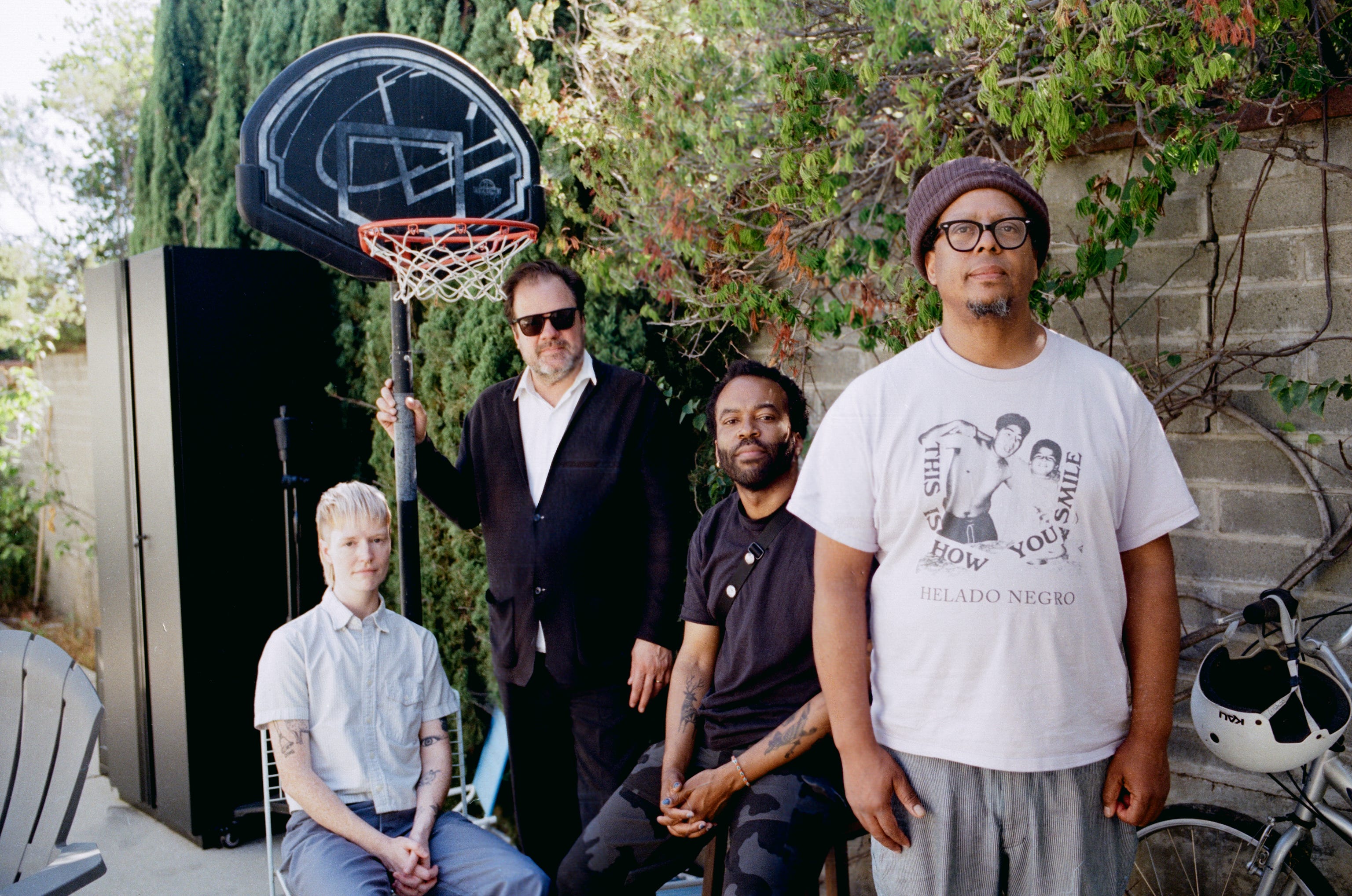
More than 20 years ago Parker led a weekly engagement at a Chicago bar called Rodan with bassist Jason Ajemian and drummer Nori Tanaka called A Cushicle. It mixed groove-oriented improv with the occasional jazz standard tossed in, and that band provided the ETA IVtet’s roots—a wide-open aesthetic unobstructed by any trivial concerns about style, genre, and orthodoxy. Every week the trio dug in deeper and deeper, forging a telepathic connection that was genuinely transcendent. While Parker has always been an astute student of music history and has long honored his mentors and heroes, he’s never been trapped by the past, nor the present. There’s always been something completely organic about his practice, and the ETA IVtet seems like the latest and most profound manifestation of that quality.
This past Friday the band released its third album, Happy Today (International Anthem/Nonesuch), the title of which reflects on the transitory notion of contentment, especially considered the difficulties Parker encountered in the period before cutting the music, bludgeoned by the cruelty and destruction unleashed by the Trump administration and being displaced by the Eaton fires for eight months. The pair of extended tracks on the new album arrive as a balm and an act of transcendence. There’s not much about the mechanics of the music that differs from its predecessors. Parker articulates a simple, hypnotic line and his bandmates gradually fill out the canvas with complementary figures, puzzle-pieces that collectively produce a gently percolating, mesmerizing beauty. Johnson, who also controls the sustained electronic drone that grounds the music, tends to range more freely than anyone in the band, his alto saxophone lines reflecting a knack for endless motific variation as well as an ability to pour his sound into the nooks and crannies left by Parker, Butterss, and Bellerose, who generally circle around fixed parts fractured by endless accents and displacements. The smallest deviation can hit like a ton of bricks. The solos by Johnson and Parker are never flashy or distracting, always integrally connected to the larger shape of the music.
The consistent head-nodding aura transmits a meditative vibe, but it’s not meandering. Indeed, it feels laser-focused. Bellerose is the secret weapon, hewing to cycling drum patterns, but frequently inserting some little detail that either adds tension or provokes another player to alter their path. The natural ebb-and-flow of the music never gets tired because those moments of repose always seem to generate something fresh or surprising. Below you can check out the entirety of “Like Swimmer,” a mid-tempo gem that seems to undergo regular transitions every four-or-five minutes, but nothing so effective as the way Bellerose concludes a lull built around staccato sax lines from Johnson with a groove-shift that instantly transforms the whole vibe without upsetting the cart around the 10:45 mark. The crowd reacts with spontaneous shouts, feeling the earthy transformation deep in its bones. It’s one of my favorite musical moments of the year. The quartet’s original haunt, the Enfield Tennis Academy, was tiny, while the Lodge Room, the LA venue where Happy Today was recorded live, is considerably larger, which might explain a slightly looser feel to the music—there is literally much more space between the musicians, but the hothouse vibe still endures. On the title piece Bellerose offers individual gestures and isolated rhythmic devices for nearly eleven minutes before finally jumping in with a full kit groove, and while that might superficially be the most dramatic shift, the whole performance is an act of relentless development. I’ve got all of the group’s albums loaded on my digital music player, each added as they’ve arrived, and there have been multiple occasions where I’ve let them flow into each other for several hours. It’s the sound of eternity, not because it never ends, but because I never want it to end.
Trans-Continental Lowercase Mixing with Akiyama/Nakamura/Eubanks/Prins
Japanese guitarist Tetuzi Akiyama and no-input mixer pioneer Toshimaru Nakamura stand as two of the most creative and influential musicians in experimental music over the last few decades. They’ve managed to occupy several realms simultaneously, particularly the former who’s never observed much of a gap between churning out heavy-duty choogle one day, reduced acoustic guitar gestures the next. On the other hand, Nakamura has found endless ways to both adapt his unwieldy, seemingly limited feedback loop to different settings and to steadily refine, twist, and expand that sound over decades. Of course, there’s also the matter of his invention of what’s become an increasingly common electronic music tool. The pair have worked together in countless contexts over the years and back in 2015 when I was still living in Chicago I presented a terrific concert by them with Berlin experimentalist and improvisor Bryan Eubanks and Zurich based sound artist Jason Kahn, who first cut his teeth in as the drummer in Joe Baiza’s Universal Congress Of. More recently the duo and Eubanks have been working with veteran Amsterdam improviser Gert-Jan Prins, one of the first folks I heard find ways to bring live electronics into a free improv setting. His solo records from the early aughts were visceral blasts from another planet, and his duo album with the great Cor Fuhler, The Flirts, remains one of my favorite releases from Erstwhile. On the new quartet’s 2025 debut album Spring (Meennaa) the players each recorded a solo performance separately, with Eubanks and Prins subsequently each mixing a track, and Nakamura handling the remaining pair.
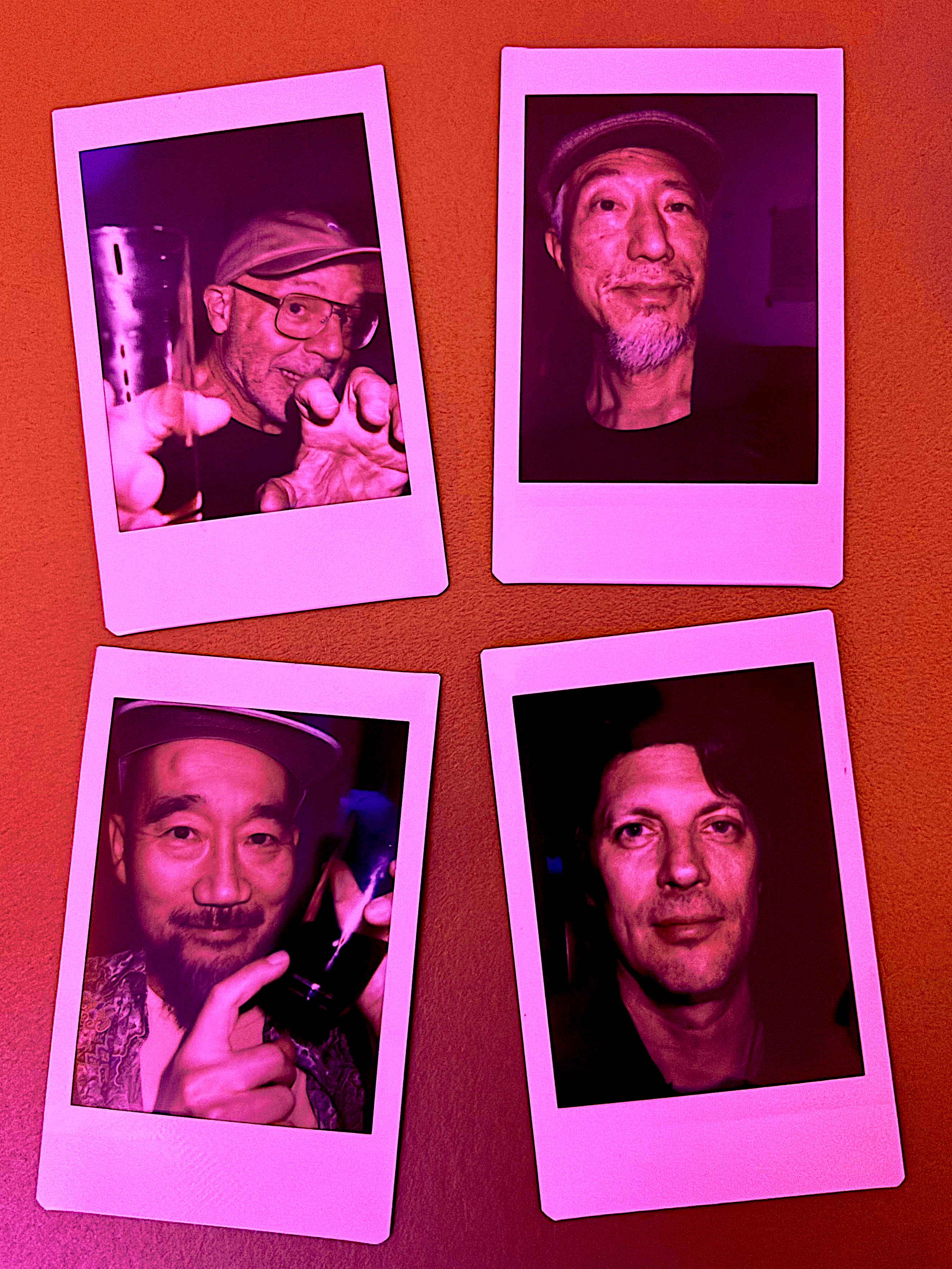
Over four collective pieces there’s a steadily shifting churn of electronic static, sine tone swells, knotty guitar tangles, busted musicbox-like tinkling, soprano saxophone squawks and long tones, and a raft of less tangible arcs, splatters, and drifts. It’s hard to parse this sort of music even when it’s created live, in the same space; it’s a collective endeavor, but to disentangle any single utterance misses the point. The keen post-production abilities conjure what we might expect when they all play together, but it also offers something unique. Obviously each mix introduces personal aesthetic preferences and transforms something created spontaneously into something composed or fixed. Nakamura’s two pieces push further afield. On “3:nepa,” which you can hear below, he delves into noisy territory, with sometimes sputtering, sometimes searing guitar, and primitive drum thumping from Prins. As it rolls into his second mixed piece, which concludes the album, all hell has broken loose. The quartet will share the stage together this Thursday, May 21 at Exploratorium, and then Akiyama, Nakamura, and Prins will all play solo sets, along with a reading from Rebecca Lane on Saturday, May 23 at KM28.
Recommended Shows in Berlin This Week
May 19: Lucrecia Dalt; Jonathan Castro, 9 PM, Betonhalle, Silent Green, Gerichtstraße 35, 13347 Berlin
May 20: Chris Potter Trio (Chris Potter, reeds, Matt Brewer, double bass, and Kendrick Scott, drums), 6:30 PM, Zig-Zag Jazz Club, Hauptstraße 89, 12159 Berlin
May 20: Tobias Delius, clarinet, tenor saxophone, Camila Nebbia, tenor saxophone, Jonas Westergaard, double bass, and Nathan Ott, drums, 8:30 PM, Panda Theater, Knaackstraße 97, (i.d. Kulturbrauerei, Gebäude 8) 10435, Berlin
May 20: Gruppo di Improvvisazione Giallo (Hanno Leichtmann, electronics, percussion, Magda Mayas, piano, clavinet, Nils Ostendorf, trumpet, electronics, Sara Persico, voice, electronics, and Valerio Tricoli, Revox B77), 8:30 PM, KM28, Karl Marx Straße 28, 12043 Berlin
May 20: Raed Yassin and Mike Majkowski, double basses; Mark So, piano, tape, and electronics, 8:30 PM, Sowieso, Weisestraße 24, 12049 Berlin
May 21: Mariam Rezaei, turntables, and Edward George, voice, 8 PM, Callie’s Sound Studio, Lindower Str. 20, 13347 Berlin
May 21: NEPA Quartet (Tetuzi Akiyama, guitar, Bryan Eubanks, soprano saxophone, electronics, Toshimaru Nakamura, no input mixer, Gert-Jan Prins, percussion, electronics), 8 PM, Exploratorium, Zossener Strasse 24, 10961, Berlin
May 21: Timo Lassy Trio (Timo Lassy, saxophones, Jaska Lukkarinen, drums, and Ville Herrala, double bass), 8:30 PM, Jazz Club A-Trane, Bleibtreustraße 1, 10625 Berlin
May 22: Mariam Rezaei, turntables, and Edward George, voice, 8 PM, Callie’s Sound Studio, Lindower Str. 20, 13347 Berlin
May 22: Die Enttäuschung (Rudi Mahall, bass clarinet, clarinet, Axel Dörner, trumpet,
Jan Roder, double bass, and Kasper Tom, drums), 8 PM, Alter Schwede, Schwedenstraße 11A, 13357 Berlin
May 22: Mark So & Manfred Werder play the inferior part of the stars, for voices, portable tape recorders and typewriter, paper and notebooks, evidences, traces, objects, 8:30 PM, KM28, Karl Marx Straße 28, 12043 Berlin
May 23: Maggie Nicols; Natasha Pirard; Heli Hartikainen; KOOB, 6 PM, Schloss Britz, Alt-Britz 81, 12359 Berlin
May 23: Mariam Rezaei, turntables, and Edward George, voice, 8 PM, Callie’s Sound Studio, Lindower Str. 20, 13347 Berlin
May 23: Toshimaru Nakamura; no-input mixer; Tetuzi Akiyama, guitar; Gert-Jan Prins, electronics, percussion; Rebecca Lane, reading, 8:30 PM, KM28, Karl Marx Straße 28, 12043 Berlin
May 25: Tatsuya Yoshida, drums, vocals, and Risa Takeda, piano, effects, synthesizer; Helicopter with Rieko Okuda (Peter Van Huffel, alto saxophone, effects, Roland Fidezius, electric bass, effects, and Simon Camatta, drums) with Reiko Okuda, keyboards, 8 PM, Schokoladen, Ackerstraße 169, 10115 Berlin
Rieko :)