
On the Road Again
Natural Information Society, [Ahmed], Bruine

As often seems to be the case, I’m filing this week’s newsletter from abroad. Today, I’m in the UK, where I’m attending the Huddersfield Contemporary Music Festival for a forthcoming review in the Wire.
The Essential Natural Information Society
About two-and-a-half years ago I mentioned catching a performance from the quartet iteration of Natural Information Society, the long-running project of Joshua Abrams. I had traveled to Chicago for the 10th anniversary celebration of Constellation, the essential music venue owned and operated by my friend Mike Reed and the home of Frequency Series and the Frequency Festival, the two programming endeavors I maintain in Chicago. In fact, earlier this year the festival featured the expanded Natural Information Society Community Band, who gave a knockout performance. But the show I caught back in April of 2023 featured the core quartet of the project—Abrams on guimbri, Jason Stein on bass clarinet, Lisa Alvarado on harmonium, and Mikel Patrick Avery on drums—and as I wrote I the newsletter linked here, it was the first time I had caught the group live in about five years and in that time the core had developed into a ridiculously focused unit. I always liked the project, but I had never experienced such precision, thrust, and elegance from them like I did that night at Constellation. It turns out the piece they played that night is the title track of their new album Perseverance Flow (Eremite), an album I’ve been completely addicted to since I first heard it a couple of months ago.
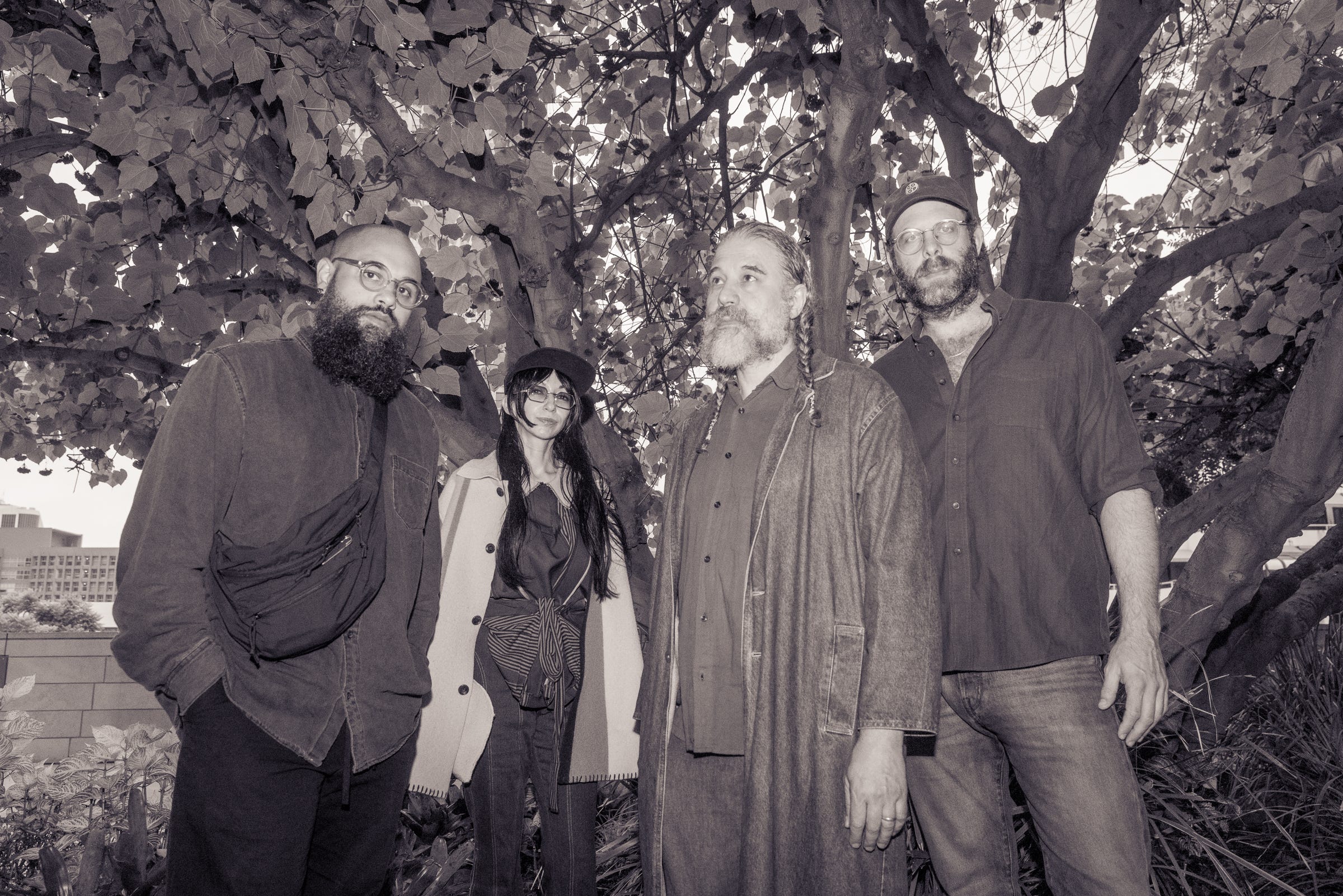
The music stands out from previous work in several ways. It’s the first time the quartet has made an album without guest musicians and it’s also the first time, at least that I’m aware of, that the studio has played such an integral part of the music-making process, with a kind of dub-like treatment that masterfully enhances the mercurial nature of the performance. The 37-minute piece is a masterclass of additive composition, with the deceptively simple theme endlessly expanding as it proceeds. The various components are in constant flux. The central melody sketched out by Stein is unveiled slowly, as serene long tones expand and begin morphing into different pitches. It takes about seven-and-a-half minutes for the full line to emerge. It’s a haunting melody, a kind of ethereal presence that further gives Perseverance Flow its psychedelic complexion. The piece begins with a simple two-beat figure by Avery, a master of the slow-build and the group’s greatest additive aesthete. His ability to judiciously bring in a simple new element is insanely effective and with all of the shifts occurring within the band in general, and especially on this piece, we usually notice the shift after it’s happened—a trick of seduction that doesn’t lose its power after we know when it’s coming. The twangy groove of Abrams is somewhat fixed, but he’s regularly tweaking the line with shifting accent, inversion, or a little spasm from an oscillator that turns his woody tone into an infectious metallic hiccup for a brief second. Alvarado’s see-saw harmonium part is often thickened and transformed with some kind of effect. Stein occasionally blows gauzy countermelodies, even before the primary line has been fully voiced.
Every bar seems to have some kind of subtle variation from someone in the group, whether the musicians are doing it in real time or if it’s a post-production effect, all of them executed with pin-point precision but without drawing attention to the alteration, at least when we initially hear the music. I’ve surely listened to this record a couple of dozen times at this point and I’m still noticing nifty little fillips. It might be an upside down guimbri phrase or a sudden cymbal gesture arriving out of the blue and vanishing before we become cognizant of it. The changes impact the groove, timbre, melody, polyrhythmic thrust—you name it, everything is in motion. On paper it might sound like the performance is all over the place, but that couldn’t be further from the truth. I’ve seen several people mention how Avery imparts a four-on-the-floor house groove about 23 minutes in, and while the rhythmic quality of house is there, it hits in a way that destabilizes the music in a thrilling way, a kind of polymetric collision with Abrams that would end up derailing the jam altogether in lesser hands. And even if Avery was consciously incorporating that genre marker, I’m sure it had much less, if anything, to do with a clever allusion than a musical choice to generate exquisite tension. Despite the endless variations that emerge, the work is marked by an inexorable drive, building propulsion, density, and lapidary detail as it unfolds, and the additive parts seem to change the alignment of the four musicians in ways that only heightens the drama and the richness. Naturally, the durational aspect is crucial, pulling the listener in and allowing us to get lost in the music, but that’s been a steady presence within the group for years. The record finds NIS at the peak of its powers, and considering the creativity of each member I don’t see that ascent coming to an end anytime soon. The full piece isn’t available for free streaming, but you can hear a remixed track, jacking up the low-end, which nevertheless gives you a sense of what it’s all about. But I strongly encourage you to dive into the full version.
[Ahmed], Now With Enhanced Clarity and Concentrated Power
Speaking of durational music, playing extended pieces has been standard practice for the quartet [Ahmed] from its inception, nearly a decade ago. For those living under a rock, the group with pianist Pat Thomas, double bassist Joel Grip, alto saxophonist Seymour Wright, and drummer Antonin Gerbal interprets the music of Ahmed Abdul-Malik in singular fashion, taking elemental parts of his compositions and building on them for blistering set-long performances that usually last between 40-60 minutes. What began as a sincere yet conceptual prompt has become a formal goldmine with the band extracting something uncanny from the source material and forging otherworldly, transportive experiences when they meld their peculiar sensibilities in shifting proportions. They are never less than fully locked in.
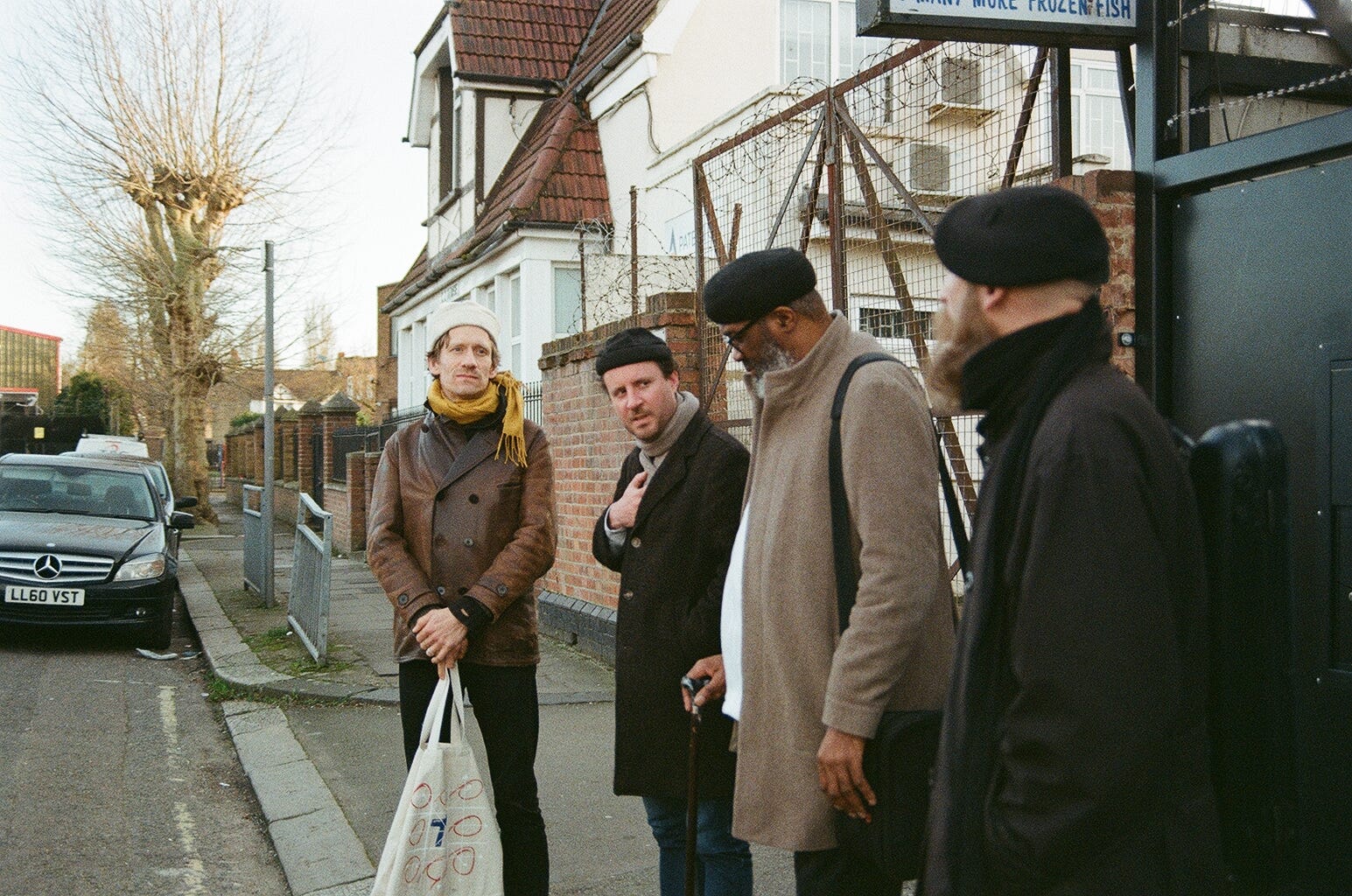
A couple of weeks ago the group released the staggering Sama’a – Audition (Otoroku), which like the new NIS record breaks with a couple of group precedents. It’s their first studio recording and rather than featuring a performance of a single work—or in the case of last year’s brilliant Giant Beauty (Fönstret), five of them, spread across as many compact discs—it features a front-to-back account of all four tunes from Abdul-Malik’s groundbreaking 1958 album Jazz Sahara, arguably the first album to rigorously meld post-bop and Arabic music. [Ahmed] has previously tackled its “El Haris (Anxious)” and “Farah ‘Alaiyna (Joy Upon Us)” on previous albums. Ultimately, the quartet’s shifts don’t really change its modus operandi, but the studio recording absolutely brings out a level of sonic richness and detail missing from the live recordings. Grip’s bowed bass solo on “Ya Annas [Oh, People],” for example, is incredible, his wooden tone imparting a lush microtonality that hints at the original without overtly tracing its contours, and once Wright drops some subtle background shadings we can sense the group approaching liftoff. The maniacal cymbal-work of Gerbal has always been noticeable, but its presence and importance feels more substantial here, particularly highlighting the unstoppable interactive force he conjures together with Grip. The other obvious tandem is the frontline of Thomas and Wright, and their jagged lockstep mastery also benefits from the heightened audio fidelity.
I probably would’ve insisted that [Ahmed] needed those long takes for its hypnotic power to fully take hold, and while that still might be true, the band reveals an undeniable intentionality in these more concise readings. And while the music may not cast the same mesmerizing quality here, in a lot of ways it’s stronger, touching on most of its sui generis qualities but in a way that demands close listening. I think most listeners drift off here and there in those long accounts—getting lost in the general whirlwind of energy, cracking back to sharp attentiveness before long—but here the music is so commanding, that it almost feels like a concentrated version of the quartet. Nothing can be taken for granted, as every tone, gesture, and rhythm hits like sculpted granite, albeit a sculpture forged in real time. Below you can check out “Isma’a [Listen],” which captures the quartet at its most ferocious, with Thomas and Wright achieving a steamrolling intensity endlessly stoked by the tireless rhythm team of Grip and Gerbal.
Bruine’s Sound World Building
I was instantly sucked into the mysteriously tactile sound world conjured by the trio Bruine on its self-titled 2024 album, a feast of friction, tightly-coiled breath-driven gestures, and turbulent vibrations. Berlin clarinetist Michael Thieke, French accordionist Emilie Škrijelj, and Belgian percussionist Tom Malmendier are collectively committed to building an engrossing sonic atmosphere, subverting the reduced language of lowercase improv to construct a unified vision. Each musician deploys electronics, manipulating their individual output with various transducers more to activate additional objects than to alter their own sounds. The clarinet and accordion both sound like themselves in the hands of Thieke and Škrijelj who each drill down into microscopic patterns, modulating minimalist feints with remarkable sensitivity and imagination, while Malmendier functions as kind of wild card, using a snare drum as a kind of resonator played with unconventional objects layered with damping devices and setting up an array of metallic detritus—including an assortment of HVAC ducts, joints, and turbine vents—which are controlled with those transducers to shake, rattle, and groan.
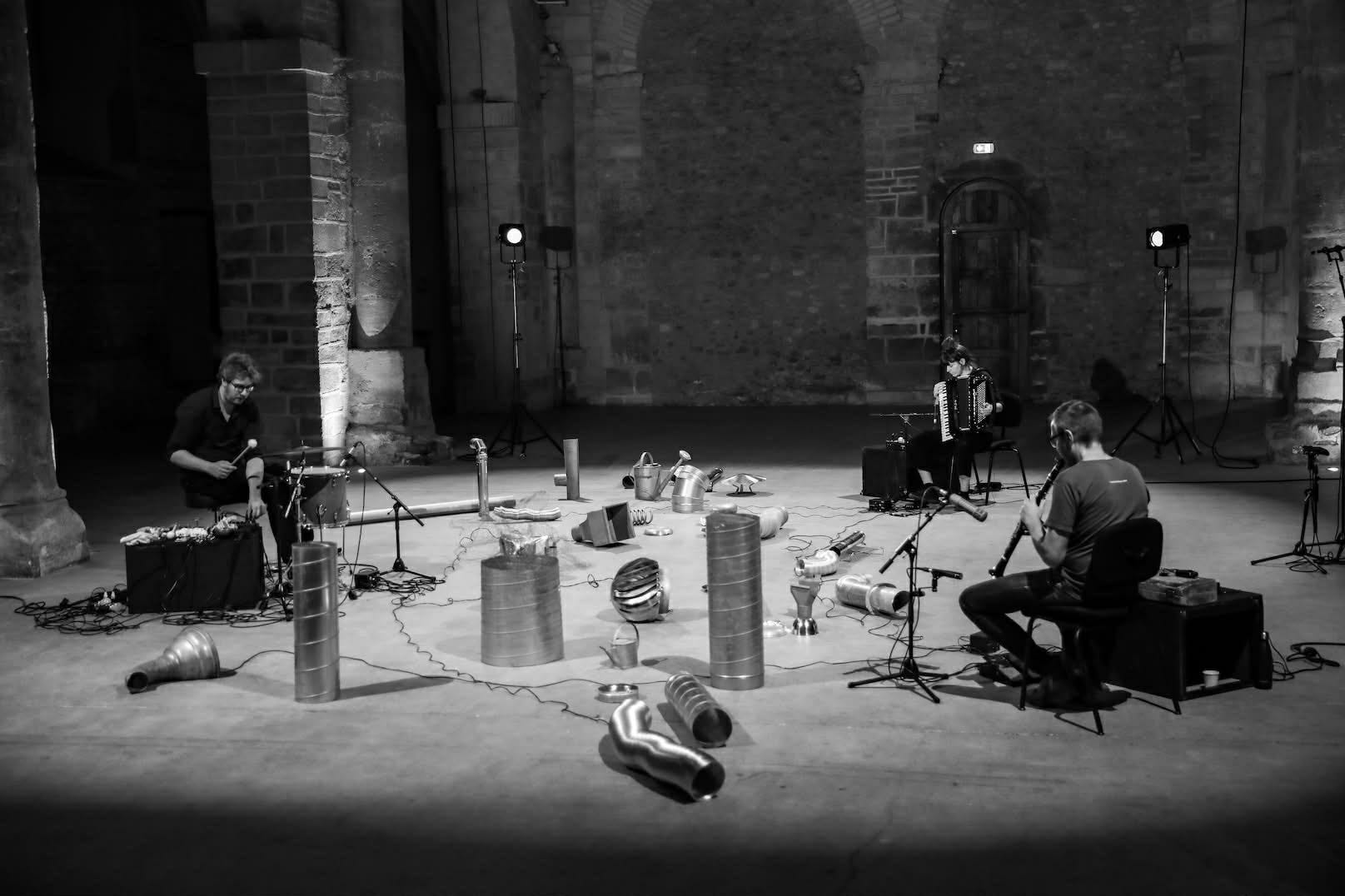
As much as I enjoyed the music, my appreciation for what Bruine does was greatly amplified after watching the video embedded below, where a description positions the trio between a concert and a sound installation. The musicians array themselves in a wide-open space littered with Malmendier’s tools. Thieke and Škrijelj are largely inert, sitting in chairs as they focus on a single tactic over the long haul, injecting microscopic variation in those patterns. As you can see in the video the accordionist alternates between a vibrato-rich gesture in which she subtly contracts the bellows while creating the motif by gently slapping the top corner of the instrument and more sustained tones, some of which are electronically processed. The percussionist moves between his reduced kit and the objects sprawled across the floor, crawling around to explore new variations—changing transducers, piling objects atop one another to alter the vibrations, and sometimes opting for unamplified noises by scraping, sliding, and spinning the various junk around.
While Bruine sticks with this general procedure, the three extended tracks on their album provide different focal points and techniques. And as I mentioned above, my initial exposure came from listening, without having any idea about how the process worked or looked. The methodology may be reduced and minimal, but the sounds are hardly tepid or restrictive. As you can hear below on “Particule en crue” things can get pretty harsh and harried, albeit within a tightly confined space. I’m bummed that I’m out of town when the trio performs at Exploratorium on Thursday, November 27, because it does seem like the line between performance and installation is quite thin, but then again I’ve repeatedly lost myself in the universe carved out by the pieces on the CD. Bruine may offer something riveting in performance, but the sounds they generate have proven to be nicely portable.
Recommended Shows in Berlin This Week:
November 25: Sawt Out (Burkhard Beins, percussion, Mazen Kerbaj, trumpet, and Michael Vorfeld, percussion), 7:30 PM, World in a Room, Brunhildstraße 7. 10829 Berlin
November 25: Orchestra Baobab, 8:30 PM, Metropol, Nollendorfpl. 5, 10777 Berlin
November 26: Caoi De Barra; Cian Nugent, 8 PM, Petersburg Art Space, Kaiserin-Augusta-Allee 101, 10553 Berlin, entrance in the courtyard, Aufgang II, 1 OG
November 26: Madison Greenstone, clarinet; Hunter Brown, electronics, 8:30 PM, KM28, Karl Marx Straße 28, 12043 Berlin
November 26: Alexander von Schlippenbach’s Monk’s Casino (Alexander von Schlippenbach, piano, Rudi Mahall, bass clarinet, clarinet, Axel Dörner, trumpet, Jan Roder, double bass, and Kasper Tom, drums) 9 PM, Zig-Zag Jazz Club, Hauptstraße 89, 12159 Berlin
November 27: Deutsches Symphonie Orchestre Berlin plays Eleanor Alberga, Ludovic Lamothe, Joshua Uzoigwe, Yaz Lancaster, Thomas “Blind Tom” Wiggins, and Courtney Bryan, 8 PM, Haus der Kulturen der Welt, John-Foster-Dulles-Allee 10, 10557 Berlin
November 27: Bruine (Emilie Škrijelj, accordion, loudspeaker, Tom Malmendier, drums, loudspeaker, and Michael Thieke, clarinet, loudspeaker), 8 PM, Exploratorium, Zossener Strasse 24, 10961, Berlin
November 27: Múm; Hist OG, 8 PM, Lido, Cuvrystraße 7, 10997 Berlin
November 27: Die Enttäuschung (Rudi Mahall, bass clarinet, clarinet, Axel Dörner, trumpet, Jan Roder, double bass, and Kasper Tom, drums), 8:30 PM, KM28, Karl Marx Straße 28, 12043 Berlin
November 28: Kimia Koochakzadeh-Yazdi, Navid Afghah, The Sleep of Reason Creates Monsters (Mette Rasmussen, alto saxophone, Mariam Rezaei, turntables, Gabriele Mitelli, trumpet, and Lukas König, drums), 8 PM, Tehran Contemporary Sounds Festival, Silent Green, Gerichtstraße 35, 13347 Berlin
November 28: Fabian Willmann Trio (Fabian Willmann, tenor saxophone, Arne Huber, double bass, and Jeff Ballard, drums), 8:30 PM, Donau115, Donaustraße 115, 12043 Berlin
November 28: Mombojó, 8:30 PM, Badehaus Berlin, Revaler Str. 99, 10245 Berlin
November 28: Fink Floyd (Johannes Fink, cello, Rieko Okuda, piano, Antti Virtaranta, double bass, and Greg Smith, drums), 8 PM, Peppi Guggenheim, Weichselstrasse 7, 12043 Berlin
November 28: Jeremy Viner, tenor saxophone clarinet, Kit Downes, piano, and Sun-Mi Hong, drums, 8:30 PM, Sowieso, Weisestraße 24, 12049 Berlin
November 29: Camila Nebbia, tenor saxophone, Marta Warelis, synthesizer, Arne Braun, guitar, and Sun-Mi Hong, drums, 8:30 PM, Morphine Raum, Köpenicker Straße 147, 10997 Berlin (Hinterhof 1. Etage)
November 30: Marta Warelis. piano, Florian Stoffner, elecric guitar, and Rudi Fischerlehner, drums, percussion, 3:30 PM, Industriesalon Schöneweide, Reinbeckstraße 10, 12459 Berlin
November 30: Gulf of Berlin (Antje Messerschmidt, violin, Gerhard Gschlössl, trombone, tuba, Gebhard Ullmann, tenor saxophone, bass clarinet, Maike Hilbig double bass, Jan Leipnitz, drums, and Michael Haves, analog live electronics), 9 PM, B-Flat, Dircksenstr. 40, 10178 Berlin