
No Time to Waste
Roland Keijser, Christer Bothén, Stop Over 4

I’m slowly getting back in the saddle this week after a welcome break from the grind—not entirely, of course, as any freelancer will tell you. Normally things in Berlin are pretty slow in January, but as you can see from this week’s recommended shows that’s not the case in 2026. But I had been meaning to write about some music from the late Roland Keijser and the very much active Christer Bothén, two of Sweden’s most expansive musicians, for a couple of months, and that’s where the first newsletter of 2026 begins. Later this week I’ll be counting down some of my favorite albums of 2025, so subscribers will have several missives turning up in the old inbox this week. I’m also excited that I’ll be announcing the line-up for the 10th edition of Frequency Festival in Chicago, tomorrow—it will run from Tuesday, February 24 through Sunday March 1. More on that soon!
Two Swedish Masters Get Their Due
Roland Keijser
Mats Gustafsson has never been restrained in his enthusiasms, regularly celebrating music he digs with over-the-top ALL CAPS fervor. I never doubt this exuberance, but I don’t always share it, yet when he writes, “It is incomprehensible that this vibrant, contemporary music has stayed unreleased for almost 60 years,” in his messianic liner notes for the third release in his increasingly important Öppet series through Caprice Records, featuring music by the Roland Keijser Kvartett from 1968-69, I don’t think he’s exaggerating. The sounds on this new release aren’t merely a nice little archival discovery, but a vital, previously overlooked chapter in the history of Swedish and international jazz.
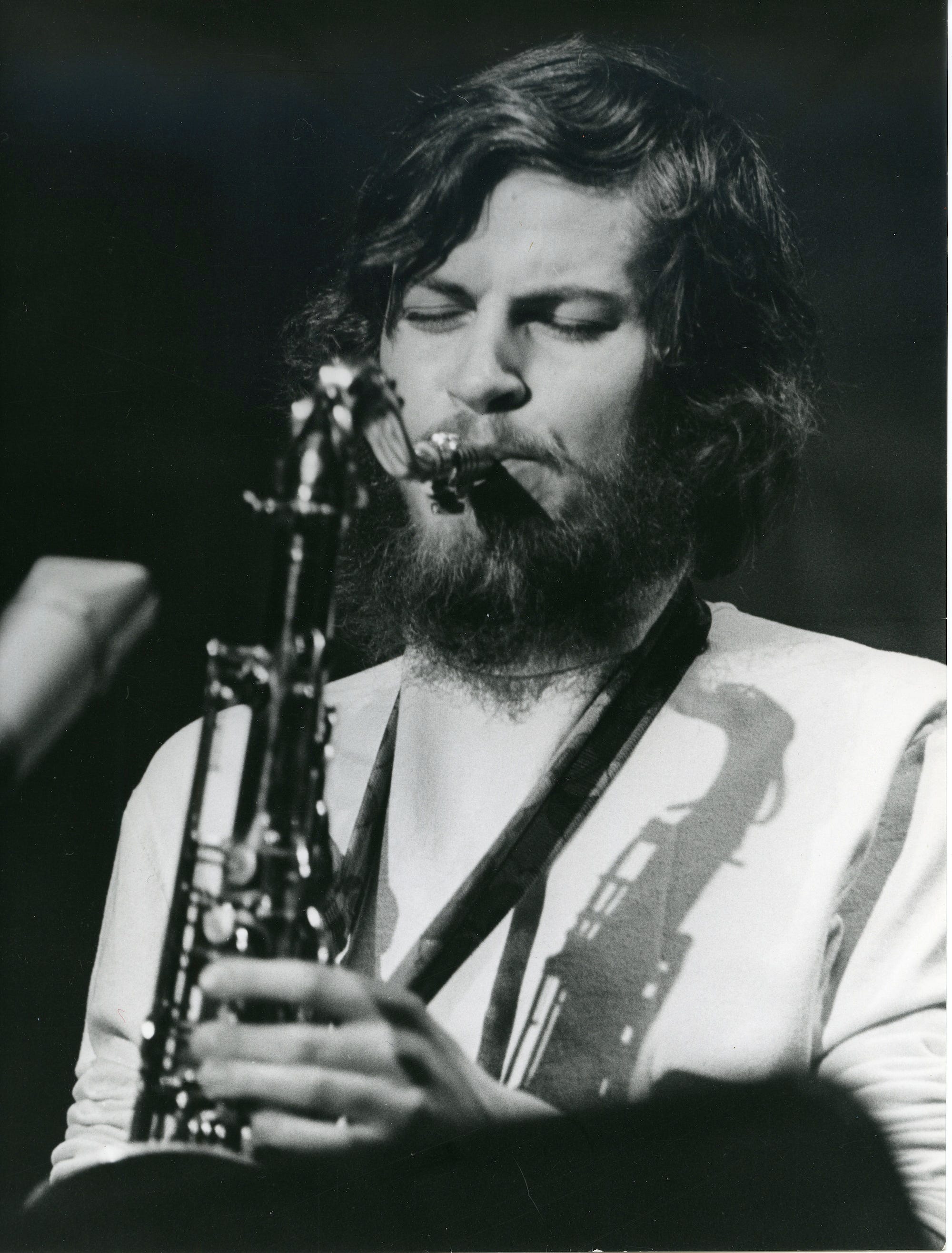
I had previously heard Keijser on the eponymous album by Kege Snö, a superb 2010 freebop session released on Umlaut, with bassist Joel Grip, trumpeter Niklas Barnö, and drummer Raymond Strid, and while I enjoyed it at the time I failed to dig into the saxophonist’s history, an illustrious figure in Swedish music. It would be more than a decade before I encountered his name again, when Fredrik Ljungkvist released his terrific trio album Atlantis (Moserobie) in 2019, which included a lovely solo tenor saxophone version of “So-Do-So-Do-Re,” a tune composed by Keijser, who had died in January of that year, aged 74. You can read a great biographical account of his life from a discussion with Ukrainian interlocutor Sergei Starkowski in 2012 at Grip’s legendary Hagenfesten, but only published upon his passing by Salt Peanuts. He was an important mentor for the younger reedist, and the performance transmitted palpable respect and ardor. I did some research at the time and finagled a copy from Grip of a remarkable 3-CD set of duets between Keijser and Strid called Yellow Bell, released by Umlaut in 2011, a relaxed, extended set of music that captured the reedist’s deep engagement with international folk traditions through an improvisational lens.
The material on the Öppet Tre album emerged during a time of thrilling experimentation, the start of a broad collision of local and global folk traditions with free jazz and improvisation, a period and aesthetic that seemed to look beyond genre and really foment something that felt like total music. While the music on the recording sits broadly within a post-bop realm, albeit with subtle folk references and some free blowing, Keijser was already drifting into a mélange of art happenings, folk revivalism, and early progressive rock, reaching a new apotheosis when the quartet transformed into the wildly popular Arbete och Fritid. Keijser still played some jazz, but the touring demands of Arbete och Fritid as well as another experimental band called Gunder Hägg (which had to rename itself Blå Tåget after the Swedish runner whose name they purloined voiced his, um, displeasure). Keijser was an intellectual of strong curiosity, and had lots of other interests, which by the late 70s led him to give up music in favor of teaching and committing to a macrobiotic lifestyle. By the late 1980s he’d begun to play music again, toggling regularly between folk, world music, and jazz. Keijser had worked with the great Bengt Berger before his quartet dissolved, and he remained one of his most trusted collaborators until his death.
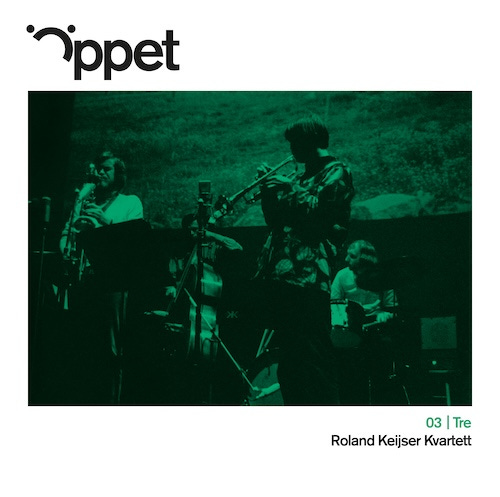
His late 60s quartet included trumpeter Torstein Eckerman, who would be a key member of Arbete och Fritid, along with bassist Staggan Sjöholm and drummer Bosse Skoglund, all of whom, except the drummer, are also credited with piano on the Öppet release. All four tracks were written by Keijser and recorded live over a five-month period. Their range reflects Keijser’s wide interests. Nothing is more fascinating than the opening piece “Big Bad Bag of Baba-Louie/Kvarteret Sniken/Slutning,” a 1968 performance seamlessly blending several disparate themes, none more surprising than the first one, where a kind of soul jazz/boogaloo riff hurtles forward with increasingly uncertainty, never fully unfolding, until it gets locked into nearly five minutes of austere, cycling pointillism, with the leader eventually speaking of “Baba-Louie” in flat Swedish, “He has a utopian idea of a world of music like this, that’s his big idea.” Eventually the theme returns at a reduced speed, its shape suddenly suggesting a kind of New Orleans vibe over a numbing two-beat stutter, with a knockout clarinet solo by the leader. Without pause the quartet moves into the breathlessly shape-shifting “Kvarteret Sniken,” zipping through post-bop, soul jazz, cool jazz, and more, before Eckerman uncorks a stunning full-bodied trumpet solo. The journey concludes with the admirably loose “Slutning” where there’s some interplay between the frontline horns that almost sounds like a studio fabrication, with the in-and-out of sync lines sounding downright psychedelic. The whole enterprise captures a band that was seriously dialed-in rhythmically, harmonically, and melodically. Check it out below. The album also includes a more stretched out, standalone rendition of “Kvarteret Sniken” from two months later where the rhythm section gets lots more leeway. The collection ends with “Tusch/Untitled,” another sharp medley that underlines how easily and perceptively the group pushed against the arrangements with spontaneous harmonies, accents, displacements, and backgrounds. Sometimes archival finds like this are celebrated due to rarity or oddity alone, but Öppet Tre genuinely pulls the curtain back on a lost episode in jazz history.
Christer Bothén
Another vaunted figure of Swedish jazz and improvised music had a remarkable year in 2025, with a welcome surge of renewed interest in his work: Christer Bothén, age 84. The superb clarinetist, who also plays the Moroccan guimbri and the West African donso n’goni—both of which he spent years learning, with extended stays in the regions where the instruments were born—has been turning up more often in the recent years, including membership in Vilhelm Bromander’s Unfolding Orchestra, which brought him to Jazzfest Berlin in 2024. Earlier in the same year Black Truffle reissued Bothén’s 1984 album Trancedance, a high-energy, savvy fusion of Moroccan and Malian music, free jazz, and rock (as well as plenty of Don Cherry overtones).
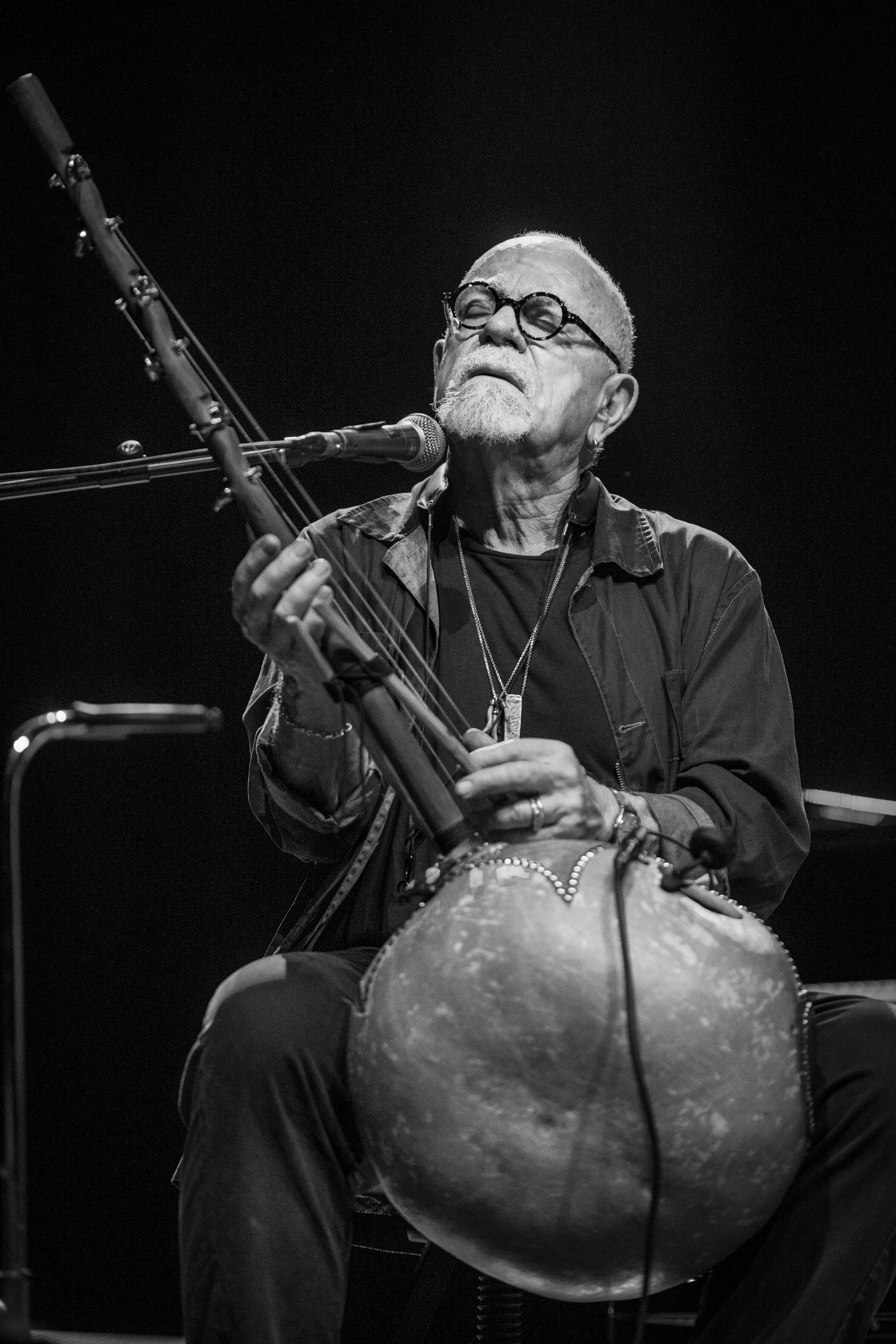
The Cherry vibes are a crucial part of Bothén’s musical DNA, as he worked closely with the trumpeter during his Swedish years. That’s his donso n’goni playing all over Organic Music Society. He taps into that aesthetic on Traces (We Jazz), a terrific quintet record that explores many facets of Cherry’s oeuvre, whether his late 60s’s free jazz classics or the sui generis 1975 fusion record Brown Rice. Bothén toggles between instruments on the album, getting powerhouse support from reedist Mats Gustafsson—in peak form—the dependably agile and tuneful trumpeter Goran Kajfeš, muscular yet soulful double bassist Kansan Zetterberg, and percussionist Juan Romero, a musician more connected to Stockholm’s world music scene than jazz, but in Cherry’s universe that doesn’t matter. Apart from a loose adaptation of “Brown Rice,” the material is all original, reinforcing Cherry’s visionary prescience with pieces that reject any sort of stylistic purity in favor of deep communication. The collective experience and versatility of the ensemble members defines where the music goes.
Soon after that album dropped Bothén released L’Invisible (Thanatosis), a killer trio outing that put the spotlight on his bass clarinet work, with elegant support from Zetterberg and percussionist Kjell Nordeson, who sticks primarily to vibraphone. There’s a dreamy quality to the two-part work, with a scrim of ECM-grade reverb elongating the reedy, patient melodies. Zetterberg, who’s been studying donso n’goni with Bothén, is terrific, his warm, woody tone and precise articulation laying down an important foundation, whether it’s a harmonic base or a lockstep presence with Bothén’s tender-then-squawky lines. It’s chamber music of exquisite beauty and raw expressiveness. The album captures the reedist in a decidedly jazz-rooted mode, with Ornette Coleman-esque phrases billowing delicately throughout the performance.
In September Bothén released Donso n’goni (Black Truffle), a gorgeous collection of solo music for the titular instrument, illustrating the way he’s adapted the tradition to suit his own interests while still maintaining respect for its history. In his liner note essay he discusses his relationship with the instrument, explaining how an encounter with the guimbri in Marrakech eventually led him to Mali in 1971, where studied under Brouema Dombia. “When I left I had Brouema’s blessing to play the instrument in my own way as well as in the traditional patterns and I promised to spread knowledge of the hunters of Wassoulou and to let the donso n’goni be heard outside of Mali,” he writes. Soon after his return Cherry knocked at his door, expressing interest in Bothén’s African instruments, an encounter that opened up a new chapter. Most of the album is made of his own arrangements of traditional themes, although he did compose “La Baraka,” the sparse, seductively cycling gem you can hear below. The closing piece, “Waso Manjé,” features Zetterberg on a second donso n’goni and Marianne N’Lemvo Lindén on karignan, a metal scraper. The stunning recordings capture the instrument’s full range, from the twangy arpeggios to the buzzing metallic vibrations of attached rattles, as the musician weaves gentle melodic variations within an utterly mesmerizing rhythmic framework. The elements are inseparable in this master’s wise hands, capturing an eternal sound that’s inextricably woven into all of his music.
Stop Over 4 Touches Down
This week Konzerthaus Berlin hosts the fourth edition of Stop Over, which as far as I can tell is an ongoing stop-gap endeavor to tease what a potential House of Jazz in Berlin could deliver, as the planning for this seeming white whale enters its second decade with little visible progress in sight. My fingers remained crossed that Berlin could have a well-funded venue like just about every other city across the EU has to present the music. In the meantime, we have Stop Over, which this year features a much broader scope of talent and feels less like a funding opportunity than a showcase of superb working projects.

I’m admittedly biased about one of the acts on the opening night program, on Thursday, January 8, which was curated by the excellent saxophonist and composer Ingrid Laubrock, a German native long residing in New York. My partner, the composer and musician Jessie Marino, is premiering a project based on weaving patterns called Ecstatic Looms with two stellar, fellow string players: London-based Welsh violinist Angharad Davies and Berlin-based Italian cellist Deborah Walker. But the rest of the lineup is terrific as well. The New York-based Taiwanese vibraphonist and composer Yuhan Su presents a trio called Nuance with the lyric alto saxophonist Michaël Attias, who splits his time between New York and Berlin, and the fascinating young pianist and electronic musician Shinya Lee, a Taiwanese polymath living in New York where he straddles all kinds of different stylistic worlds, including video game music on one hand to free improvisation on the other. He contributes electronics to Su’s most recent album Over the Moons (Endectomorph), a dense post-bop recording given a proggy flair with intricate arrangements articulated by a crack octet include Lee, saxophonists Anna Webber and Alex LoRe, pianist Matt Mitchell, and guitarist Yingda Chen. You can check out the album’s opening track, “Pieces Peace,” below.
I haven’t seen Su perform live, but I was blown away by poet and academic Fred Moten and double bassist Brandon Lopez during a show in Chicago last September at the inaugural Sound & Gravity Festival. As much as I’m impressed by the recordings they’ve made with drummer Gerald Cleaver and on their own—last year’s bracing Revision (TAO Forms)—nothing can touch the power of seeing them live, where Moten’s presence and spontaneous wit collide perfectly with the visceral, muscular attack of Lopez. Moten’s sharp socio-political observations and deft wordplay are delivered in cool, measured cadences benefitting from close attention, while the virtuosic range and strength of Lopez’s improvisations form an imperturbable connection with the almost conversational spoken word. Moten taps into jazz’s improvisational ethos through his masterful diction, whether deadpan provocation or sly sing-song accents, working over words like a saxophonist rips apart a motif in real-time, and enfolding other texts like musical quotations to be played with like putty. Lopez provides a rhythmic frame, grounding the performance while unleashing ferociously physical techniques that spasm and slash and cycling patterns that provide continuity. Below you can check out the opening track from Revision, “#14.”
The program on Friday, January 9 was curated by pianist, composer, and bandleader Julia Hülsmann, but apart from a handful of participating musicians like the Berlin marimba player Taiko Saito, I don’t have much familiarity with the three performing groups. That’s not the case with the fascinating program assembled by percussionist Christian Lillinger for Saturday, January 10—it’s only marginally connected to what most people would consider jazz, a healthy, daring position for him to take. The line-up includes the Slovenian duo of vocalist Irena Z. Tomažin and keyboardist Kaja Draksler, both of whom regularly subvert any given tradition they work within. Tomažin is a vocalist and performer whose improvisational efforts push the limits of conventional singing, frequently using her instrument as a sound generator rather than a song vehicle. Of course, such an assumption is laid to waste by her impressive new album Another Crying Game (Kamizdat), a gorgeous song cycle that blurs the lines between folk, rock, and art music. Draksler is one of my favorite musician in the world, a rigorous improviser and composer who nonchalantly straddles all kinds of approaches, whether the jagged post-bop she creates with Lillinger and bassist Petter Eldh as Punkt.Vrt.Plastik or the adventurous settings she creates for works of poetry in her octet. More recently she released Flapping, the second album by Czajka & Puchacz, her duo project with Szymon Gąsiorek. Below you can check out a song by each of these recent releases, but I’m quite sure it will offer little insight into what the duo will do in Berlin, apart from indicating the pair’s quirky range.
Austrian pianist Elias Stemeseder, the New York-based keyboardist who’s become a close collaborator of Lillinger in recent years, will lead an agile trio on the same program, joined by bassist Henry Fraser and drummer Kayvon Gordon. I saw a version of this trio in Berlin a couple of years ago—with bassist Felix Henkelhausen and Gordon—and it illustrated the pianist’s breadth and ambition. Stemeseder is something of a keyboard junkie, often littering the stage with multiple synthesizers and, perhaps, a harpsichord, hopping between them like a kid inventorying his Halloween candy haul, but I prefer it when he sticks to piano, where his outsized talent, technique, and imagination are presented with jaw-dropping precision and craft. I can’t wait to hear how this music has evolved since I heard it at Sowieso. Hprizm, a founding member of New York’s Anti-Pop Consortium who’s been working intermittently in Steve Lehman’s great project Sélébéyone, will perform a solo set using synthesizer, sampler, and electronics. Perhaps the most unexpected portion of the bill comes from classical pianist Lorenzo Soulès performing with the Berlin brass ensemble Apparat. They’ll play Elliott Carter’s late work 90+, but I’m most excited to hear their account of Eonta, a piece from 1963-64 by Iannis Xenakis that was commissioned by Pierre Boulez, who then found the score to be too demanding for the musicians who were to perform it at his Parisian concert series Domaine Musical in 1964.
Boulez doubled the size of the brass ensemble to 10, convinced that they needed more space and silence to recover from the physically demanding score for only five players, never mind that pushing the musicians to an extreme was part of the composer’s design. Subsequently the five-strong brass section became the standard, and today’s musicians tackle it without struggling too much. In fact, Soulès recorded a stellar version of the piece with Ensemble Schwerpunkt for a 2023 collection of Xenakis music released by the Berlin label Bastille Musique, which has been releasing music from the collective trio Lillinger has with vibist Christopher Dell and double bassist Jonas Westergaard. Eonta is a mind-melter, which not only asks the brass players to nail their parts, but to follow a choreography on stage while performing. You can hear that account of the piece below.
Recommended Shows in Berlin This Week
January 6: Lucía Martinez & the Fearless (Lucía Martínez, drums, Benjamin Weidekamp, bass clarinet, Ronny Graupe, guitar, Morris Kliphuis, horn, cornet, and electronics, Marcel Kroemker, bass), 9 PM, B-Flat, Dircksenstr. 40, 10178 Berlin
January 7: Moor Mother & Ensemble Mosaik with Alya Al-Sultani, soprano, Dudù Kouate, percussion, Aquiles Navarro, trumpet, Simon Sieger, keyboards, flutes, play Time Travel Hear Today, 8:30 PM, Neue Nationalgalerie, Potsdamer Str. 50, 10785 Berlin
January 8: Jessie Marino, string, electronics, Angharad Davies, violin, and Deborah Walker, cello, play Ecstatic Looms; Yuhan Su Nuance (Yuhan Su, vibraphone, Shinya Lin, piano, electronics, and Michaël Attias, alto saxophone); Fred Moten, voice, and Brandon Lopez, double bass, 7 PM, Konzerthaus Berlin, Gendarmenmarkt 2, 10117 Berlin
January 8: Dream Big Fish (Julius Gawlik, tenor saxophone, clarinet, Thorbjørn Stefansson, double bass, and Marius Wankel, drums), 8:30 PM, Donau115, Donaustraße 115, 12043 Berlin
January 8: Moor Mother & Ensemble Mosaik with Alya Al-Sultani, soprano, Dudù Kouate, percussion, Aquiles Navarro, trumpet, Simon Sieger, keyboards, flutes, play Time Travel Hear Today, 8:30 PM, Neue Nationalgalerie, Potsdamer Str. 50, 10785 Berlin
January 9: Faust, 8 PM, Genezarethkirche, Herrfurthplatz 14, 12049 Berlin
January 9: Angharad Davies, violin, and Burkhard Beins, percussion; Biliana Voutchkova, violin, and Thomas Canna, percussion; Davies - Voutchkova - Canna - Beins, 8 PM, Richten25, Gerichtstraße 25, 13347 Berlin
January 9: Tobias Delius, tenor saxophone, clarinet, Kit Downes, piano, Thorbjørn Stefannson, double bass, and Marius Wankel, drums, 8:30 PM, Sowieso, Weisestraße 24, 12049 Berlin
January 9: Moor Mother & Ensemble Mosaik with Alya Al-Sultani, soprano, Dudù Kouate, percussion, Aquiles Navarro, trumpet, Simon Sieger, keyboards, flutes, play Time Travel Hear Today, 8:30 PM, Neue Nationalgalerie, Potsdamer Str. 50, 10785 Berlin
January 10: Kaja Draksler, piano, and Irena Tomažin, voice, performance; Lorenzo Soulès & Ensemble Apparat play Iannis Xenakis’ Eonta and Elliott Carter’s 90+; Elias Stemeseder Ensemble (Elias Stemeseder, piano, Henry Fraser, double bass, and Kayvon Gordon, drums); Hprizm, synthesizer, sampler, tapes, 7 PM, Konzerthaus Berlin, Gendarmenmarkt 2, 10117 Berlin
January 10, **Y** (Liz Kosack, synthesizer, Dan Peter Sundland, electric bass, and Steve Heather, drums), 8:30 PM, Sowieso, Weisestraße 24, 12049 Berlin
January 10: Moor Mother & Ensemble Mosaik with Alya Al-Sultani, soprano, Dudù Kouate, percussion, Aquiles Navarro, trumpet, Simon Sieger, keyboards, flutes, play Time Travel Hear Today, 8:30 PM, Neue Nationalgalerie, Potsdamer Str. 50, 10785 Berlin
January 11: Bass Clarinet Festival with Rudi Mahall, Lothar Ohlmaeier, Frank Gratkowski, Tobias Klein, Anat Cohavi, and Fie Schouten, bass clarinets, 3:30 PM, Industriesalon Schöneweide, Reinbeckstraße 10, 12459 Berlin
January 11: Irene Aranda, piano, and Maria I.J. Reich, violin, 8 PM, Exploratorium, Zossener Strasse 24, 10961, Berlin
This is great, Peter -- thanks for all the history on Roland Keijser.