

The Deceptive Depth Lurking Within Michael Moore’s Universal Quartet
I have an innate tendency to devote my attention to things that sound new to me. As a music journalist I feel that making and sharing such discoveries is part of my mission, but I sometimes I need to remind myself that novelty or specious notions of “originality” are rarely enough. I like to be confused and excited by stuff, old or new, but unfortunately that means I can take things for granted if they seem familiar. That’s a problem when it comes to writing about jazz and improvised music. For a long time I tended to skip over jazz artists who worked deep in the tradition, and seemed to be just going through the paces. Don’t get me wrong—there are loads of players that do just that. But the best improvisers can find space to revise, renew, or reinvent their language within familiar settings, forms and repertoire. As I’ve gotten older I’ve gained increasingly respect for those elders who never stop digging, even if they superficially seem to be content within a particular milieu. A couple of years ago I heard the veteran Chicago tenor saxophonist and pianist Ari Brown in an improvising trio with bassist Joshua Abrams and drummer Mike Reed and his playing took my head off. The performance has stayed with me. I had heard Brown many times during my days in the city, leading his own soulful post-bop groups, or excelling as the front-line voice in Kahil El’Zabar’s Ritual Trio, but for whatever reason his genius really hit me in this context. His playing was remarkably fresh and fearless, forging an ever shifting series of melodic/rhythmic constellations with his younger bandmates. Brown has always been a strong pianist, too, bringing a McCoy Tyner-esque fervor to relatively straight post-bop, but in this trio his piano attack was almost unrecognizable, suggests a cubist take on the minimalism of Terry Riley.
Likewise, I’ve always adored the playing of reedist Michael Moore, the California expat who’s long been a quietly dominant figure on the Amsterdam scene. He’s well known for his work in the ICP Orchestra, where his participation alongside Tobias Delius and Ab Baars forms one of the greatest reed sections of our time, but he’s also done incredible work in his own projects like Available Jelly, the Persons, and Clusone 3. More recently he’s heard to fine effect with drummer Joe Hertenstein, trombonist Ray Anderson, and bassist Michael Formanek on The 7th Dinner Live (Fundacja Słuchaj). Earlier this summer Moore released a new quartet recording called Listen! (Ramboy) billed to Moore’s Universal Quartet, with a junior cohort of Amsterdam fixtures: Argentine electric guitarist Guillermo Celano, Israeli double bassist Omer Govreen, and actual Dutch drummer Onno Govaert. When I saw news of the release I reached out to Moore to request a copy. And then I fucked up. I skimmed through it, and noted its breezy, measured vibe, but moved on to something else. Finally, last week I sat down and gave it a proper listen. Again, my initial reaction was that the music was tuneful and pleasant, qualities which remain accurate. But after 20 minutes or so I began to realize that Listen! is one of the best things I’ve heard all year. The album contains 25 Moore originals—some reaching back into his past—clocking in at two hours. I’m usually a bit leery of such expanded offerings, but not only is the music excellent across the board, the abundance is a crucial element, as it spells out Moore’s nonchalant range. While there’s nothing structurally or conceptually about the music that will challenge assumptions, the band executes with such precision, ease, and generosity that it renders those concerns moot.
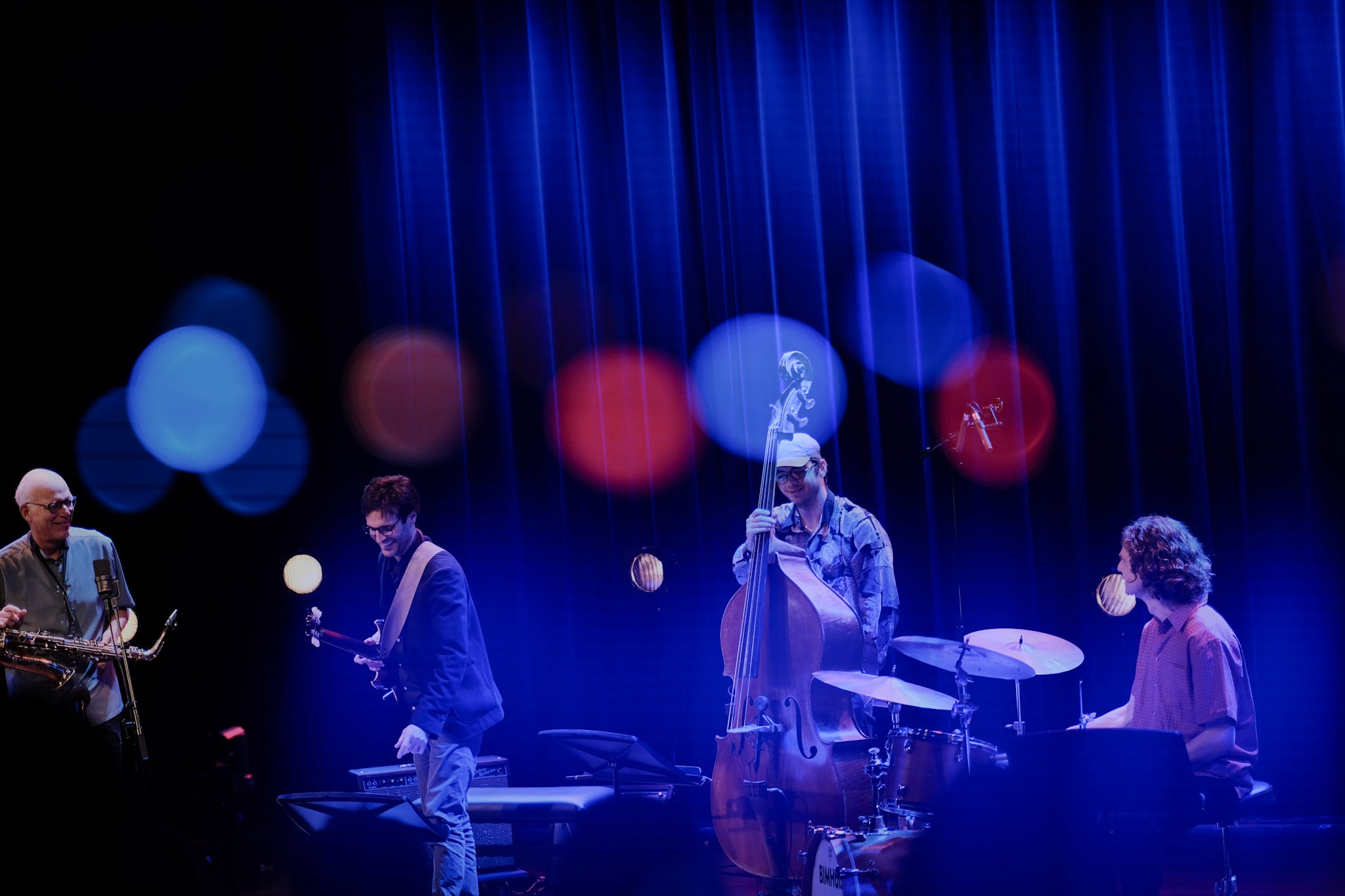
Moore is one of the greatest living melodists and in that regard he’s never limited himself to jazz language as a composer. Years ago he had a trio called Jewels & Binoculars with drummer Michael Vatcher and bassist Lindsey Horner, which devoted itself to interpreting the music of Bob Dylan. I can’t help but think of that band when I hear some of these Moore tunes, many of which also tap into Americana with a depth of understanding, empathy, and presence that’s exceedingly uncommon in jazz. I’d even say the only musician on par with Moore in that regard is Bill Frisell, who tends to be the poster boy for such an ethos. I can certainly hear a Frisell influence in Celano’s gorgeous playing, although the latter generally opts for a cleaner, effects-free sound. Still, nobody would confuse Moore’s quartet with a Frisell project. Moore’s music extends in other directions, too, such as the calypso flavor that adds irresistible buoyancy to “Project 88,” a tune he wrote in route to a birthday celebration for his father, one of the tidbits his pithy annotations for each tune convey. Check it out below. He doesn’t compose with elaborate schemes in mind, but instead jots down the catchy melodies that seem to be forever dancing around in his head. He writes that “Buon Giorono” is “a short story about daily life, with repeats, ups and downs, something we all experience,” and the Italianate feel, which wouldn’t be out of a place in an old Fellini film, is elliptical enough to feel universal, allowing the listener to apply their own particulars to the form.
There’s never anything flashy going on in the band, but the unity of his group is unmistakable, swinging with a elasticity and near weightlessness. “Brethren” is an old Available Jelly theme, subtly steeped in gospel and South African jazz verities—wouldn’t be surprised if the title was a wink to Chris McGregor’s Brotherhood of Brass—with Govreen and Govaert connecting with incredible grace and lift. On the other hand, there’s a delicate engagement with sustained tension and low-key atmospherics while Moore uncorks a beautifully sorrowful clarinet solo on “Spooky.” Celano brings an appealing twang to his solo on “Top Secret,” an invention on the old standard “Secret Love,” with a cool percolating groove from the rhythm section. If anyone needs proof that Moore is still a sonic explorer check out the spindly unison patterns he plays with Cellano on “Klee,” a piece influenced by some of the painter’s work. The whole thing is a deep pleasure, transmitting a clear vision with crystalline directness. Sadly, this is the kind of band that doesn’t play too much, let alone outside of the Netherlands, a depressingly common situation with infrastructure that can no longer afford much chance-taking. But you don’t have to sleep on this.
Inside Julio Lopez, Art Outsider
I know almost nothing about Julio Lopez apart from what’s revealed in a recent interview with Brad Rose over at Foxy Digitalis, a conversation I found after being knocked out by Cloud Unknowing, a tape recently released on Lobby Art. The artist seems to live around Tuscon, Arizona, but both the interview and the liner notes to the tape don’t bother with such quotidian details. I’m grateful to Sam Wenc for sharing the music with me, which arrived like a bolt out of the blue, serving up a highly unlikely blend of pleasure points. The album contains six tracks which touch upon Irish fiddle music, bossa nova, folk-rock, blues, and experiments in just intonation, and had I simply read that description rather than hearing the music I might’ve passed it by. Beforehand I would have thought those things didn’t make sense together, until I heard Lopez prove me wrong. In the interview Lopez mentions “studying voice and composition with Jessika Kenney, and also Irish ‘sean nós’ singing with Dáithí Sproule,” but otherwise there’s little mention of a musical community. Lopez comes across as an autodidact with a deep curiosity, and their embrace of such a wide array of stylistic interests seem fed through a singular sensibility defied the logic my ears brought to that first encounter. Both the repertoire and the disparate traditions from which the songs were taken feel utterly disjointed on paper, but not when Lopez inhabits them.
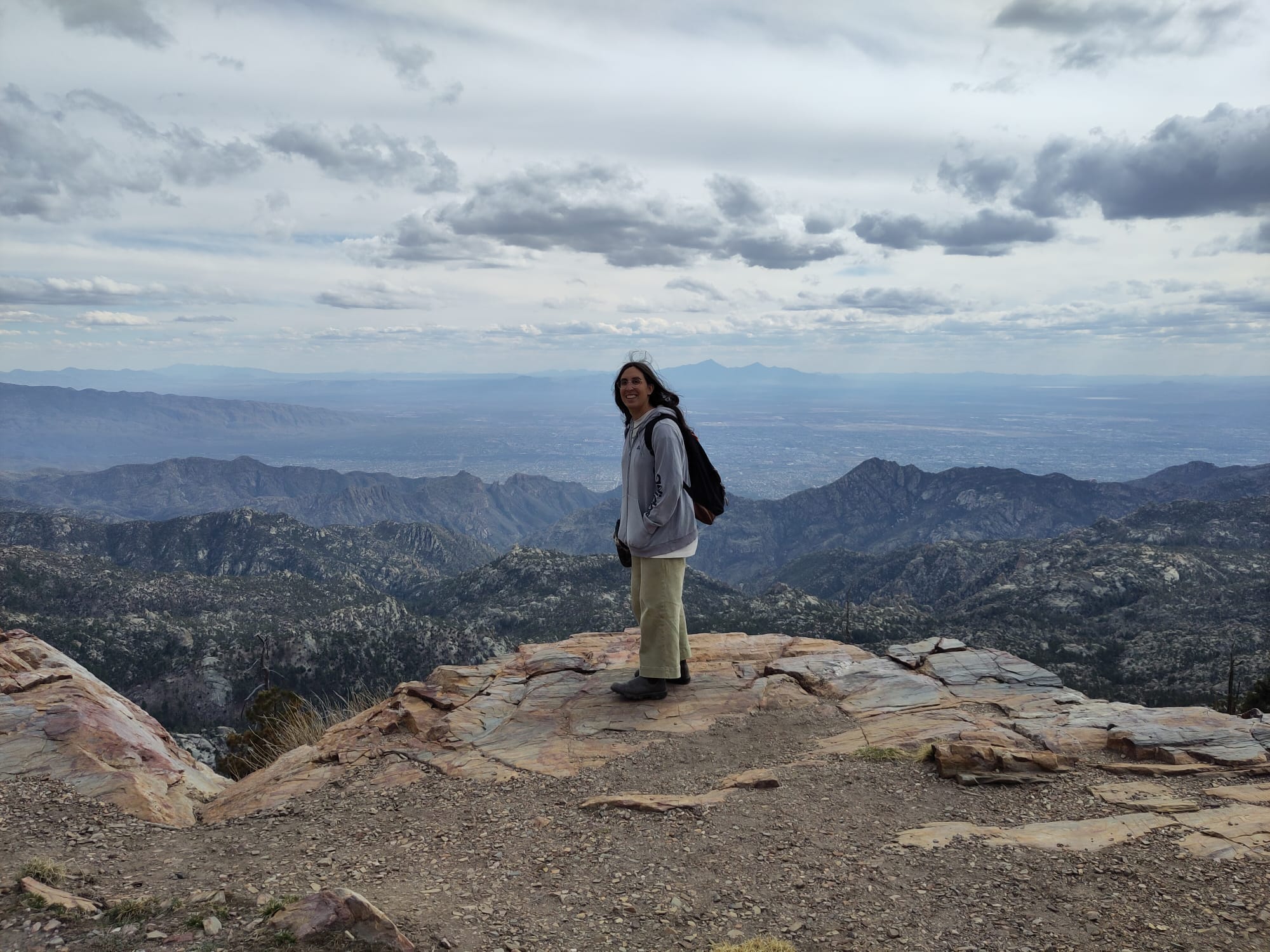
The album opens with a relatively popular 17th century Irish love song “An Raibh tú ag an gCarraig,” which Lopez plays as an instrumental violin piece. The room sound of the recording is gorgeous, and it’s masterfully paired with the patient phrasing and harmonic richness of his playing. I can hear Irish roots, but Lopez embraces a wider sound world that masterfully connects with the piece that follows, a setting of the 1577 San Juan de la Cruz poem “En una Noche Oscura” over sparse, droning violin chords. Check it out below. The song unspools for more than eleven gorgeous minutes, Lopez’s voice occupying the sound field with an utterly preternatural sense of belonging. There’s a creamy austerity to their voice that reminds me of Jeb Loy Nichols a bit, but the hushed phrasing owes a bigger debt to João Gilberto, an influence made plain by the choice to perform “Eclipse,”a tune written in 1943 by the great Cuban composer and singer Margarita Lecuona that the bossa nova legend later made his own. It’s a knockout. Lopez also reimagines the Judee Sill tune “Crayon Angels,” recasting it with violin scrapes and tangles over a synthesizer patterns in 5-limit just intonation. Lopez wrote the words and music for “si la tierra suspire,” a stripped-down bi-lingual ballad in which his close-miked singing—transmitted with a nasality that’s pure João—is accompanied by spry acoustic guitar arpeggios shaded by violin pizz and rhythms articulated with shakers, maracas, and “mesquite pods from a tree by my house.” The closing work is a radical revamp of “I Will Do My Last Singing in This Land,” a late gem from gospel-blues great Reverend Gary Davis. Lopez collages minimal violin harmonics and an electronic carpet “made from re-tuning static radio frequencies/electrical interference in the house I lived in.” The focal point is their singing, which slows down the tune, transforming into a tender lament.
I think it’s instructive to quote at length from the liner notes Lopes wrote:
i made these recordings as part of a personal process, working through ideas of lineage, diaspora, appropriation, spirit, and song in my life. i was thinking about how musical and spiritual knowledge can move disguised within colonial-religious structures of language, in clouded movements that serve as veils for acts of inner transfiguration, as well as acts of resistance, transforming the outer structures that would frame them. “secret histories of secrets” in christian mysticism, new age theology, harmonics, “folk music” and its renewals, musics of the spheres, movements in the earth. trans interiority. this kind of interfaith essence and outsider discernment, oriented towards the beloved, “always already” intertwined with difference, with repression and resistance, loss and renewal, devotion and dissent.
The record was brought to the attention of Lobby Art’s Wenc by scholar Matt Marble, the man behind the sui generis website American Museum of Paramusicology. Lopez has seemingly developed a bespoke practice where his various strands of research have been adapted and assimilated into something strikingly beautiful and original in its unwieldy admixture. I can’t wait for more.
Propan’s Sonic Garden
Propan, the Norwegian duo of singers Natali Abrahmsen Garner and Ina Sangstuen, has been producing its slippery, unusually hushed, elusive brand of experimental music for 15 years now. Both singers are deeply connected to Norway’s jazz and improvised music community, but their own work reflects twisted pop sensibilities. They never play it straight, whether it’s the unsettling darkness and submerged liquidity of Garner’s quartet Delish or Sangstuen’s art-pop duo with guitarist Christian Winther. I’ve always struggled to get a firm handle on Propan’s work; some of its recordings have connected with me, while others, not so much. In Nevertheless, its unpredictability and sonic imagination—essentially building a sound world all its own—has always kept me interested. IThat engagement pays off with an album like the recent Flutter (Pluritone), a collaboration with flutist Johanna Orellana and saxophonist Harald Lassen that frames the duo’s peculiar, usually wordless vocal practice with stunning effectiveness. (In March Propan released a cool collaborative project with vocalist Stina Stjern called Shrew, but the partnership lost some of that duo’s special sauce). The duo’s fragile warbling always feels introspective and intimate, typically garnished by simpatico electronic gurgles, drones, and curlicues, but as far as I can tell the new record largely dispenses with the electronics apart from some post-production, relying exclusively on human breaths, whether vocalic or fed through metal tubing.
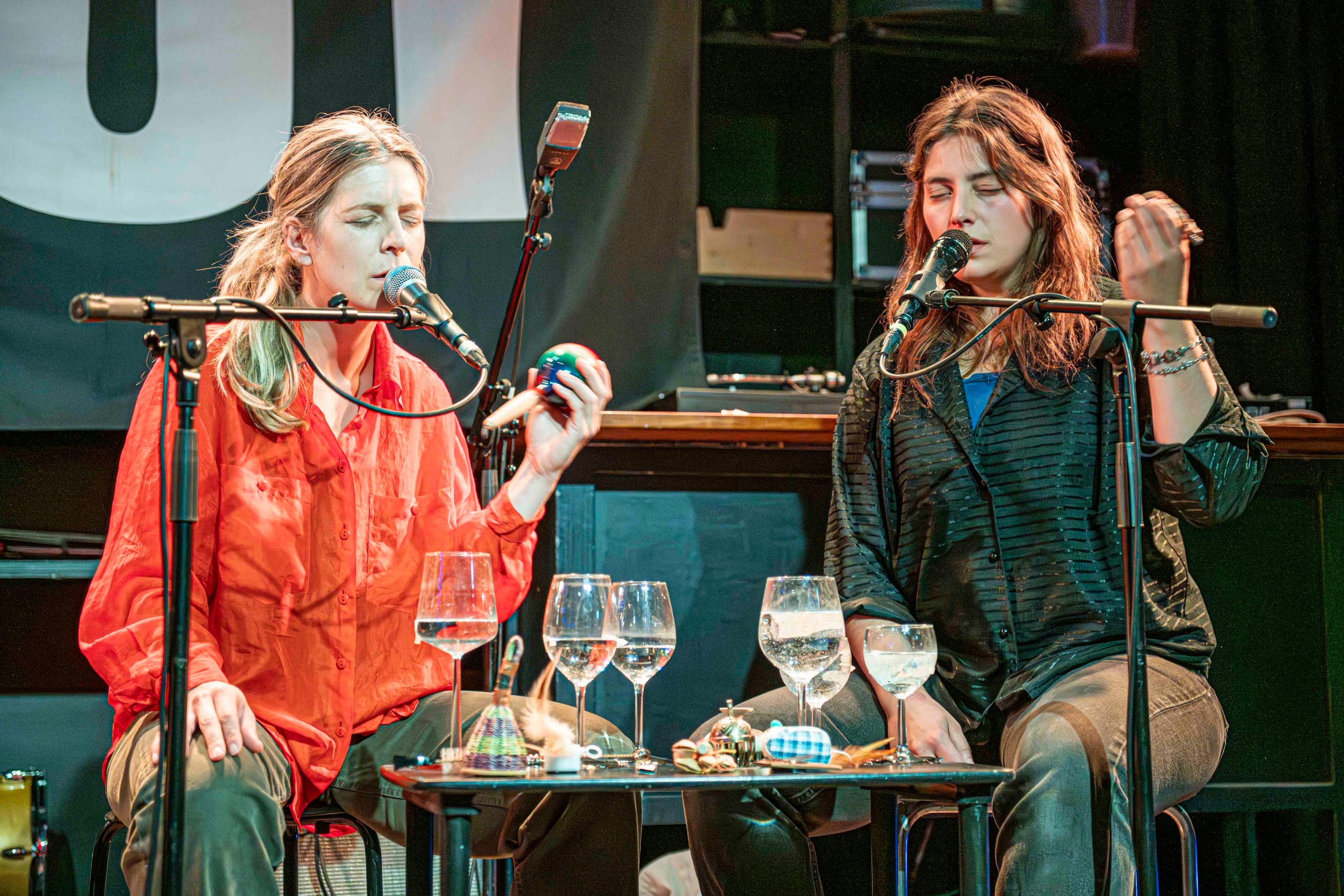
The project positions the two duos in shifting parallels, and parsing those sonic lattices is nearly as engaging as just basking in the output. On the opening track “Sirene” there’s a quivering dance between whistling overtones and human whistles, fluttering vocals and woodwind trills, a kind of space-setting that magically sets the tone for what follows. On “Murd” the two singers articulate a darting unison melody around which the winds harmonize and drop rhythmic accents well above and below the range staked by the singers. “Moon Over Sandy Hill” opens with translucent layers of long tones from the winds, and then a weird cubism takes over with the singers locking into a kind of husky, rhythmic breathing pattern. I assume the shifting reed textures were shaped in post-production, but it still feels totally organic. You can hear it below. Here and there rustic, somber melodies enter the picture, usually submerged within serene chords from the winds duo to suggest a kind of homemade chamber music. There’s some top-notch wine glass playing on “Eerie Eerie,” a feast of warped sonic beating, while “The Hum” feels like a solemn hymn in which the sturdy rising-and-falling vocal tones serve as a backbone for the winds, which puncture the calm with masterfully placed unpitched breaths and spit-flecked textures. I have a low tolerance for vocal fry, but it definitely works on the closing piece “Floating Wind on Ocean.” From the beginning Propan has seemed intent on carving out an imaginary universe all its own, and while it’s impossible not to give Orellana and Lassen credit for fleshing out the contrapuntal arrangements here, it’s the most convincing, fully realized thing I’ve yet to encounter from Garner and Sangstuen.
Recommended Shows in Berlin This Week
September 1: Stefan Voglsinger,snare drum resonator, electronics, and Bella Comsom, electronics/lighting, clarinet, voice; Marc Ducret, guitar, Uli Kempendorff, tenor saxophone, clarinet, Peter Bruun, drums, and Jonas Westergaard, double bass, 8 PM Richten25, Gerichtstraße 25, 13347 Berlin
September 1: Karen Ng, alto saxophone, Mauricio Takara, drums, electronics, Matthias Koole, electric guitar, and Henrik Munkeby Nørstebø, trombone, electronics, 8:30 PM, Kühlspot Social Club, Lehderstrasse 74-79, 13086 Berlin
September 2: Cansu Tanrıkulu, voice, gabby fluke-mogul, violin, Arne Braun, guitar, and Felix Henkelhausen, double bass, 8:30 PM, Luisenkirche, Gierkeplatz 4, 10585 Berlin
September 2: Marc Ducret, guitar, Uli Kempendorff, tenor saxophone, clarinet, Peter Bruun, drums, Jonas Westergaard, double bass, and Søren Kjærgaard, piano, 8:30 PM, Kühlspot Social Club, Lehderstrasse 74-79, 13086 Berlin
September 3: Praed (Raed Yassin, vocals, synthesizer, sampling, and Paed Conca, clarinet, electric bass, electronics), 7:30 PM, Haus der Kulturen der Welt, John-Foster-Dulles-Allee 10, 10557 Berlin
September 3: Karen Ng, saxophone, electronics; Vertical Movements, feedback, multichannel diffusion; Antti Virtaranta, bass, electronics, 8 PM, Richten25, Gerichtstraße 25, 13347 Berlin
September 3: The Hobknobs, 8 PM, Schokoladen, Ackerstraße 169, 10115 Berlin
September 3: Marc Ducret, guitar, Uli Kempendorff, tenor saxophone, clarinet, Peter Bruun, drums, Jonas Westergaard, double bass, and Søren Kjærgaard, piano, 8:30 PM, Kühlspot Social Club, Lehderstrasse 74-79, 13086 Berlin
September 4: Vinyl Reduction (Sofia Borges, Stefan Roigk, Ignaz Schick, and Eliad Wagner, turntables, prepared vinyl), 8:30 PM, Morphine Raum, Köpenicker Straße 147, 10997 Berlin (Hinterhof 1. Etage)
September 4: gabby fluke-mogul, violin, and Andrea Parkins, accordion, objects, electronics; James Banner, double bass, 8:30 PM, Sowieso, Weisestraße 24, 12049 Berlin
September 4: Luca Curcio's La Bomba (Asger Nissen, alto saxophone, Francesco Bigoni, tenor saxophone, Igor Osypov, electric guitar, Luca Curcio, bass, andSimon Olderskog Albertsen, drums), 8:30 PM, Donau115, Donaustraße 115, 12043 Berlin
September 5: Chris Jonas Ensemble (Silke Eberhard, alto saxophone, Nikolaus Neuser, trumpet, Matthias Müller, trombone, Dan Peter Sundland, electric bass, Jan Roder, double bass, Felix Astor, drums, and Chris Jonas, saxophones), 7:30 PM, Club Polonischer Versager, Ackerstraße 169, 10115 Berlin
September 5: Lina Allemano, trumpet, Karen Ng, alto saxophone, Felix Henkelhausen, double bass, and Marius Wankel, drums, 8:30 PM, Sowieso, Weisestraße 24, 12049 Berlin
September 5: Vinyl Reduction (Sofia Borges, Stefan Roigk, Ignaz Schick, and Eliad Wagner, turntables, prepared vinyl), 8:30 PM, Morphine Raum, Köpenicker Straße 147, 10997 Berlin (Hinterhof 1. Etage)
September 6: London Symphony Orchestra with Sir Antonio Pappano, conductor, and Eivind Ringstad, viola, play Sofia Gubaidulina and Anton Bruckner, 8 PM, Philharmonie Berlin, Großer Saal, Herbert-von-Karajan-Straße 1, 10785 Berlin
September 6: The Hanged One (Camila Nebbia, tenor saxophone, Julia Biłat, cello, Arne Braun, guitar, Andres Marino, electronics, Vinicius Cajado, double bass, and Lukas Akintaya, drums); Pitch Shifting Group (Grgur Savić, saxophones, electronics, Richard Scott, modular synthesizer, Sanja Star, live animation, and Samuel Hall, drums, percussion, electronics), 8 PM, House of Music, Revalerstr. 99, 10245 Berlin
Michael Moore is indeed an under appreciated master!