
Experimental Excavations
Alasdair Roberts, Fredrik Rasten, Quinie, Jasmine Guffond, Violeta Garcia, Lucio Capece

The Radical Traditionalism of Alasdair Roberts
From album to album Scottish folksinger Alasdair Roberts reveals a panoply of interests and influences, seamlessly moving from the most unadorned interpretations of the most traditional of material to more experimental settings. I’ve written about his transformation from indie rocker in the Will Oldham-steeped Appendix Out to one of his homeland’s most skilled, knowledgeable, and devoted folk musicians, but it bears repeating. Lots of young musicians get caught up in new obsessions, but observing how Roberts fully inhabited his shift feels singular. His ascent from passionate novice to flat-out master has been remarkable. Of course, he’s continued to jigger his hard-core traditionalism in all kinds of different ways.
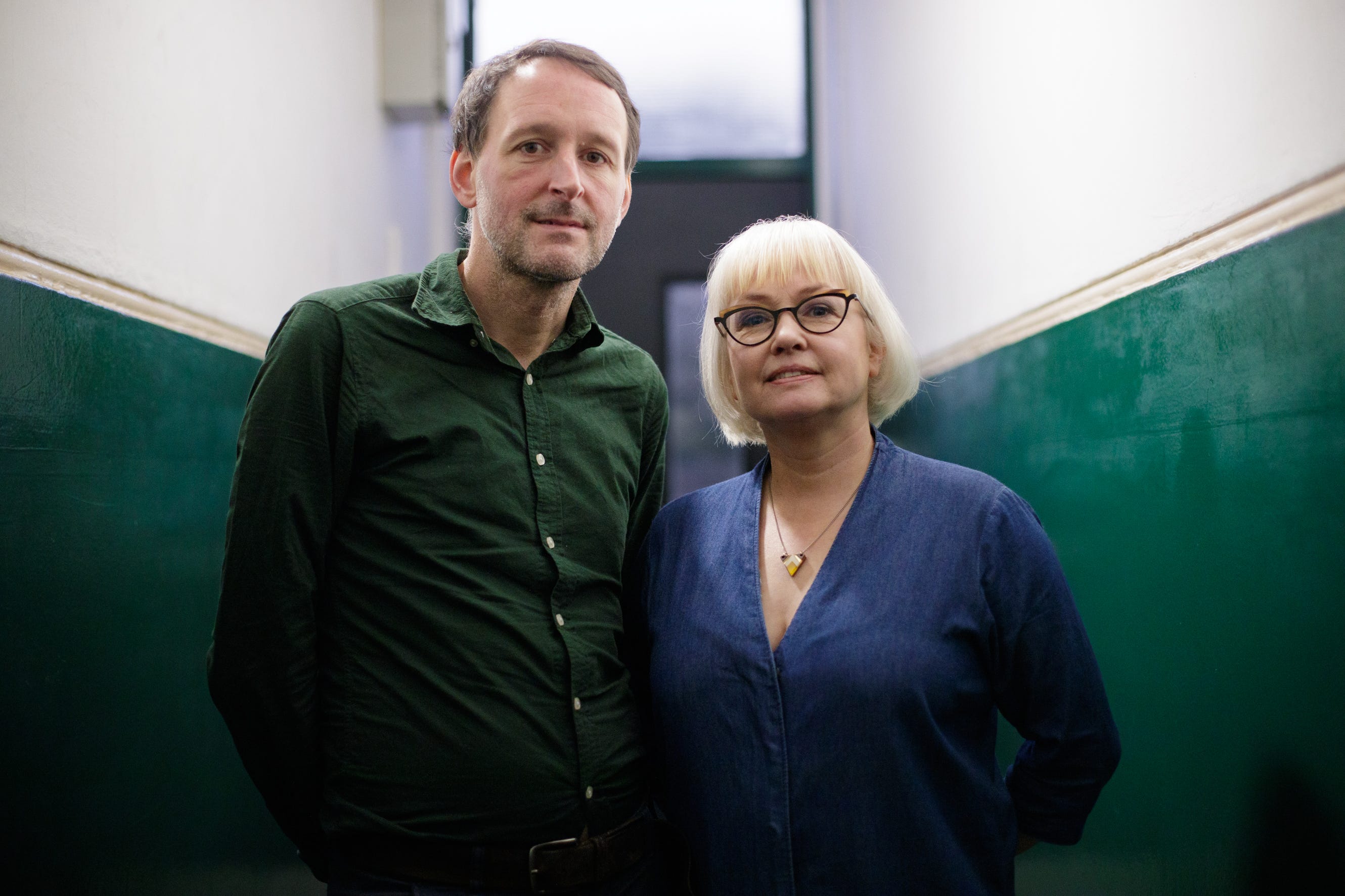
Earlier this year he released Remembered in Exile: Songs and Ballads From Nova Scotia (Drag City), his second collaborative album with Màiri Morrison, a Gaelic singer from the Isle of Lewis. The project was instigated by Pete Johnson, a musician from Nova Scotia. While the material is technically from a different continent, there is plenty of aesthetic and historical overlap in the Gaelic material, such as the closing track “The Soldier’s Adieu,” a setting of a work by Scottish poet Robert Tannahill. All of the songs are traditional, but the excellent cast working behind them, led by bassist Pete Johnston—who wrote the arrangements with the two singers—bring a crisp folk-rock attack a la Fairport Convention to the arrangements. I know almost nothing about Nova Scotian folk music, but their harmonizing requires little background info. In classic folk practice, the liner notes detail the provenance of the songs, all of which were drawn from three volumes of songs collected by Helen Creighton as well as the 1962 Folkways album Maritime Folk Songs. The detailed information is part of the essential research that’s part of being a folksinger, learning the context and development of the material. Below you can hear the track “The Bonny House of Airie.”
Back in 2021 Roberts released a much different collaboration with The Old Fabled River (Drag City), with an ensemble called Völvur. When it was released I was just starting to get my head around the Norwegian Motvind crew, a label, festival, and group of musicians rooted in improvised music while extending to embrace all manner of traditional sounds from around the globe. The project was initiated by the sublime violinist Hans K. Kjorstad, working with Roberts on a mix of original and traditional tunes. The remarkable, quietly versatile band—which also includes saxophonist and singer Marthe Lea, reedist Andreas Røysum, Swedish bassist Egil Kalman, drummer Jan-Martin Gismervik, and guitarist Fredrik Rasten—joined the singer in moving fluidly within and outside folk tradition, although the various detours and experiments were all achieved with stunning fluidity and subtlety. The two reedists blend seamlessly within the string-driven sound, unleashing delicate lines that lilt and wriggle, beautifully caressing arrangements built around the gorgeous, emotion-streaked warble of Roberts. I loved the record from the start, but when it was released I failed to notice much of the rich detail and gauzy ornamentation as well as the more sound-oriented flourishes, such as the masterfully scratchy, unpitched scrapes and whinnies of Kjortstad’s violin behind the beautiful singing of Lea, who handles a pair of Norwegian folk tunes. Below you can hear evidence of Roberts’ openness on the closing track, “Nu solen går ned,” where Roberts defers to Lea on the album’s most experimental track, where angular guitars create tendrils of overtones and oddly tuned harmonies, with greater space given to the various instrumentalists.
While it was Kjorstad who started the project, in recent years it has been Rasten that pursued ongoing work with Roberts through a stunning duo project, which makes its debut Berlin performance on Wednesday, July 23 at Petersburg Art Space. Regular readers of this newsletter certainly know of my admiration for Rasten’s music, which I also wrote about in a short feature published in the August issue of the Wire. While he’s closely aligned with Berlin’s Harmonic Space Orchestra and sound-oriented improv projects like Oker and Pip, he also possesses an abiding love for British folk traditions.
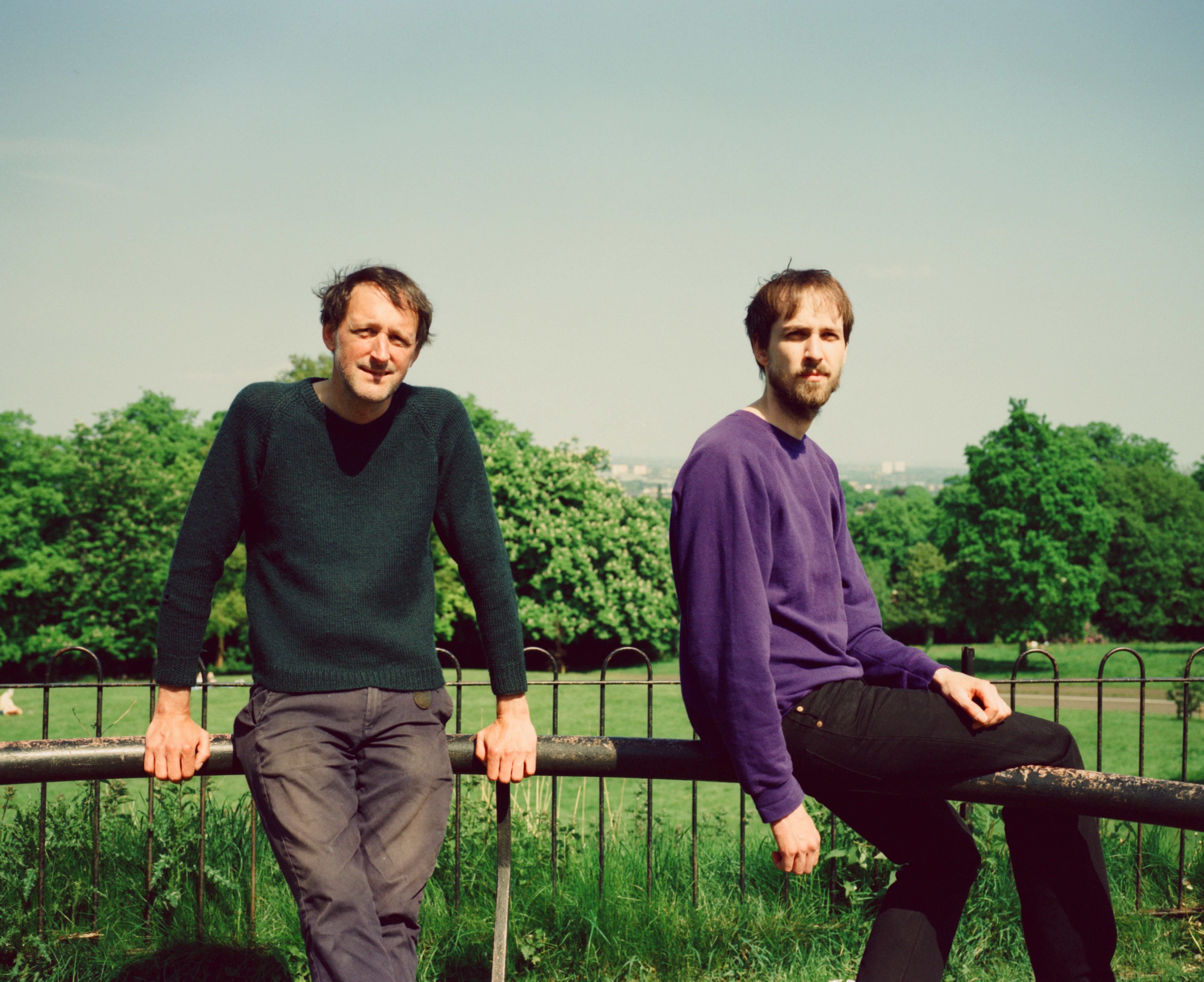
I was lucky enough to catch a performance by them last summer at the Motvind Festival in remote Rollag, Norway. It was stunning, as the pair sculpted an otherworldly mélange of guitar interplay, including some justly intoned harmonies and electronic drones to support gorgeous singing. Roberts was the lead voice, but Rasten’s harmonies provided something unexpectedly deep. The duo has yet to release any music, but they’ve recorded material I’ve been lucky enough to hear and it’s unbelievably strong, embracing an extended format that extends the ballad tradition to epic proportions, as well as offering enhanced clarity on how powerful the pair’s vocal harmonies are. On the new album with Morrison, Roberts interprets an old tune called “Hind Horn” with a concise, lively folk-rock arrangement, but when he plays it with Rasten it’s stretched into a 15-minute excursion rippling with clangorous overtones at a tempo that feels more like a chant than a song. It underlines how elastic folk songs can be, both lyrically and musically.
Quinie: More Scottish Adventurism
My recent re-immersion into the music of Roberts has been complemented by belatedly digging into Forefowk, Mind Me (Upset the Rhythm), the remarkable new album by another Scottish folksinger named Quinie (aka Josie Valley). I randomly discovered the singer’s excellent 2018 album Buckie Prins (GLARC) in 2018 while paging through the Café Oto website. I loved it, and checked out a couple of subsequent recordings, but the new album has riveted me. Quinie is self-taught, part of a loose network of artisans who apply a decidedly more rough-hewn, experimental ethos to the Scottish folk without an ounce of disrespect. In the press materials for the recording she says, “We learn from each other and build community, and we are not afraid to make a shonky-looking tape or CD. The difference is perhaps in intent and method—I take the ‘do what you like’ attitude of DIY and combine it with the ‘cherish what has come before’ values of the folk tradition. I see them as complementary rather than contradictory.”

That principle ripples through the music, much of which is sung a cappella like Quinie’s primary influences, the late folksingers Sheila Stewart and Lizzie Higgins. The bulk of the tunes are sung in Scots, one of Scotland’s three official languages along with Gaelic and English. Before falling under the album’s spell I’d never heard of either of them, but, naturally, I’ve gladly rectified that situation. On other songs Quinie is support by the richly droning Uillean pipes of Harry Górsky-Brown or the sometimes strident, sometimes jaunty viola of Ailbhe Nic Oireachtaigh, with additional contributions by Oliver Pitt and Stevie Jones. The album is bracing in the best way, marked by viscerally direct singing that’s somehow both raw and precise. This crew seems to be putting its own spin on the kind of research of Roberts, embracing a DIY sensibility that melds beautifully with this traditional music. I feel like I’m just beginning to get a grip on the music, but each time I listen my attraction is strengthened, my interest further piqued. If only there was more time to the day! Below you can check out a tune called “Sae Slight a Thing.” Like Roberts, she includes annotation detailing the song’s origins:
The melody for this is based on Port na bPúcai played on the Uilleann pipes. There are various stories behind the tune. It was heard by fishermen who stayed overnight on Inis Mhic Fhaolain in the Blasket Islands (off the coast of County Kerry). Coming from the mist, they described it as the sound of the wind blowing across the islands, or whale song. The words are based on Marion Angus' poem A Small Thing, first published in The Turn of the Day (The Porpoise Press, 1931).
Don’t Insult Jasmine Guffond’s Music With the “a” Word
In a period awash in toothless and usually meaningless ambient music—where much of the work seems to serve the same anodyne yet capitalist purpose of the “lean back” aesthetic of Spotify—Jasmine Guffond deliberately embraces the term “muzak” on her latest album, Muzak for the Encouragement of Unproductivity (Line). The music was created as a sound installation for the Errant Sound’s 2024 exhibition Dystopia Sound Art Biennale at HAUNT here in Berlin. Guffond pointedly embraces the idea of a faceless music originally designed to enhance worker productivity vis a vis the rigorously engineered efficiency of Amazon fulfillment centers, but her work is neither muzak nor ambient music—two products that seem almost interchangeable these days. In fact, it’s one of the most compelling, spooky things I’ve ever heard from the Australian expat composer, who performs on Thursday, July 24 on a Kiezsalon double bill at the Kleiner Wasserspeicher in Prenzlauer Berg.
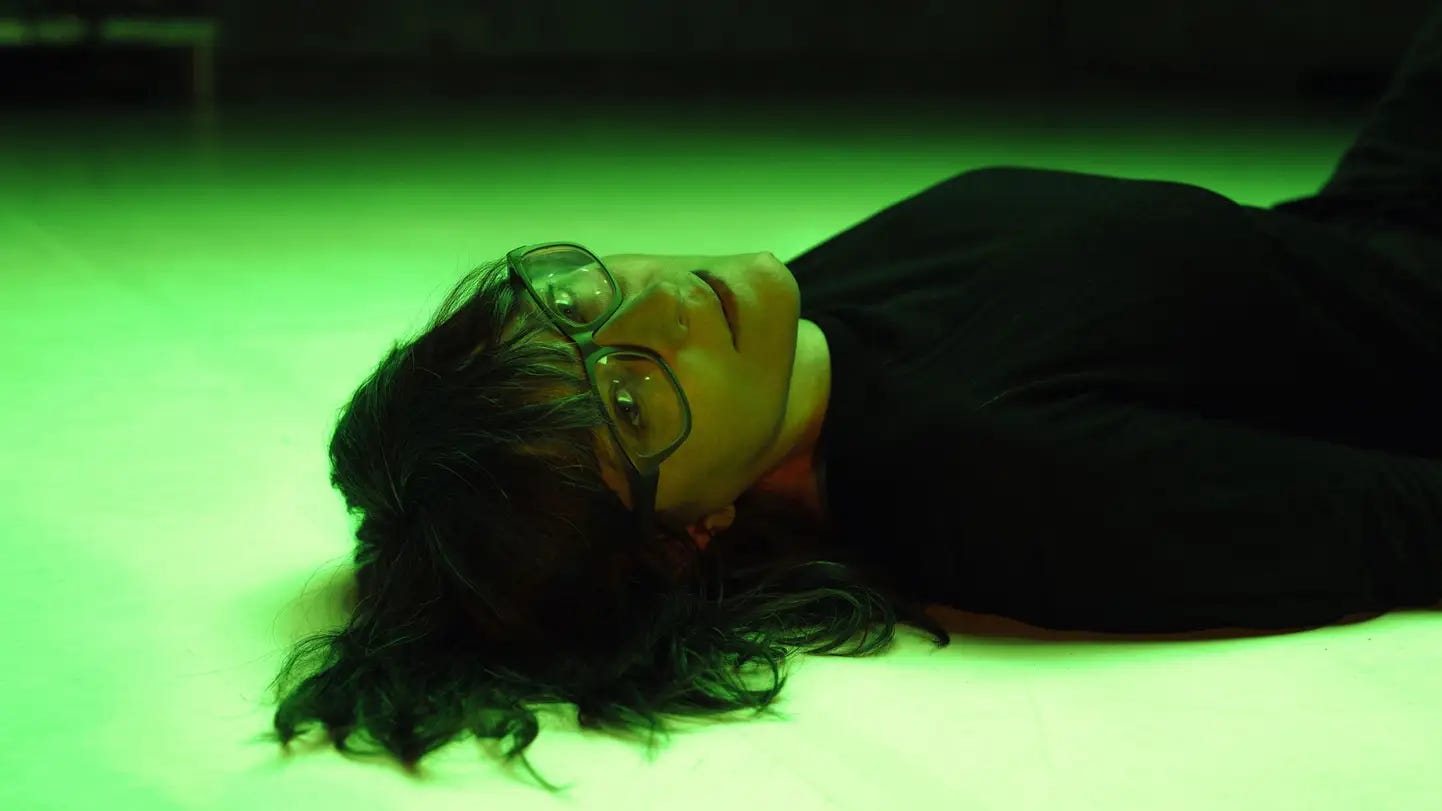
To my ears Guffond has created ambient music of unusual depth and beauty, bending her own electronics with extended performances by Hilary Jeffrey on trumpet and tuba and Kai Fagaschinski on clarinet. The slow-moving melodies, transformed by reverb modeled on the acoustics of a specific Amazon fulfillment center in Berlin, is decidedly muted in its articulation, but while the edges may have been softened and blurred, the shape of the lines is consistently beautiful, with a genuine human touch behind the sounds. While the composer’s conceptual frame is fascinating and rigorous, it’s hardly essential to appreciating the music. The extended brass lines take on an almost creamy timbre, as discrete melody lines seems to swirl and crash into themselves, extended and glowing in Guffond’s electronic enhancements and deft editing, but at the same time the work is undercut by an unsettling air of paranoia and surveillance, a darkness that brings greater depth and complexity to the potentially soothing drift. Even on the second part of the three-movement album, eight minutes of overlapping, often tonally wobbly keyboard chords, the music walks the razor’s edge between subdued terror and chill ambience, but the collisions inject an air of disruption that prevents it from devolving into weightlessness. Below you can hear the third part of the album, where the lines of Fagaschinski—which sound less electronically-treated than the other elements here— and Jeffery engage in endless variation, interwoven, tangled, and pulled apart with a contrapuntal beauty that holds the tension at bay. I imagine the Kleiner Wasserspeicher will enhance the heavy reverb the piece deploys, and for this performance she’ll be joined by Fagaschinski, who brings out exquisite nuances in the material.
Argentine Expat Exhibition
On Wednesday, July 23 Galiläakirche will host a double bill featuring two Argentine expats living in Europe. Cellist Violeta Garcia, who splits time between Barcelona, Bern, and her native Buenos Aires, recently released IN/OUT (Bongo Joe), a collection of pieces recorded in a giant water reserve in Geneva, Switzerland, applying thick natural reverb to a series of meditative solo pieces. She’s long worked with more ambient aesthetics, and while I’m partial to the drier, more visceral, improv-driven approach she’s displayed in a duo with saxophonist Chris Pitsiokos and on her earlier solo album Fobia (Relative Pitch), it’s rewarding to hear her confront the space’s acoustic qualities. The minimalist pieces toggle between bowed drones and prickly pizzicato, but the reverberance of the space mutes any sharp edges or heavy dissonance, instead bathing every gesture with clouds of resonance. Still, despite embracing microtonality, extended techniques, and alternate tunings the music here often drifts into anonymity, the richest of harmonies washed-out rather than enhanced by the acoustics of the space, veering into ordinary ambient aesthetics rather than pushing psychoacoustics. Below you can listen to “OUT II.” It’s probably my favorite piece, but too much of the album tends to float and drift, eliding deep exploration in favor of a passive cinematic wash. It’s lovely, but I wish it dug in more.
Sharing the bill is long-time Berlin resident Lucio Capece, who will present a quadraphonic version of his piece “New Hemispheres Ratios,” a work in just intonation featuring multi-channel playback of the composer’s own clarinet, the cello of Judith Hamann, and a mixture of saw and sine tones. You can hear a truncated version of the piece taken from a 2022 benefit compilation called The Border, below.
Capece recently released albums from two very different projects on the North Carolina label Erotodox, including From Scratch by his New Discantus Quintet. The music also deals with tuning systems, alternating sparse, tightly-coiled chamber music tuned in the same frequency of a series of field recordings made around Europe where a microphone was placed within a series of cardboard tubes of varied length. The ensemble—percussionist Tatiana Heuman, double bassist Jon Heilbron, tenor saxophonist Gerard Lebik, and keyboardist Quentin Tomimieri complementing the composer’s soprano saxophone—interpret eight beautifully measured movements, all of which allow individual voices to emerge across lean but elegant intervals. The music advances slowly and calmly, and while everyone gets space to improvise, I find that the grainy bowing of Heilbron and the beautifully incongruous jazz-flavored solos and accents by Tolimieri make the strongest impact. Below you can hear the piece “Change in one property depends on changes in other properties,” where beneath the two-tone motif is a lot of satisfying scampering between bass, piano, and drums. I’ve been less taken with Capece’s other new album I Lost Myself in Finding You, a collaboration with vocalist Rasha Ragab and stone harp player Christoph Nicolaus built around texts by ancient Sufi poet and mystic Rabi’a Al-‘Adawiyya. Ragab’s sung and spoken delivery is interspersed with sustained tones produced by the other pair, and while the various elements are nice, ultimately it doesn’t cohere for me.
Recommended Shows in Berlin This Week
July 22: Uproot (Ganesh Anandan, shruti stick, microtonal metallophones, percussion, Kriton Beyer, harmonium, objects, andDaniel Fishkin, daxophone); Weston Olencki plays “Foggy Mountain Breakdown,” 8 PM, Zwitscher Maschine, Potsdamer Str. 161, 10783 Berlin
July 23: Violeta Garcia, cello; Lucio Capece, electronics, 8 PM, Galiläakirche, Rigaer Str. 9, 10247 Berlin
July 23: Sullivan Fortner, piano, John Clayton, double bass, and Jeff Hamilton, drums, play the music of Oscar Peterson, 9 PM, Zig-Zag Jazz Club, Hauptstraße 89, 12159 Berlin
July 23: Alasdair Roberts & Fredrik Rasten; Joey Gavin, 8 PM, Petersburg Art Space, Kaiserin-Augusta-Allee 101, 10553 Berlin, entrance in the courtyard, Aufgang II, 1 OG
July 24: Jasmine Guffond; Jason Kunwar, 8 PM, Kleiner Wasserspeicher, Diedenhofer Strasse 20, 10405 Berlin
July 24: Ether Drift (Liz Allbee, trumpet, objects, Torsten Papenheim, guitar, objects, and Samuel Hall,percussion, electronics); Olaf Rupp, guitar, Isabel Rößler, double bass, and Samuel Hall, drums, 8 PM, Richten25, Gerichtstraße 25, 13347 Berlin
July 25: Mourning [A] BLKstar; Lollise, 7 PM, Schlueterhof, Humboldt Forum, Museumsinsel, 10178 Berlin
July 25: Quartetto Pazzo (Christof Thewes, trombone, Rudi Mahall, clarinets, José Davila, tuba, and Martial Frenzel, drums), 8 PM, Terzo Mondo, Grolmanstraße 28, 10623 Berlin
July 26: Big Bubu (Paul Engelmann,alto sax, Rudi Mahall, clarinet, bass clarinet, tenor sax, Christof Thewes, trombone, Ben Lehmann, double bass, and Martial Frenzel, drums); Tuba Vibes Project (Christof Griese, tenor sax, saxello, flute, Franz Bauer, vibraphone, Stefan Gocht, tuba, and Leon Griese, drums), 4 PM, Jazz em Kaisersteg, Alte Kita, Hasselwerderstraße 22A, 12439 Berlin
July 27: Hermeto Pascoal e Grupo; Jota.Pê; Jéssica Gaspar; Letrux: Yùon; Patricktor4, 4 PM, Psicotrópicos Festival, Neue Nationalgalerie, Potsdamer Str. 50, 10785 Berlin