
Exhale, Slowly
Guus Janssen, Vilhelm Bromander & Fredrik Rasten

As mentioned in last week’s newsletter I’m in glorious Lisbon for Jazz em Agosto, one of my favorite jazz festivals, so this week’s edition is not only brief, but the recommended shows list covers two weeks rather than one. Sitting in a Lisbon hotel room is a stupid way to visit this city and, as usual, the musical happenings in Berlin are scant, so I’m taking next week off entirely. Of course, everything will change again very soon, and we’ll be flooded with music.
The Old Dutch Masters
Still, I figured I’d shine some light on two of my favorite records this year before going silent. Regular readers surely know I maintain an ardor for a certain strain of Dutch jazz, that mix of love and irreverence for jazz tradition served with a healthy dollop of self-inflicted chaos that was laid back in the 1960s by Misha Mengelberg and Han Bennink’s ICP Orchestra and the deep community that blossomed and fought amongst itself in its wake. In general, that aesthetic world has largely vanished, but some of the old-school heavies carry on, whether our beloved Tobias Delius in Berlin or folks like Ab Baars, Eric Boeren, Mary Oliver, Michael Moore, and Bennink himself in Amsterdam. There are some younger inheritors like Oscar Jan Hoogland revamping the aesthetic these days, but by and large the cosmopolitan Amsterdam scene has other concerns.
When Mengelberg died in 2017 fellow pianist and composer Guus Janssen dared to take his spot in ICP Orchestra, a daunting role to fill. While Misha was a lovable contrarian who provided much of the group’s creative internal dissension, Janssen is a more bookish, standoffish figure. He shares Mengelberg’s love for vintage bebop, with a particular fancy for the Tristano school, and he’s also a serious contemporary music composer, but in ICP he generally accepts a task without ruffling feathers. Every ICP recording and performance I’ve heard with him since has been excellent, and here and there his durable tunes have made it in the group’s repertoire.
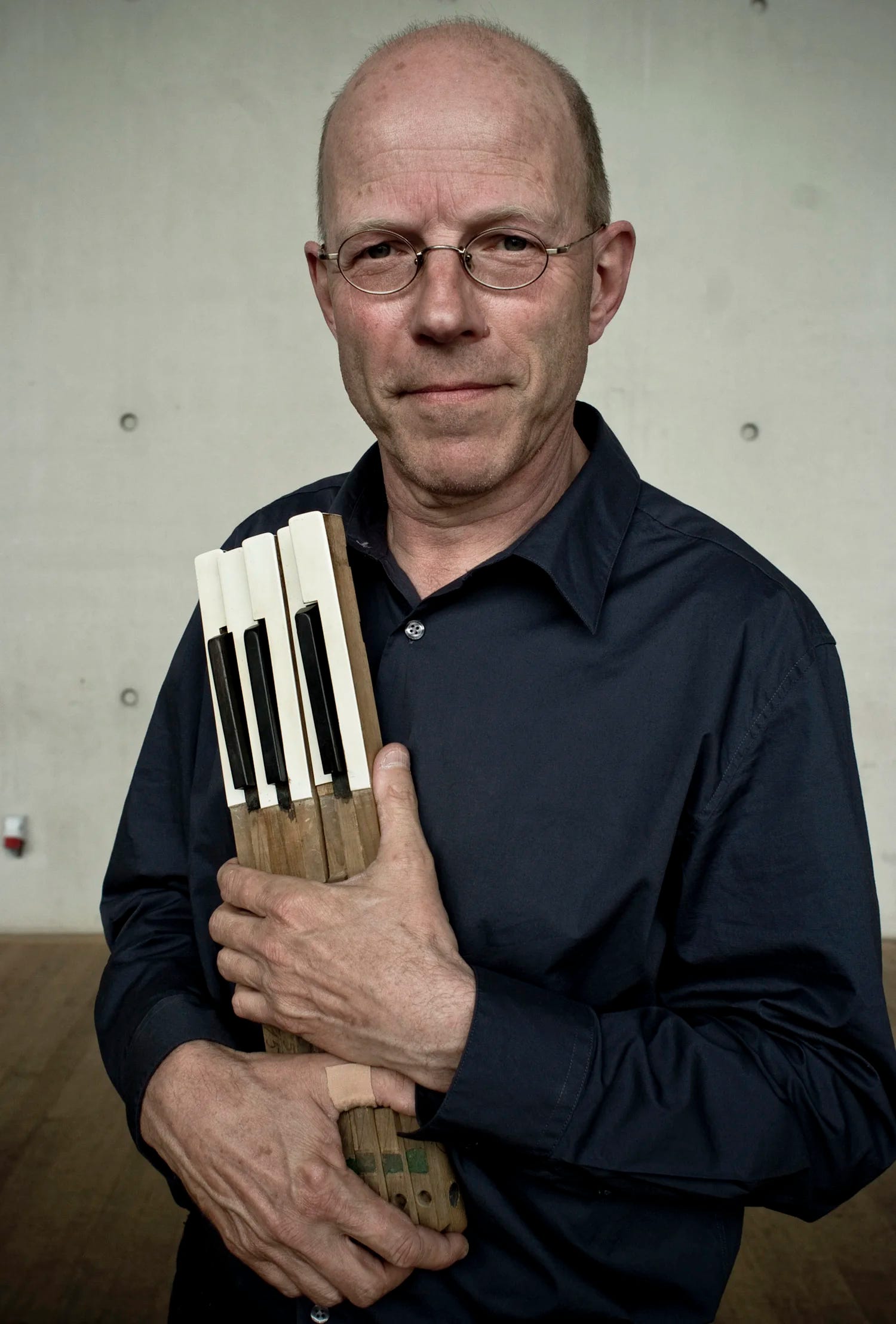
In May Janssen released a wonderful new trio album called Live at the Pletterij (Geestgronden), a deceptively relaxed set in which the pianist revisits some of his favorite tunes, a mix of vintage American nuggets by the likes of Herbie Nichols, Duke Ellington, Horace Silver, and Thelonious Monk, South Africans Abdullah Ibrahim and Sean Bergin (who instilled that indelible kwela flavor in Amsterdam), alongside a few originals and a gem from Mengelberg. The pianist’s trios have always featured his brother Wim on drums, but replacing the group’s long-time bassist and fellow ICP member Ernst Glerum on this session is a fellow named Bert van Erk.
There’s nothing about the album that will shock or recalibrate one’s sensibilities. Janssen is both a classicist and a post-modern—those essential Amsterdam qualities—but the way trio leaves its freewheeling mark on the tunes is deeply satisfying, a gentle reminder of how certain jazz verities are unassailable. Below you can hear the group’s account of Ibrahim’s plaintively beautiful “Maraba Blue.”
The Sympathetic Vibrations of Vilhelm Bromander and Fredrik Rasten
In late May the Swedish Fönstret label operated by John Chantler released Astral Twins, the second album by Stockholm double bassist Vilhelm Bromander and Berlin-based Norwegian guitarist Fredrik Rasten, a frequent presence in this newsletter. They both share a deep interest in working in just intonation, but whereas their 2019 album …for some reason that escapes us (Differ) served up fragmentary collisions designed to explore the tuning system, the new album feels much more focused and locked in, taking two very different paths on a pair of sidelong pieces, one by each of them. The new music is rooted in more formally rigorous compositions that allow the psychoacoustic splendor of JI to radiate beautifully, without sacrificing a formal beauty inherent in the actual writing.
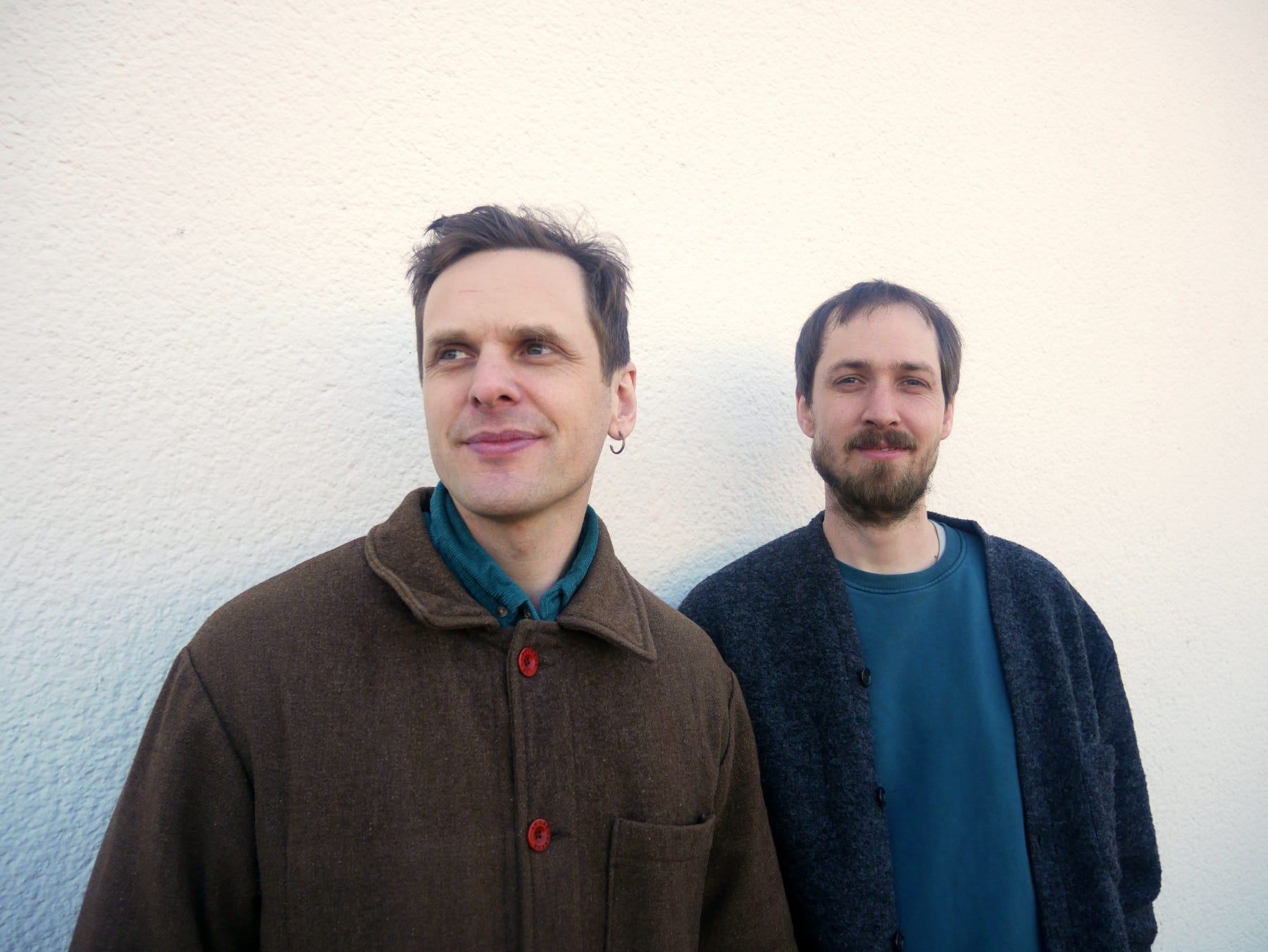
Rasten’s “Sojourns” follows a very simple, elegant design, sucking the marrow out of a transparent acoustic guitar arpeggio for more than twenty minutes. While the phrase Rasten plays cleaves the same cadence all the way through, with every cycle he makes an adjustment to the tuning on a single note. The vaporous overtones his picking produces hang like a veil over the proceedings, a sonic substance richly magnified by Bromander’s woody arco lines. It’s no secret that it’s hard for some folks to fully grasp the mechanics of music made in JI, but here the duo make its appeal clear as day. With one easily graspable phrase we hear endless transformation through continuity. Adjusting a single note on the fly might not feel like a narrative tactic, but tracing how the two musicians apply their laser-like focus on tuning together in real-time is stunning. With every phrase we can detect a change, but the tuning system means that we’re not only registering a subtle change, but we hear how the harmony between the individually voices notes coalesces and generates something more than the sum of its parts, as if they tones undergo some kind of alchemical transformation.
Bromander’s “Partially Dancing” is build around a jaunty bowed double-stop overtone figure in the instrument’s upper register. His movement leans into some tricky note pairs, high-pitched and a bit sour, here and there, for those of us held prisoner by equal temperament. He explains that the title has a double meaning, both referencing a folk theme used for dancing and indicating the way the tones dance around one another. As is Rasten’s wont, he’s sonically multitasking, carving out arpeggios that often take on the sound characteristics of a harp in the midst of Bromander’s rich drones, while also manipulating a second guitar with chains, single plucked notes, wordless singing, and gentle pitch pipe tones, all blending and activating a sound that becomes downright orchestral at times. At times I’m in disbelief that only two people are responsible for what’s happening. Whereras “Sojourns” dazzles with the simplicity of its design, the Bromander piece delightfully flummoxes the ears, scrambling the logic of what we think we’re hearing. On one level it’s a very modest recording, with a very restricted palette, but on the other hand the sound world is totally psychedelic, a kaleidoscopic cascade of endlessly morphing sound and motion. I’ve heard it at least a dozen times now, and I keep discovering new details.
Recommended Shows in Berlin for the Next Two Weeks
August 5: Declan Forde, piano, James Banner, double bass, and João Lopes Pereira, drums, 8:30 PM, Luisenkirche, Gierkeplatz 4, 10585 Berlin
August 6: Ana Frango Elétrico, 8 PM, Lido, Cuvrystraße 7, 10997 Berlin
August 7: Sardy Fardy (Ayman Asfour, violin, Bakr Khleifi, oud, George Crotty, cello, and Salam Elhassan, percussion), 8:30 PM, Morphine Raum, Köpenicker Straße 147, 10997 Berlin (Hinterhof 1. Etage)
August 8: Peter Ehwald & Scubert Four (Peter Ehwald, reeds, Thomas Dąbrowski, trumpet, Matthias Pichler, double bass, and Ivars Arutyunyan, drums); Helicopter (Peter van Huffel, saxophones, Roland Fidezius, double bass, and Simon Carmatta, drums), 4 PM, Jazz em Kaisersteg, Alte Kita, Hasselwerderstraße 22A, 12439 Berlin
August 10: Brandon López, double bass, Tony Buck, drums, and Kit Downes, piano, 8:30 PM, Kühlspot Social Club, Lehderstrasse 74-79, 13086 Berlin
August 11: Bonnie “Prince” Billy, 8 PM, Großer Sendesaal des rbb, Masurenallee 8-14, 14057, Berlin
August 11: Margaux Oswald, piano; Brandon López, double bass, 8:30 PM, Kühlspot Social Club, Lehderstrasse 74-79, 13086 Berlin
August 12: WhatWhy Art; Solistenensemble Kaleidoskop play Maya Dunietz, 8 PM, Halle am Berghain, Am Wriezener Bahnhof, 10243 Berlin
August 12: Aly Eissa, oud, 8:30 PM, Morphine Raum, Köpenicker Straße 147, 10997 Berlin (Hinterhof 1. Etage)
August 14: Hyper Elastic Jinx (Signe Emmeluth, alto saxophone, Nana Pi, tenor saxophone, Keisuke Matsuno, guitar, and Halym Kim, drums), 8:30 PM, Sowieso, Weisestraße 24, 12049 Berlin
August 15: Devin Gray, drums, Camila Nebbia, tenor saxophone, and Chloë Sobek, double bass, 8:30 PM, Sowieso, Weisestraße 24, 12049 Berlin
Nice to see Guus Janssen get some attention. Thank you. I had not yet heard this album.