
December is for Berliners
Kai Fagaschinski, Liz Allbee, Merry Peers
I’m happy to be sending out this week’s newsletter from my home in Berlin, where I’m even happier to report I’ll be residing for a lengthy, uninterrupted spell. My recent travels to Huddersfield and London for the past ten days have put beyond yet again. That situation also explains the brevity of this week’s transmission. I promise I’ll get back to normal next week.
Kai Fagaschinski and Liz Allbee, Alone and in Good Company
There are a lot of heady musicians in Berlin, and clarinetist Kai Fagaschinski ranks among them. He’s an intrepid inquisitor, a close listener, a generous collaborator, and a deep thinker who routinely applies rigorous consideration before he puts anything out into the world. It’s not that he’s afraid of failure, experimentation, and open-endedness—in fact, quite the opposite. But he also seems to value a listener’s time and he also puts a lot of thought into his work. At the same time, he possesses a dead-pan wit that’s effective and dry as anyone I’ve met during my six years in Berlin. He’s a long-time fixture on the improvised music scene, and I actually heard him play on my very first visit to Belin back in 2002 performing in the trio No Furniture with Axel Dörner and Boris Baltschun, at the height of the city’s echtzeitmusic movement. He’s founding member of Splitter Orchestra, but for me his most effective project has been the International Nothing, his peerless clarinet duo with Michael Thieke.
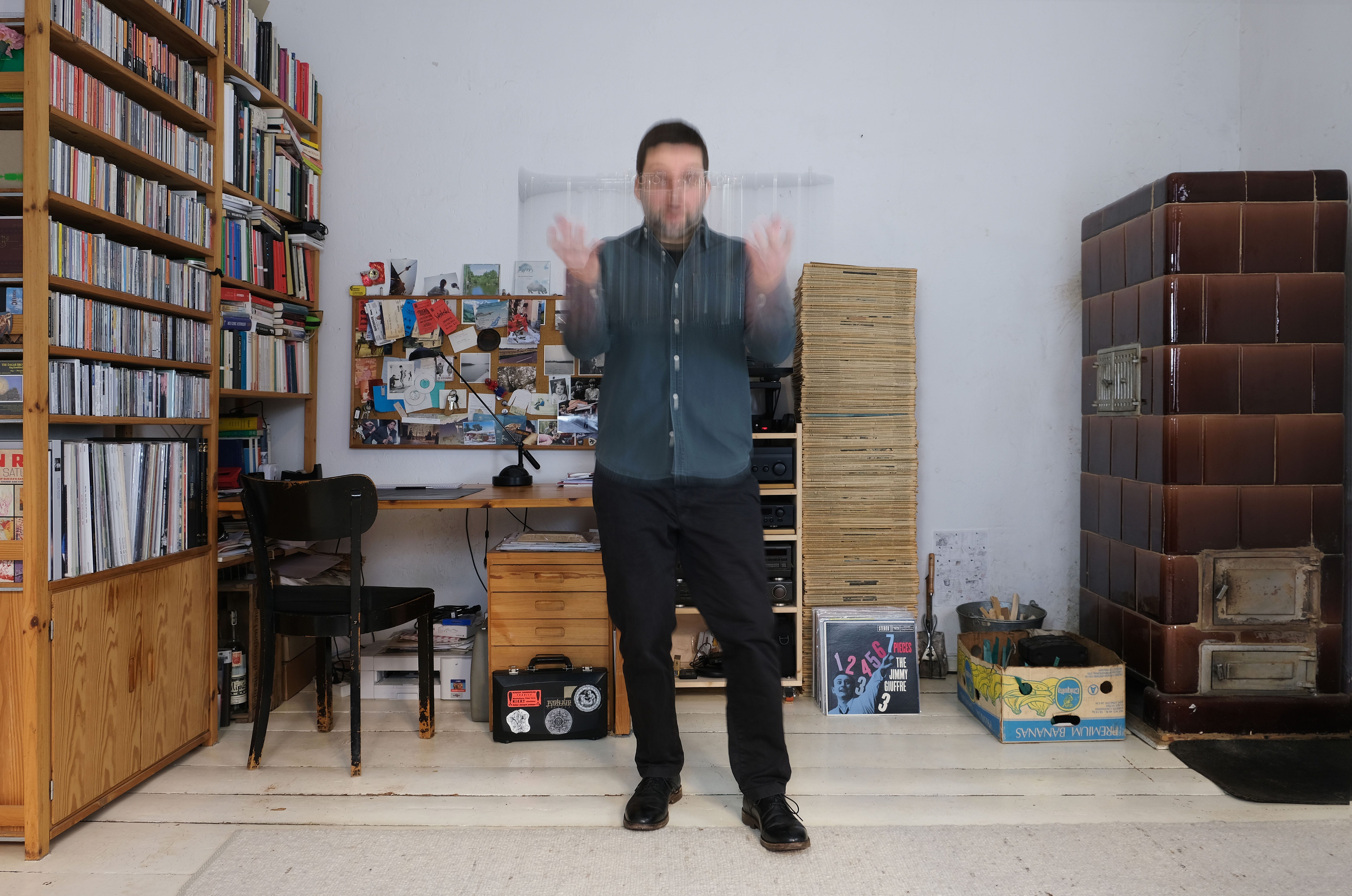
He recently released his first album under his own name, a terrific double record titled Aerodynamics (Ni Vu Ni Connu), and while it aligns closely with the reduced sounds he’s known for trafficking in, it also shares his interest in composition. The first of the records contains “Welcome to the 20th Century,” a work for the eight-member Paranormal Clarinet Society, which formed for concert featuring the Fagaschinski piece and another for the same octet by Sam Dunscombe. Both composers are members of the ensemble, along with Thieke, Laurent Bruttin, Lucio Capece, Chris Heenan, Theo Nabicht, and Michiko Ogawa. The leader avoided the sort of extended techniques this community of musicians usually draws upon because he wanted to erect few obstacles for others to tackle the piece, which focuses on swarm-like patterns, the eight voices engaging in massed ebb and flow. In performance—which to date has occurred only twice—the musicians are spread radially within a circular array of listeners, touching on the sort of multi-channel simulacrum explored by the International Nothing. For the recording featured on the record Fagaschinski had each musician record their part separately to heighten a deliberately shaky intonation and imperfect timing. In his typically incisive and humorous liner note essay he remarks on the ubiquity of just intonation in the Berlin experimental music scene before explains, “Welcome to the 20th Century responds (at least over wider parts of the piece) with a strict ‘no intonation’ policy.”
The richly varied density of the accrued long tones, unpitched breaths, and subtle tongue slapping reflects recurring concerns in Fagaschinski’s music, and while the stereo field can’t recreate the sonics of the live performance, there’s no missing a certain spatialized quality. The multipartite piece employs accretion and reduction, with the score directing certain sounds and textures to drift in and out, or organizing shifting tonalities, some meticulously connected to generate dazzling psychoacoustic episodes within the swarming effects. You can hear the entire piece below.
The other record contains a piece featuring nine independent clarinet tracks using similar spatialization ideas. Fagaschinski played all of the parts, thus leading to the title “Surrounded by Idiots.” The piece is a kind of adaptation of a work he made for Splitter Orchestra called “Imagine Splitter,” which began as a reaction against the inevitable tendency of improvisers to find some kind of alignment or opposition with what other players are doing, which he sees as “driven by a need for integration.” Both the piece for Splitter and this new one for nine Kais focused on creating lines that exist in a decidedly independent fashion. For both works all of the parts were recorded separately and combined in the studio on the fixed timescale. The composer requested that musicians imagine their performance as part of the larger work, so there would be stretches of silence as there would be in a group performance. For Fagaschinski the work was largely about “observing an ecosystem of sounds rather than listening to an interacting ensemble.” I his solo version he didn’t listen to any of the other versions although he made specific decisions to encourage a certain consistency, avoiding motivic improvising in favor of sparse, gestural, and more abstract utterances. As he notes:
Certainly, this music misses many elements that you might hope for in improvised music, or in composition, or just in music as such, and I agree it isn’t what it is not, and when you look here for the things that are not there you might experience disappointment. Well, this goes for life too, I guess.
The packaging of the release is gorgeous, with stunning cover art shot by Nathalie Snel and the music pressed at 45 RPM for heightened sonic depth. Fagaschinski will celebrate the release of the recording on Thursday, December 4 at KM28, sharing the bill with fellow improviser and Splitter Orchestra member Liz Allbee. Fagaschinski will present a new work for four clarinets wryly titles “The Evil of Banality.”
While Allbee is known best as a trumpeter, that instrument is supplanted on her new album Breath Vessels (Ni Vu Ni Connu) by the collection of titular homemade instruments she built along with her voice, tuning forks, and sine waves. She envisions “resonace” as something more and something beyond the sonic realm, considering it the relationship between “beings/things. It is a meeting and an unfolding in time.”
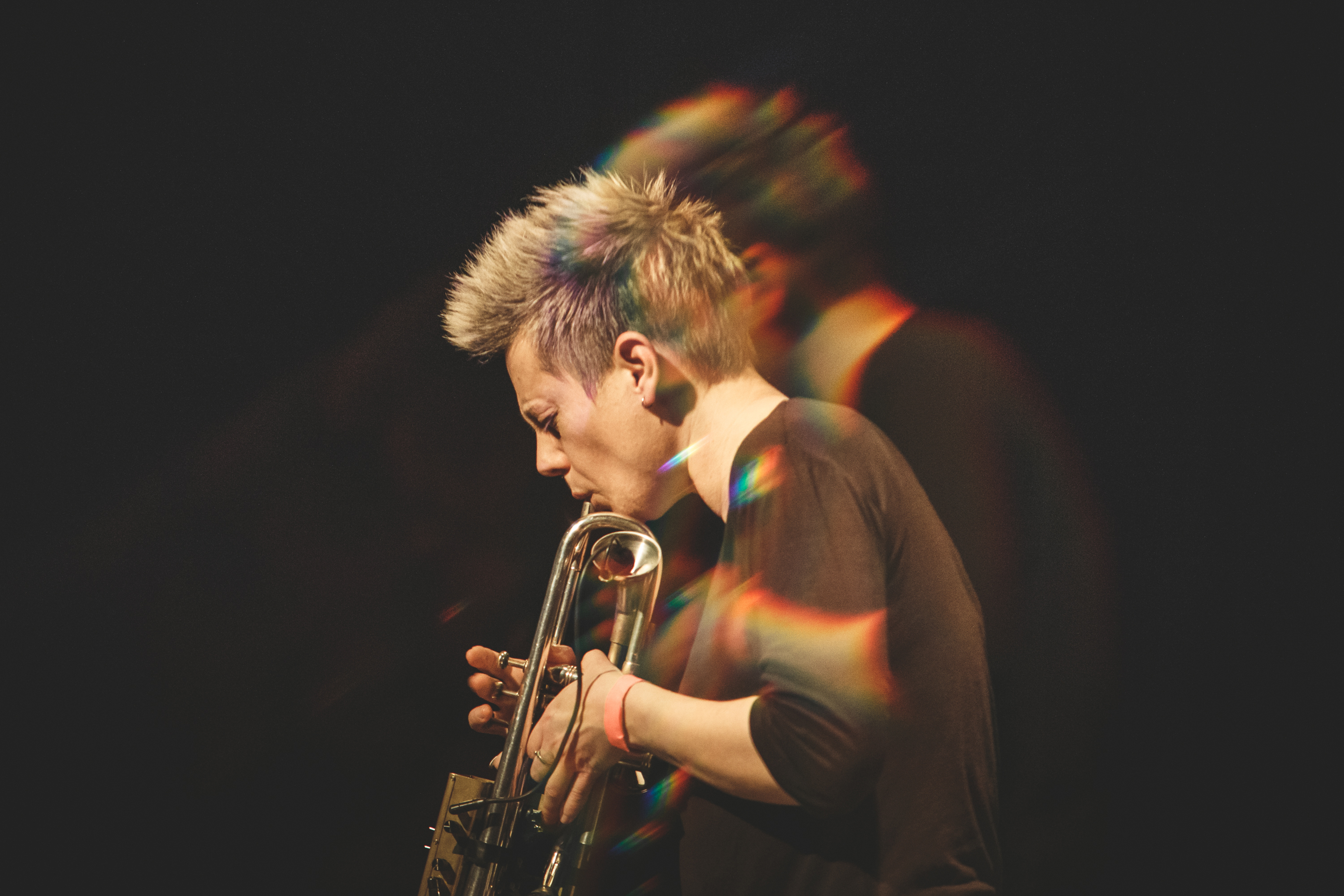
The pieces began as a quest to develop what she calls “a speculative folk music.” In her liner note essay she elaborates, “Not the nationalist kind of folk, nor the nostalgic, rather an imagining of how collectivity might sound at some point ahead: an orchestra of future souls, no conductor but a common spark, a pulse of breath between them: electro-conductive communality for when the power goes out.” The sound world generated by these instruments is aerated and richly textured, and Allbee has been refining them since 2017, an outgrowth of a long-standing practice of developing different extensions for her trumpet.
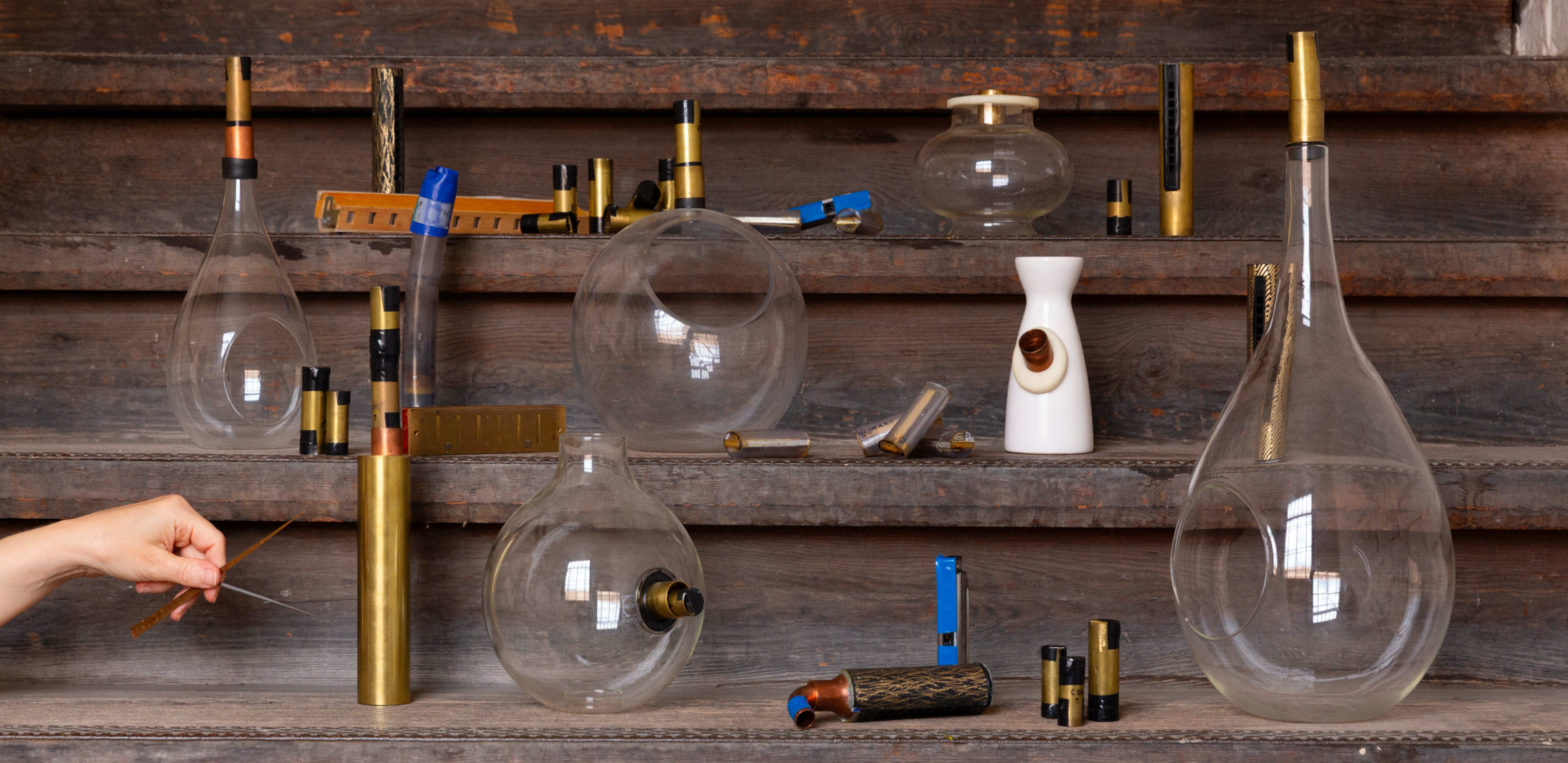
The first side of the vinyl is occupied the appropriately solemn, mournful title work which was inspired by two sea tragedies in 2023: the loss of the Titan submersible and the disastrous sinking of the Messenia, a Greek migrant ship that went down with more than 500 refugees from the Middle East. The broad attention and boundless recovery efforts of the former stood in stark contrast to the ambivalence given to the far more deadly latter calamity. The brittle, aerated tones and low-end rumble evoke the shape-shifting flow of clouds; sounds collide, mutate, and recombine with curious harmonic effects. Allbee created and recorded the work in one go during a residency that year at Cité des Arts in Paris, but the three shorter works on side B were made over an extended period, built and manipulated from improvisations recorded at different times. Both “Pigeons” and “Solitary Flocks” were inspired by urban life, and there’s something reminiscent of Laurie Anderson in Allbee’s delicate singing and spoken word delivery, observations sprinkled among a blend of gently pulsing electronics, harmonica-like tones, and various other air-driven self-made instruments. You can hear the former below. “Glottal Stops” blends sustained electronic tones and kinetic popping sounds that an extended technique for trumpet, a multi-layered stream of frictive percussion. For the release event Allbee will screen a video iteration of the new album’s title track, and she’ll play a new piece for prepared trumpet and text. She’ll also display a number of the instruments used on the album.
Short Take
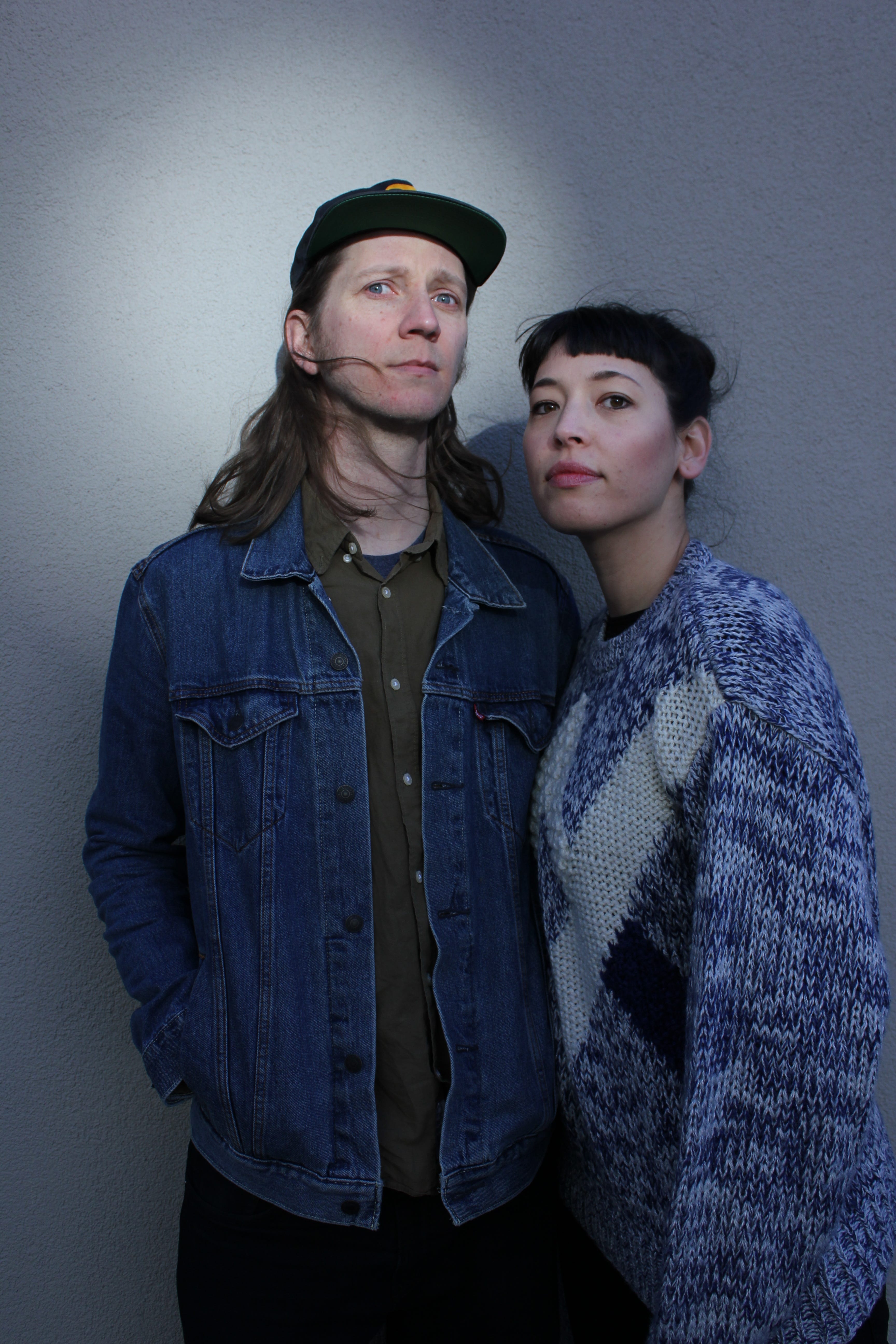
Merry Peers is the duo of trumpeter Brad Henkel and synthesist/vocalist Yoshiko Klein, a project that blurs atmospheric jazz, synth pop, and experimental electronic music approaches within a singular, exploratory melange. The project will celebrate its second album Genuine Pretension at Sowieso on Friday, December 5, the same day the recording is released by Boomslang Records. They share the bill with another duo, recent New York-to-Berlin emigre Claire Dickson, on vocals and electronics, and Julius Windisch, on synthesizer. I only got the music a couple of days ago so I’m still getting my head around the album, which is distinguished by the unapologetic way it sometimes veers between stylistic approaches. From the outset we’re dropped into a thicket of electronic noise, fractured beats, and auto-tuned singing, a kind of atmospheric art-pop that swings between epic melodies, proggy excess, and cranky chaos, in ever-changing proportions. The duo seem to embrace an instinctual drive, taking the music through a diverse variety of settings and tacks, with Henkel even sharing some jazzy romanticism with a ripe, extended solo on the second track before he unleashes some jagged post-Miles Davis gestures, although for most of the album he sticks with electronics.
Recommended Shows in Berlin This Week
December 2: The Clarinet Trio (Jürgen Kupke, clarinet, Michael Thieke, alto clarinet, and Gebhard Ullmann, bass clarinet), 7:30 PM, Mai Galerie, Torstraße 6, 10119 Berlin
December 2: Axel Dörner, trumpet, Erlend Strand Rolfsen, trumpet, and Dag Magnus Narvesen, drums, 8:30 PM, Kühlspot Social Club, Lehderstrasse 74-79, 13086 Berlin
December 3: Cara Dawson, harp, lever harps, with Sebastian Dumitrescu, lumatone, play Kevin Kay, Marc Sabat, and Thomas Nicholson, 8:30 PM, KM28, Karl Marx Straße 28, 12043 Berlin
December 3: Vinicius Cajado, double bass, electronics, Kit Downes, piano, Keisuke Matsuno, guitar, computer, and Tony Buck, drums, 8:30 PM, Morphine Raum, Köpenicker Straße 147, 10997 Berlin (Hinterhof 1. Etage)
December 4: Kai Fagaschinski, clarinet; Liz Allbee, 8:30 PM, KM28, Karl Marx Straße 28, 12043 Berlin
December 5: Flut (Christopher Kunz, saxophone, and, Isabel Rößler, double bass); Flut with Vojta Drnek, accordion, and Samuel Hall, drums, percussion, 8 PM, Richten25, Gerichtstraße 25, 13347 Berlin
December 5: Merry Peers (Yoshiko Klein, synthesizer, and Brad Henkel, trumpet); Claire Dickson, voice, electronics, & Julius Windisch, synthesizer, Sowieso, Weisestraße 24, 12049 Berlin
December 6: KNM Ensemble (Rebecca Lenton, flutes, Joseph Houston, piano, celesta, and Michael Weilacher, percussion) play Morton Feldman’s Crippled Symmetry, 7 PM, Villa Elisabeth, Invalidenstr. 3, 10115, Berlin
December 6: Faces & Places (Flo Müller, guitar, Michaël Attias, alto saxophone, Jonas Westergaard, double bass, and Oli Steidle, drums), 8 PM, Kubiz, Bernkasteler Str. 78, 13088 Berlin
December 6: Flut (Christopher Kunz, saxophone, and, Isabel Rößler, double bass) with Anna Kaluza, alto saxophone, and Olaf Rupp, guitar; Flut, 8 PM, Richten25, Gerichtstraße 25, 13347 Berlin
December 6: Florian Pasche, saxophone; Margaux Oswald, piano, Vinicius Cajado, double bass, and, Tony Buck, drums, 8:30 PM, Kühlspot Social Club, Lehderstrasse 74-79, 13086 Berlin