
Call for a Thaw
Dan Weiss Quartet, Sholto Dobie

Dan Weiss Stands Up
As much as drummer Dan Weiss seems to turn up in Berlin as a sideman—whether driving the intricate polyrhythms of the Patricia Brennan Septet or stretching time in a quartet led by pianist Sylvie Courvoisier—it’s not often that he leads his own projects in town. That makes his performance at Zig-Zag Jazz Club on Friday, February 6 doubly exciting. It’s that rare chance to catch his own music with one of his best and most interesting projects, the quartet that released Unclassified Affections (Pi) last year, with vibist Brennan, guitarist Miles Okazaki, and trumpeter Peter Evans. The drummer has worked with all of the musicians in different contexts before he began writing the music on the album, composed with this particular cast in mind.Considering the mix of virtuosity and musical imagination each of them possess, Weiss was able to push through a lot of disparate ideas and approaches.
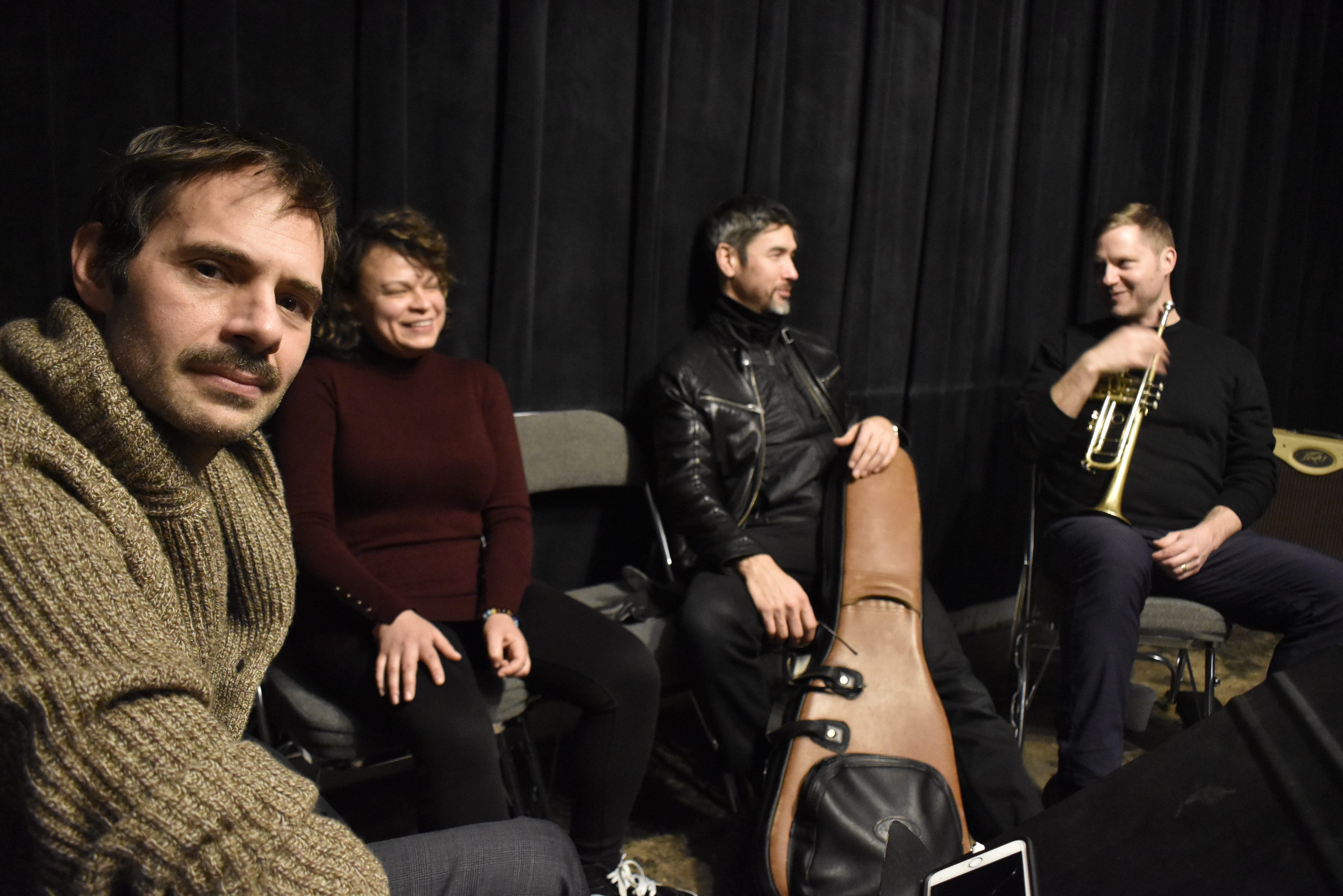
The leader is an obsessive student of jazz drumming, perpetually analyzing the mechanics and individual practices of fellow percussionists across the genre’s history. Weiss is interested in all kinds of styles, whether the metal-prog hybrid he explored in Starebaby or the complex patterns of Indian classical music that have infected numerous projects, but the quartet sits firmly in post-bop tradition. Yet within that milieu he employs all kinds of varied schemes, whether allowing the band to essay three distinct melodic sequences at any point of the album’s title track—resulting in a stunning collision of contrasting lines that never feels chaotic thanks to an easy musicality and an elastic rhythmic conception—or riding a lightning fast, hot-footed tempo on “Holotype,” a performance built around his tight connection with Okazaki, a veteran duo partner who can glide over the steeplechase patterns as if they’re joined at the hip. Weiss smartly spreads the wealth across the eight tunes, whether it’s carving out solo space for Brennan’s shimmering feature on the moody ballad “Perfection’s Loneliness”—check it out below—or feeding the stunning exploration of texture achieved by her and Okazaki, sculpturally extending the timbre of their respective instruments following a blistering solo by Evans on “Existence Ticket.” Check it out below. Of course, Evans is his typical jaw-dropping self all over the place, but especially on his a cappella improvisation on “Mansions of Madness,” a high-velocity string of rhythmically ferocious, tonally puckered, zig-zagging gestures that suspends disbelief. The brief cymbal exegesis on the opening minute of “Plusgood” is no less astonishing, as is the way the closing track “Dead Wall Revery” concludes with an extended ambient churn that contains loads of detail beneath its glistening surface. The group was pretty new when they made this record, and fueled by subsequent performances, including a week of shows in Europe under its belt before they hit Berlin, I imagine the quartet will be on fire.
Sholto Dobie’s Intimate, Homemade Worlds
Sholto Dobie is a name that has stuck in my memory whenever it was that I first encountered it, and it’s surfaced regularly in recent years, both on recordings or concert listings. But I’d never actually heard anything by the Vilnius-based Scotsman until last November when he played a wonderful set at the Huddersfield Contemporary Music Festival, where he patiently wandered around the seated audience with a pair of jerry-rigged concertinas—at least, that’s they looked like. He held one in each hand, letting the instruments dangle from one end, activated with gentle gestures as if absentmindedly playing with a yo-yo in slow motion. They produced a lovely sound—hushed, fragile, unstable, softly wheezing—which was enhanced by some delicate vocalization. The perspective of audience members changed as he moved about. The simple elegance and unabashed modesty of the performance was just as beguiling as the irregular but soothing sounds Dobie generated.
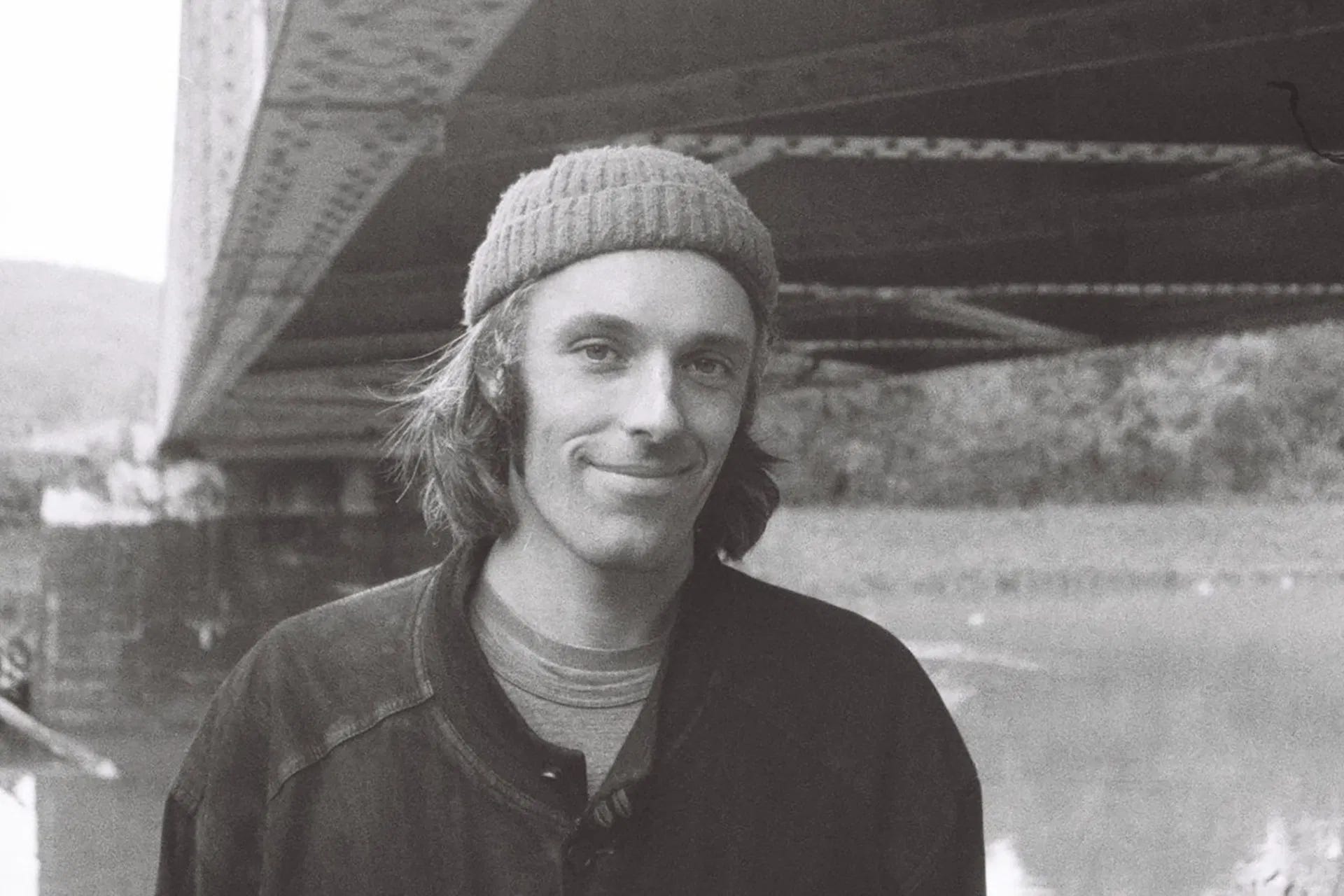
The performance wouldn’t have made a lot of sense on a recording without the spatial qualities and Dobie’s tender presence, which made it all feel like a cross between a ritual and a family gathering. Since then I’ve been checking out his recordings, which are all over the place, particularly a series of wide-ranging duo projects. He builds his own instruments, usually from repurposed materials, and he’s not so concerned with their durability or how they hold pitch. In a short interview with It’s Psychedelic Baby Magazine in 2022 he said:
Making instruments has always been a way to explore sound worlds that I feel I cannot reach by other means. Often they begin with an imagined sound, the sound doesn’t exist, or maybe it does, and making the instrument would be a way to get there. Most of the time, they would fail, as I’m not a real instrument builder. But the results would have their own idiosyncrasies and limitations which would have their own logics, and dictate different musical structures and ways to perform.
In a world where recordings too often define how music is transmitted or judged, Dobie is radical, preferring the intimacy and immediacy of small gatherings, engaging in collaborations for their social and creative potential as much as musical value. His work is decidedly homemade, and despite the fact that it’s not really designed as a “product” most of his recordings are interesting and compelling in shifting ways. He’s got a particular interest in air-driven sounds, building organs and other pipe-centered devices, such the table organ and hurdy-gurdy used on his meditative 2020 tape Nevery (Thanet Tape Center), where simple lines and drones collide and unfurl with or without the presence of field recordings. He used a synthesizer and hurdy-gurdy on The After Swell (Infant Tree), a 2022 collaboration with Malvern Brume, on sampler, that culled five concise pieces from three 30-minute improvisations. The music toggles primitive electronic tones, striated hurdy-gurdy drones, and lots of tape hiss or room noise. Below you can check out one of the longer pieces, the strangely hypnotic “Eyes Across the Tracks.”
There’s more to Dobie’s practice, such as a kind of experimental documentary work revealed on a collaboration with the Slovak filmmaker Lucia Nimcová, who together made DILO (Mappa), a collection of Rusyn folk music recorded in Ukraine that they collected in a kind of audio verité style. I have no idea what he’s got up his sleeve for his performance at Silent Green on Saturday, February 7, where he’ll share the bill Tot Onyx, a Japanese sound artist based in Berlin. I rapidly developed an ardor for the material on his latest solo album 23 (Infant Tree), a collection of wobbly drones taken from acoustic and electric sources. Still, I think witnessing how he uses his self-made instruments makes for a much richer experience, but that doesn’t mean hearing the sounds is somehow lacking. Below you can hear “Ice Pancakes,” a pulsating collision of synthesizer and some kind of bellow-driven tones that’s both needles and soothes.
Recommended Shows in Berlin This Week
February 3: Cory Hanson, 8 PM, Neue Zukunft, Alt-Stralau 68, 10245 Berlin
February 3: Strange Dreams (Aya Metwalli, vocals, Julian Sartorius, drums, and Magda Mayas, piano), 8:30 PM, Morphine Raum, Köpenicker Straße 147, 10997 Berlin (Hinterhof 1. Etage)
February 5: Tuva Halse Quintet (Tuva Halse, violin, Oscar Andreas Haug, trumpet, Benjamín Gísli Einarsson, piano, Gard Kronborg, bass, and Øyvind Leite, drums), 10 PM, B-Flat, Dircksenstr. 40, 10178 Berlin
February 6: Dan Weiss Quartet (Dan Weiss, drums, Patricia Brennan, vibraphone, Miles Okazaki, guitar, and Peter Evans, trumpet), 7:30 PM, Zig-Zag Jazz Club, Hauptstraße 89, 12159 Berlin
February 7: Tot Onyx; Sholto Dobie, 8 PM, Kuppelhalle, Silent Green, Gerichtstraße 35, 13347 Berlin
February 7: Dream Syndicate, 8 PM, Lido, Cuvrystraße 7, 10997 Berlin
February 7: Liz Kosack, synthesizer, Declan Forde, piano, James Banner, double bass, and Max Andrzejewski, drums, 8:30 PM, Sowieso, Weisestraße 24, 12049 Berlin
February 8: Anna Kaluza Quartet (Anna Kaluza, alto saxophone, Christof Thewes, trombone, Jan Roder, double bass, and Kay Lübke, drums), 3:30 PM, Industriesalon Schöneweide, Reinbeckstraße 10, 12459 Berlin
February 8: Eddie Prévost, percussion, David Grundy, piano, and Teresa Hackel, recorder, 7 PM, Exploratorium, Zossener Strasse 24, 10961, Berlin
Genuinely brilliant breakdown of these performances, especially how the instruments create those atmosphereic textures. Last winter felt like a long thaw after switching from composing to studying sound design, helped me see music production from an entirely diferent angle. This piece honestly captures that exploratory spirit perfectly.