
Busy Being
Das B., Michiko Ogawa, Webber/Morris Big Band, Taborn/Reid/Smith

Das B. “Play” Coltrane
Back in late May the idiosyncratic Berlin improvising quartet Das B. released its second album, Love (Thanatosis/Corbett vs. Dempsey), an unlikely homage to the classic John Coltrane album A Love Supreme, originally released six decades earlier. In the album liner notes the group explains its rationale:
We are not attempting to recreate the album. Rather, we took the original album’s track timing and instrumental structure, as well as some other technical aspects, like balances and panning, the occurrence of overdubs, and timbral relationships within the original, to create our tribute. This was our process and our idea was to link our music—free improv—to its roots in jazz and free jazz.
It’s a fascinating conceptual conceit, primarily as a generative form for the group which never uses composed material. Listening blind, one would never make the connection, and ultimately that doesn’t matter anyway. The music excels on its own terms, which is the remarkable sound world drummer Tony Buck, pianist Magda Mayas, double bassist Mike Majkowski, and trumpeter Mazen Kerbaj have carved out. This music is spontaneous, but the internal rapport and timbre isn’t something that emerged out of thin air. Kerbaj, of course, doesn’t play the trumpet as a trumpet, but as a sound generator. Over the years he’s formulated a dazzling catalog of techniques, procedures, and external fittings to serve a bespoke practice. (I recently heard him play a riveting solo set with an entirely new assortment of methods, a testimonial to his seemingly bottomless imagination and curiosity).
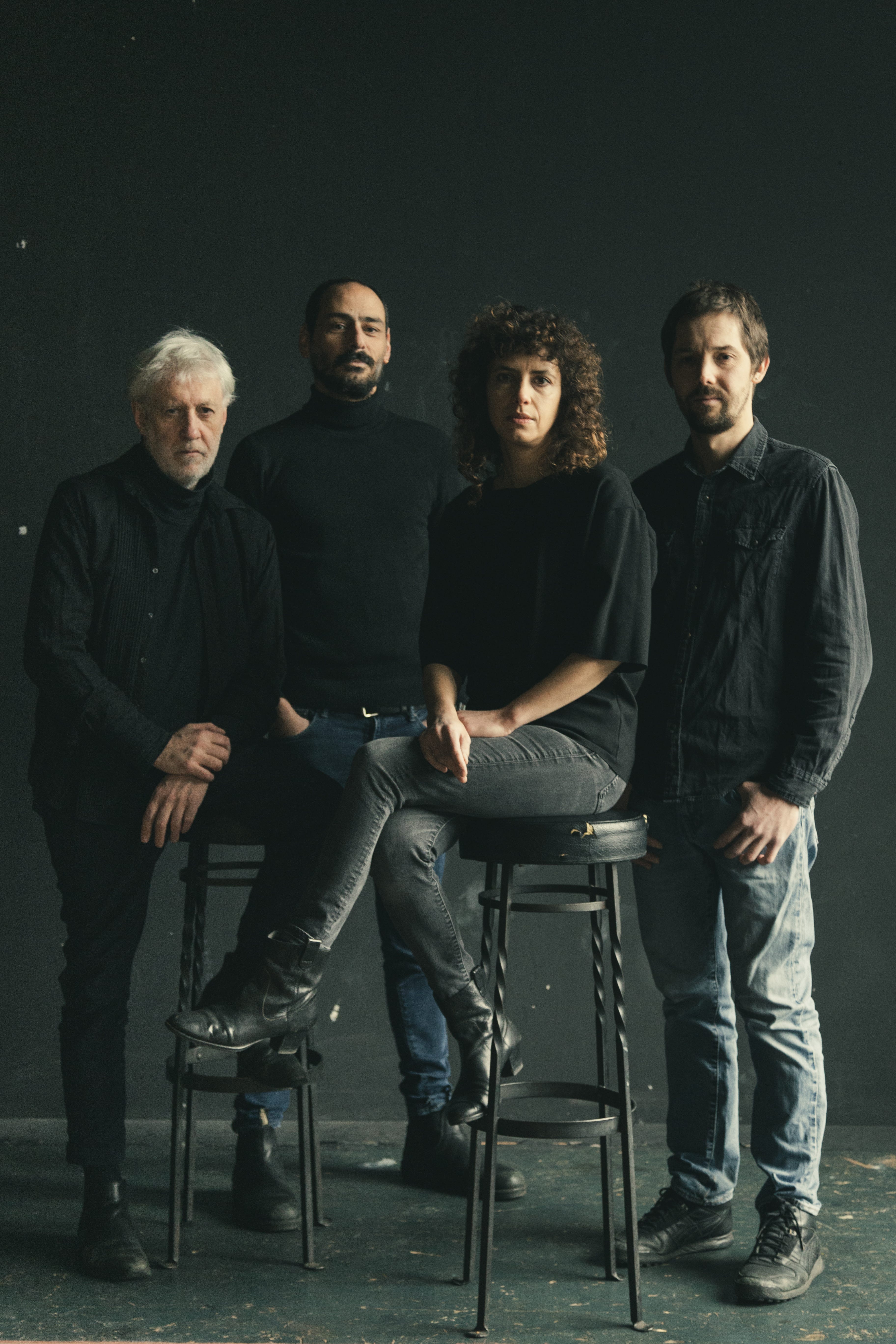
Most of the sounds he produced on Love are whistle-like gestures that flutter over the mewling churn carved out by Buck and Majkowski. Those two are super locked in, and at times the former quickly accelerates to produce a blinding flurry of cymbal motion, while the latter seems to dance within the patterns, like a hyperactive game of sonic double dutch. You can check it out in “Love 2,” below The rhythmic bed allows the prepared piano patterns of Mayas and the wandering, upper register tones of Kerbaj to find endless nooks and crannies to either seep into or play against. Elsewhere, there’s more space, with Majkowski moving to bowed lines which blend masterfully with sustained tones produced by Mayas, as Buck sculpts a metallic blanket of cymbal play and Kerbaj blowing unpitched whinnies. Despite strong connections to the city’s lowercase improv community, the rhythmic thrust within the quartet offers a rewarding contrast to a sea of small gestures. And while John Corbett’s liner note essay remarks on the project’s adaptive nature and the reverence the members of Das B. hold for the Coltrane masterpiece, that framework mostly highlights the aesthetic the quartet has developed on its own, an approach agile enough to fit neatly within such an armature. The ensemble belatedly celebrates the release of the album with a performance at Sowieso on Wednesday, November 19.
Anna Webber
The superb reedist and composer Anna Webber has been hanging around in Berlin for the past couple of weeks, performing several times in various ad hoc settings. Last week I heard her participate in one such outing with Buck and Majkowski (from the above mentioned Das B.) alongside pianist Achim Kaufmann and trumpeter Brad Henkel at Sowieso. It was excellent. She’s got one more gig before returning to the US, performing Thursday, November 20 at Donau115 in a quartet with tenor saxophonist Jeremy Viner, keyboardist Liz Kosack, and drummer Lukas Akintaya. It didn’t really hit me until that night that she had just recently released Unseparate (Out of Your Head), the second album from the Webber/Morris Big Band. I think part of that brain freeze stemmed from my general ambivalence toward big band music. I love classic swing music, but once jazz ceased to be a popular style that functioned as dance music and the cost of maintaining working big bands became unsustainable, a lot of the attendant creativity departed with it. While I can enjoy big bands from the modern era, whether the group led by Darcy James Argue or the repertoire-oriented Umlaut Big Band from Paris, it’s generally not part of my listening regimen.
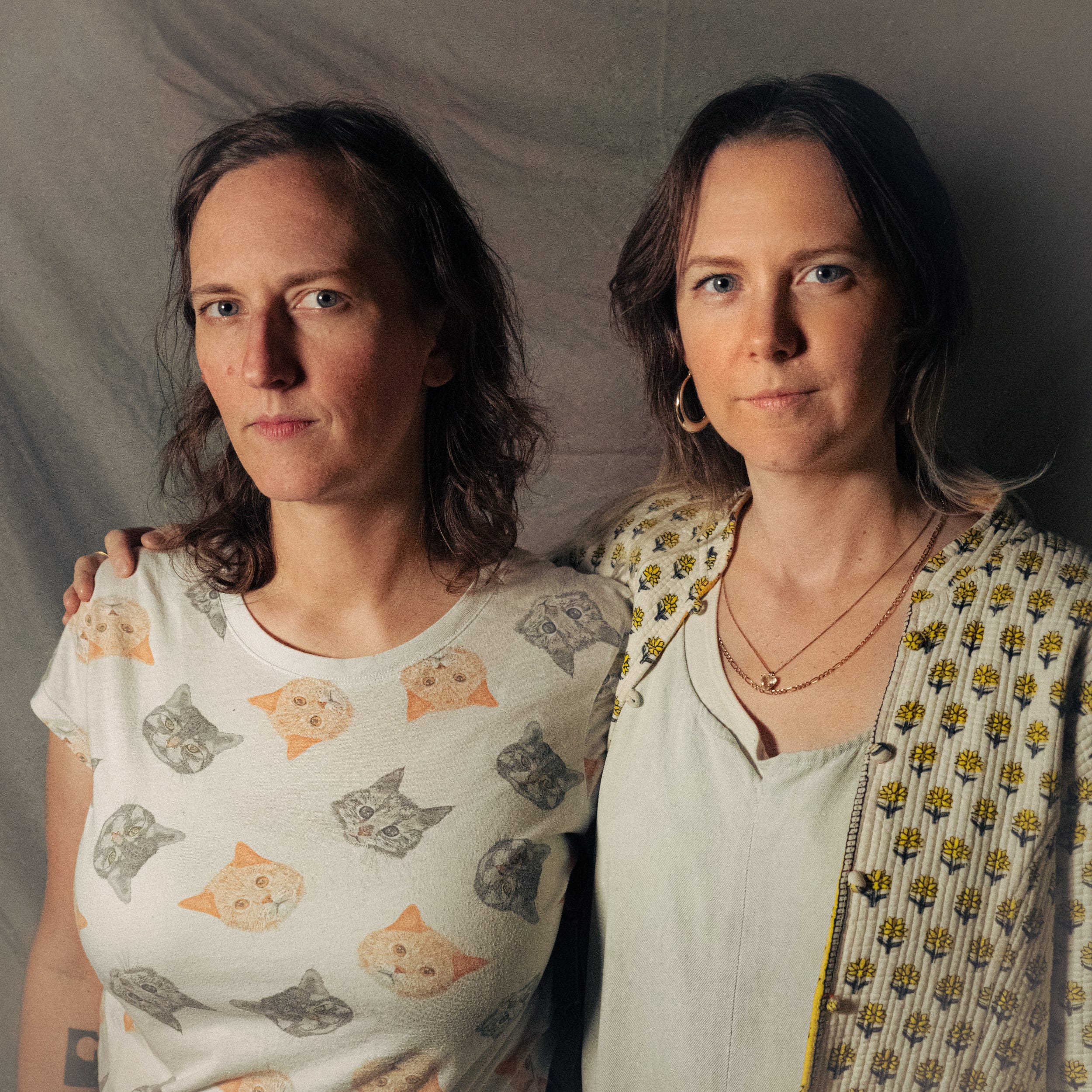
In the press materials for the new album Webber claims that the goal of the project is “to try to make it sound the least like big-band music as possible,” which indicates a position that’s probably not far from my own. The band features a killer line-up loaded with top-flight improvisors who bring sizzling energy and precision to the pair of extended suites Webber and co-leader and fellow tenor saxophonist/flutist Angela Morris each composed for the project. The latter composed the seven-part title work, which veers from big band orthodoxy in the way the arrangements endlessly splinter the 18-piece band into dueling, contrasting sections, applying social observations as sonic metaphors. Naturally, the thing a big band can do well is roar, plotting beefed-up brass and reeds to produce huge slabs of sounds, driving riffs, and thick harmonies. Morris avoids the obvious tactics even while drawing upon those familiar tools, but on a piece like the brief “Unseparate 2” her writing is so sharp and adventurous that the music reminds me a bit of Stravinsky’s L’Histoire du soldat, awash in a rigorous counterpoint.
The album opens with Webber’s four-movement Just Intonation Etudes for Big Band, which obviously deploys the titular tuning system. Working in just intonation has become an important part of her practice in recent years, and during the pandemic she spent several months at the American Academy in Berlin conducting research into the tuning. I’ve written often about how she ingeniously incorporated ideas from the system into her knockout quintet Shimmer Wince. But asking a group of musicians—even one as skilled, nuanced, and seasoned as the members of her own big band—to tackle music written in that tuning is tricky. Music deploying JI is abundant in Berlin, but it requires a lot of ear training and practice for it to reach its full potential. One of the things I admire about Webber is that her pragmatism never cheapens her discipline or vision, so she deployed the tuning in measured fashion across the piece. But you can hear why she was drawn to the idea on the piece’s opening movement, “Unseparate,” which is a two-minute excursion into long tones where the spectral harmonies of the tuning are on full display. The album’s roots lie in the pandemic shutdown that prevented the band from celebrating its 2020 debut Both Are True. When the band finally reunited as the pandemic ebbed, Webber anticipated the feeling of reuniting with the musicians, and this piece is a thrilling testimony to the power of communal sound. Check it out below. The remaining three movements are a bit more conventional, but the writing is uniformly superb.
Michiko Ogawa’s Slight Return
Berlin’s music community took a big hit last fall when clarinetist Michiko Ogawa and her partner Sam Dunscombe left Berlin for the warmer climes of San Diego. Luckily, she’s back for a short visit this week, which includes a performance at KM28 on Thursday, November 20 where Ogawa will play music from her meditative new album Pancake Moon (Futura Resistenza). Marcus Pal will also perform a solo set. Ogawa cites the theoretical quantum physics notion of many-worlds interpretation as a model for the music, but I have to admit it’s beyond my highly limited ken to make sense of it all. But appreciating the music itself requires no such knowledge. I do get Ogawa’s claim that the idea of bricolage is central to her artistic process, as she writes:
It’s a very analog method where I repurpose the tools, personal feelings, and memories close to me according to the purpose. Because of this, each material carries a strong personal element. However, by abstracting these elements, I hope that the personal sounds and memories become like a mirror in which every listener can see themselves reflected differently.
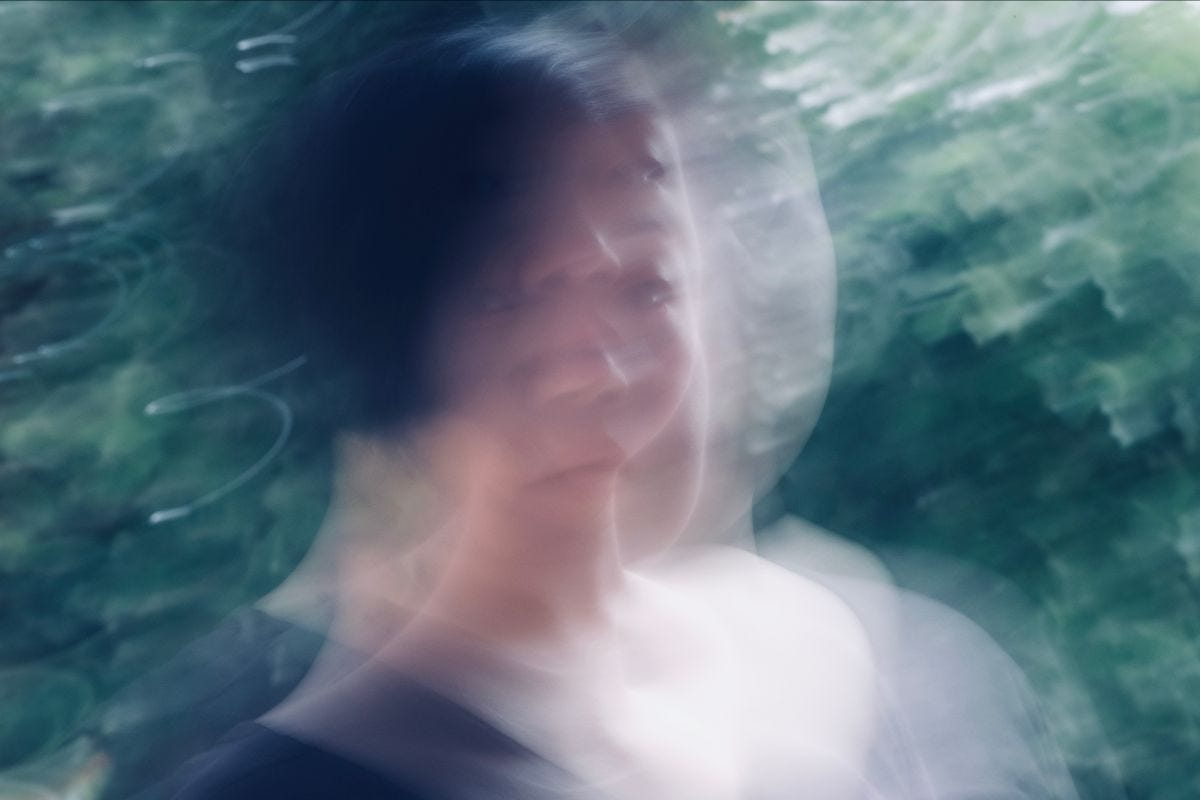
Two extended pieces weave together field recordings made in Berlin and San Diego with sounds produced with the shō, electric organ, piano, and synthesizer. I haven’t been shy about decrying how vacuous I find most ambient music, but the work Ogawa produces here belie that position. It’s soothing and gentle, but there’s plenty of action under the placid façade, whether its subtle harmonic interplay or contrasting elements—the pointillistic clusters and single note piano runs colliding against gauzy long tones, or the way environmental sources creep in and pulsate at the edge of audibility. It scratches the itch ambient music theoretically serves, forging a deep engagement with serene tones, but whereas so much of the stuff is weightless, conflict-free drift, Ogawa isn’t afraid of some turbulence and tonal transformation. Below you can check out the album’s second piece, “Shizukana Hikari.”
The Multifarious Craig Taborn is Back With Tomeka Reid and Ches Smith
It was welcome news to learn that Craig Taborn was among the recent class of MacArthur Foundation grantees. Since emerging in the early 90s as a sideman for James Carter few musicians have proven themselves as talented, inventive, or versatile. He’s a musician’s musician, a player who prioritizes making every context sound the best it can. He’s hardly a reserved performer, but his expression always exists in the context of something bigger. He’s also a stylistic omnivore with tastes and interests well outside of jazz and improvised music, whether early music or heavy metal. His interest in the latter made him an obvious choice for drummer Dan Weiss for his metal-leaning band Starebaby, and a couple of months ago he occupied a vaguely similar zone with Trio of Bloom (Pyroclastic), a trio assembled by producer David Breskin to explore a kind late 70s-early 80s fusion/groove aesthetic that can make space for Ronald Shannon Jackson’s Decoding Society and Wayne Shorter’s Native Dancer. The trio, with guitarist Nels Cline and drummer Marcus Gilmore, plays tunes from both of those projects. Breskin asked each musician to bring in a tune to interpret as well as some original material.
Cline ends up as the lead voice on most of the album, but it’s absolutely a collective endeavor, with Gilmore revealing a much more extroverted side of his playing than I’ve ever encountered. Naturally, Taborn serves the trio with a mixture of keyboards, often providing basslines for the music. In general this aesthetic isn’t one that pulls me in, but I’ve enjoyed the record and it only strengthens my respect and admiration for Taborn.You can check “Queen King,” out one of my favorite tunes from it, below.
On Wednesday, November 19 Taborn will roll into the Institut Francais with a different trio featuring cellist Tomeka Reid and drummer Ches Smith. They knocked me out when they previously played the same spot back in 2021, revealing the kind of heightened interaction and balance one always yearns for in improvised music. The group, which has a few Taborn tunes as well as Geri Allen’s “When Kabuya Dances” in its repertoire to round out the spontaneous material, is finally releasing its debut album, Dream Archives, in January for ECM.

Recommended Shows in Berlin This Week
November 19: Craig Taborn, piano, Tomeka Reid, cello, and Ches Smith, drums, 8 PM, Institut Francais, Kurfürstendamm 211, 10719 Berlin
November 19: MoE; Nadja, 8 PM, Arkaoda, Karl-Marx Platz 16, 12043 Berlin
November 19, Das B. (Magda Mayas, piano, Mazen Kerbaj, trumpet, Mike Majkowski, double bass, Tony Buck, drums, 8:30 PM, Sowieso, Weisestraße 24, 12049 Berlin
November 19: Soko Steidle (Oli Steidle, drums, Henrik Walsdorff, alto saxophone, Rudi Mahall, bass clarinet, and Jan Roder, double bass) with Alexander von Schlippenbach, piano, 8:30 PM, Panda Theater, Knaackstraße 97, (i.d. Kulturbrauerei, Gebäude 8) 10435, Berlin
November 20: Michiko Ogawa; Marcus Pal, 8:30 PM, KM28, Karl Marx Straße 28, 12043 Berlin
November 20: John Butcher, soprano and tenor saxophones; Anaïs Tuerlinckx, piano, 8:30 PM, Morphine Raum, Köpenicker Straße 147, 10997 Berlin (Hinterhof 1. Etage)
November 20: Anna Webber, tenor saxophone, flute, Jeremy Viner, tenor saxophone, clarinet, Liz Kosack, keyboards, and Lukas Akintaya, drums, 8:30 PM, Donau115, Donaustraße 115, 12043 Berlin
November 21: Ensemble for New Music Talinn and Katariin Raska, dudelsack, play music by William Dougherty, Liisa Hirsch, Klaus Lang, Arash Yazdani, and Dror Feiler, 8 PM, Genezareth-Kirche, Herrfurthplatz 14, 12049 Berlin
November 21: Marina Mello, harp, electronics; Carla Boregas, electronics, 8:30 PM, Sowieso, Weisestraße 24, 12049 Berlin
November 22: Kenny Barron Trio (Kenny Barron, piano, Kiyoshi Kitagawa, double bass, and Johnathan Blake, drums), 6:30 PM, Zig-Zag Jazz Club, Hauptstraße 89, 12159 Berlin (sold out)
November 22: Skultura (Cansu Tanrıkulu, voice/live processing, Liz Kosack, synthesizer, Eldar Tsalikov, clarinet, Nick Dunston, double bass, and Mariá Portugal drums) with special guest Merve Salgar, tanbur, 8:30 PM, KM28, Karl Marx Straße 28, 12043 Berlin
November 22: Tony Buck, drums, percussion, and Ståle Liavik Solberg, drums, percussion, with Mazen Kerbaj, trumpet, 8:30 PM, Sowieso, Weisestraße 24, 12049 Berlin
November 23: Die Hochstapler (Louis Laurain, trumpet, Pierre Borel, alto saxophone, Antonio Borghini, double bass, and Hannes Lingens, drums), 3:30 PM, Industriesalon Schöneweide, Reinbeckstraße 10, 12459 Berlin
November 24: Derya Yıldırım & Grup Şimşek, 8:30 PM, Gretchen, Obentrautstr. 19-21, 10963 Berlin
“Starebaby”, not “Starbaby”.