
Breaking the Chill
Ricardo Dias Gomes, Jessika Kenney & Eyvind Kang, Fink Floyd

The Post-MPB Vision of Ricardo Dias Gomes
Back in the summer of 2023 I wrote of my ongoing admiration for Brazilian bassist and composer Ricard Dias Gomes, who had then released the superb album Muito Sol (Hive Mind), a hushed but powerful post-MPB collection that ignored any boundaries between songcraft and sonic exploration. He’s been coming into his own for years, but for a long while he was known best for his key participation in a series of excellent 21st century albums by the great Caetano Veloso. Since moving from his native Rio de Janeiro to Lisbon in 2017 he’s been charting new pathways without ever ditching the ineffable essence of samba and bossa nova that sashays at the core of his work. He’s become an in-demand producer and sideman in Portugal, and one of these days I hope we get to hear the music he’s been making as part of a trio led by the inventive guitarist Noberto Lobo, but for now Muito Sol remains his most recent release, and I assume that’s what he’ll be focusing on when he makes his Berlin debut, performing solo at KM28 on Friday, January 16.

The album features a diverse support cast with musicians from New York like Jeremy Gustin and Will Graefe, fellow Brazilians Jonas Sá, Tiago Queiroz, and Pedro Sá, and French guitarist Julian Desprez, among others, but for years Gomes has worked alone and both times I’ve caught him live over the last decade—in Chicago and in Rome—he held it down by himself nicely. He eschews maximalism even with a full band, putting his trust in subtle caresses and lilting gestures. All of his solo recordings toggle between delicate, hooky songs and elusive soundscapes, such as the needling, droning “Fllux” from the latest album. He shapes his beautiful melodies with the whispery elegance at the heart of bossa nova, conveying an appealing intimacy regardless of setting. I imagine we’ll get to hear some new material in Berlin, but below you can check out one of my favorites tunes, the album’s title track where you instantly hear how his insinuating basslines shape all of his music—the rest of the arrangement is gravy.
The Sonic Spells of Jessika Kenney & Eyvind Kang
Last fall Eyvind Kang and Jessika Kenney each released stunning solo albums in the inaugural batch of titles from Kou Records, a new imprint operated by Charmaine Lee and Randall Dunn. On Riparian Kang stuck exclusively to viola d’amore—a baroque string instrument with a set of sympathetic resonating strings under the instrument’s bridge—constructing a pair of sidelong pieces that weave together extended pizzicato and arco passages, but the music also stitches together elements of many global traditions. The results aren’t quilt-like, as Kang’s fluid approach couldn’t be smoother. Rather than sounding like a hodge-podge, his method only underlines the continuum that exists in sound between far-flung traditions, while making his instrument sound at various times like a sarangi, a guitar, an oud, a pipa, or a viola. Yet such variety and scope is secondary to the elegant narrative that guides the pieces. Kenney achieves similar expansiveness on Uranian Void, her crystalline, precise pitch moving between pretty melodic shapes, pristine drones and calming recitations. On a piece like “Son-bol” her voice is harmonically abraded by the sustained, mildly wobbly sound produced with a prayer bowl, which becomes a captivating duo partner. Sine tones play a similar role on “Gregel (Pelog to Slendro),” their gradual shifts generating beating patterns that interact in thrilling ways with Kenney’s gently ornamented phrases.
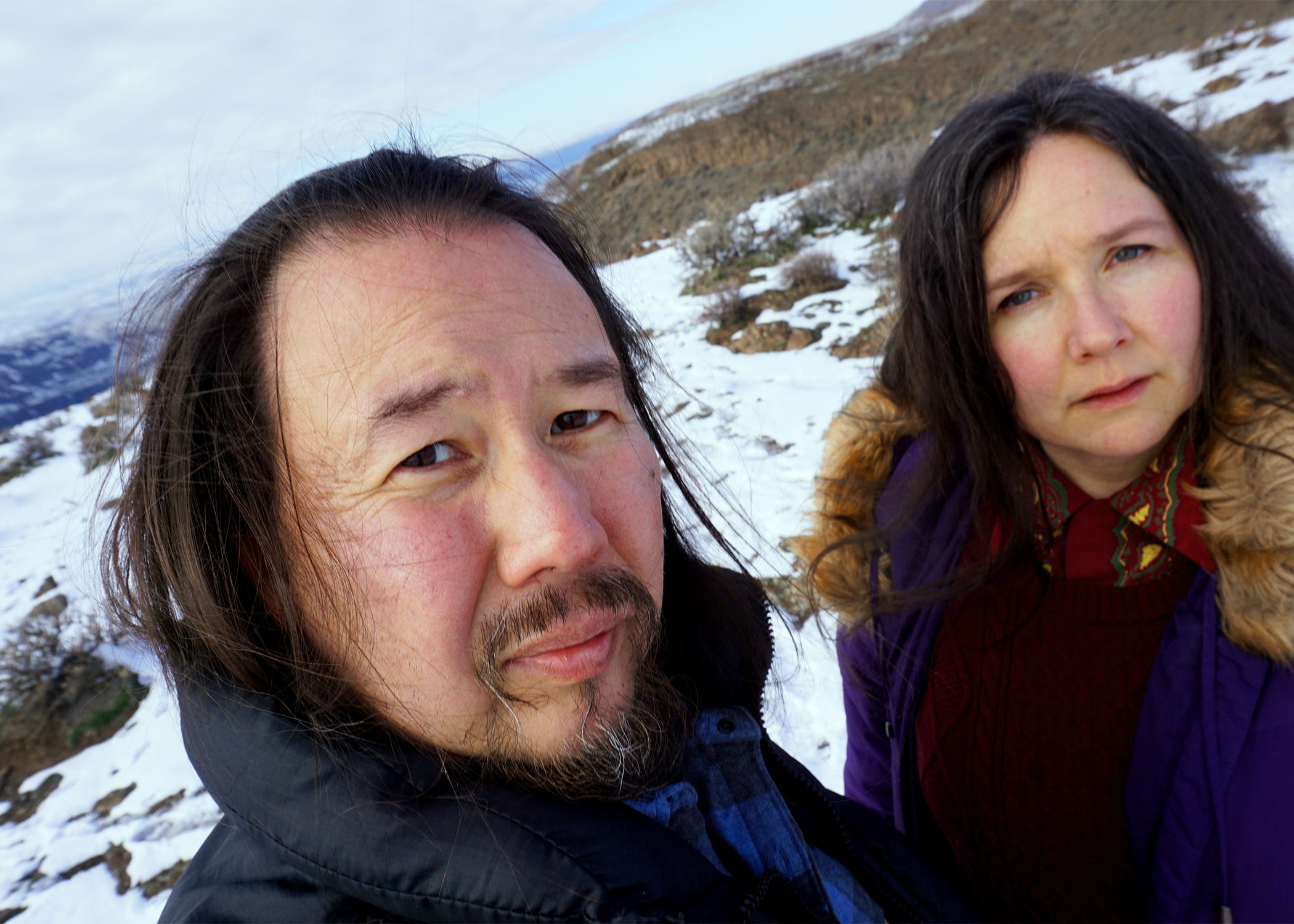
Still, I love the exponential impact they attain when they perform together. It’s been a few years since they released the terrific, trippy Azure (Ideologic Organ), a collection that reveals how their output melds into an otherworldly composite. Each of the album’s five pieces stake out different terrain, such as the weightless unison drifts of “Eclipse,” the elegant, floating twill of drone and arcing sobs on the title piece, or the juddering vibrato of “Ocean,” where the shaking tones evoke the climactic shapes in dhrupad. Check it out below. The duo makes a rare Berlin appearance at KM28 on Saturday, January 17. Kenney tells me the pair haven’t nailed down its repertoire for the concert as of this writing, but it’s likely to include material from Azure, its predecessor Face of the Earth, along with some new arrangements of older but still unrecorded pieces and perhaps new work based on the work of American writer Will Alexander.
Johannes Fink Keeps it Fun
Bassist and cellist Johannes Fink has been a steady, versatile presence on the Berlin scene since moving to the city in 1996, working in numerous collectives like Günter Adler and Gulf of Berlin, and serving as sideman in groups led by Aki Takase and Silke Eberhard. As I wrote back in 2023, I first discovered him randomly on a trip to Berlin in 2019, playing a group with Rudi Mahall. In recent years he’s begun to dig into projects as a leader, including his trio with Eberhard and drummer Tilo Weber, Fink 70s Revisited, which released its debut Sound of Music (Jazzwerkstatt) in 2023. Two days into the current year he released We Bring Back Jazz (Trouble in the East), the debut from his absurdly named quartet Fink Floyd, where he sticks exclusively to cello. As you can tell from such titles, Fink has a goofy sense of humor and he doesn’t take himself too seriously, although he’s clearly committed to his craft.
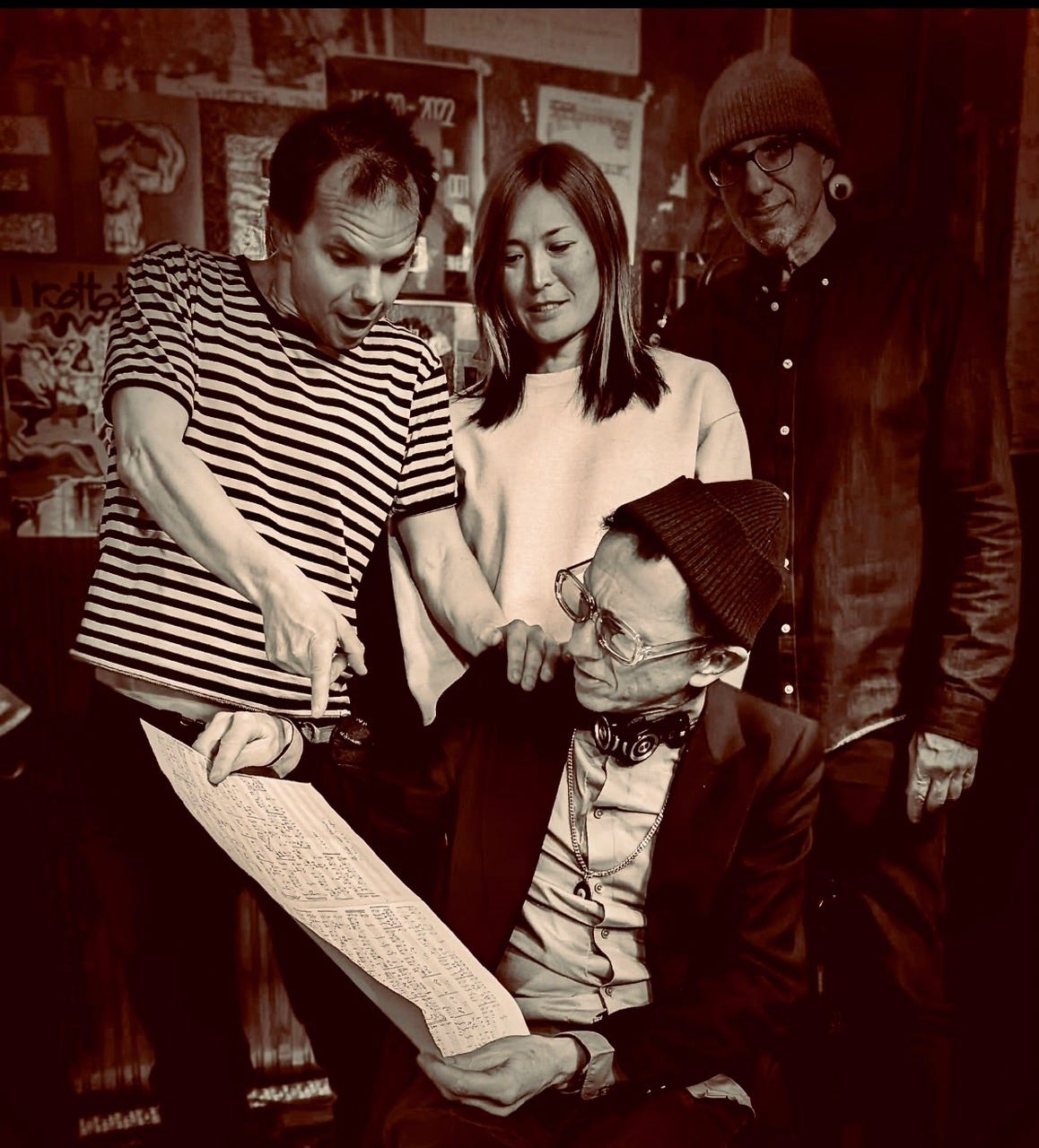
As the album title suggests, Fink Floyd doesn’t veer far from jazz tradition, but it’s not stodgy or decidedly retro. Many of Fink’s tunes employ a spry unison lines, such as the catchy theme on the album opener “Misteriöser,” where his cello and the sharp piano playing of Rieko Okuda dance over the relaxed groove meted out by bassist Antti Virtaranta and drummer Greg Smith. There’s more than a sprinkling of cool jazz sensibilities, and the way the cello operates within the quartet sometimes recalls the work of Fred Katz in various Chico Hamilton-led ensembles back in the later 1950s. While the gently swinging rhythm is old-school, with the tuneful, jaunty solos from the leader and Okuda honoring tradition, there are modern touches, such as the way Fink uses electronics behind the eloquent bass solo, subtle, abstract smears that resemble some backwards-tape action. The brief, motionless “L’ange qui reste” is more about mood and texture than jazz, an interstitial meditation that leads into “Sip of Beer,” a chill blues contrasted the by fast-paced patterns that regularly and deliberately interrupt the flow, only to open up into a teasing phrase that augurs a conclusion denied. When Okuda’s fleet solo kicks in, the band leaps into a brisk, tightly-coiled rhythm. You can hear it below, a tune that captures the group at its finest, subscribing to classic jazz tropes while playfully undercutting them.
L’ange qui passe” picks up on the earlier fragment with a beautiful melody before returning to the airy, contemplative vibe, with electronics and feather-stroke gestures before gradually picking up momentum and reprising the tender theme articulated by the leader. I can’t say I’m very fond of the wah-wah effect Fink deploys on “Gospel,” which adds schmaltz to a tune that asks for naked expression, but in general the album is a rollicking pleasure. The group celebrates the release of the album with a performance at Panda Theatre on Wednesday, January 14, with pianist Olga Reznichenko subbing for Okuda.
Recommended Shows in Berlin This Week
January 13: Winged Wheel, 8 PM, Neue Zukunft, Alt-Stralau 68, 10245 Berlin
January 13: Philipp Gropper, tenor saxophone, Olga Reznichenko, keytar, and Andi Haberl, drums, trigger drums, sampler; Philipp Gropper, tenor saxophone,
Liz Kosack, synthesizer, Felix Henkelhausen, double bass, and Grischa Lichtenberger, electronics, sound design, 8:30 PM, Kunstfabrik Schlot, Invalidenstraße 117, 10115 Berlin
January 13: Franciska; Otto Wilberg, 8:30 PM, West Germany, Skalitzer Straße 133, 10999 Berlin
Janaury 14: Gebhard Ullmann, soprano and tenor saxophones, and Michael Griener, drums, percussion; Matthias Müller’s Trilogue (Matthias Müller, trombone, Andreas Willers, guitar, and Christian Marien, drums), 8:30 PM, Donau115, Donaustraße 115, 12043 Berlin
January 14: Fink Floyd (Johannes Fink, cello, Olga Reznichenko, piano, Antti Virtaranta, double bass, and Greg Smith, drums), 8:30 PM, Panda Theater, Knaackstraße 97, (i.d. Kulturbrauerei, Gebäude 8) 10435, Berlin
January 15: Thorbjørn Stefansson, double bass, Jonas Westergaard, double bass,
Michaël Attias, alto saxophone, and Leo Gerstner, drums, 8:30 PM, Donau115, Donaustraße 115, 12043 Berlin
January 16: Ricardo Dias Gomes, 8:30 PM, KM28, Karl Marx Straße 28, 12043 Berlin
January 16: Oùat (Simon Sieger, piano, vocals, flutes, percussion, Joel Grip, double bass, guimbri, percussion, and Michael Griener, drums, percussion), 9 PM, Zig-Zag Jazz Club, Hauptstraße 89, 12159 Berlin
January 17: Rudi Mahall, clarinets, Flo Stoffner, electric guitar, and Rudi Fischerlehner, drums; Özün Usta, drums, and Maurice Louca, guitar, electronics, 8 PM, Richten25, Gerichtstraße 25, 13347 Berlin
January 17: Lisa Ullén, piano; Jiyoung Wi, electronics, 8 PM, Kuppelhalle, Silent Green, Gerichtstraße 35, 13347 Berlin
January 17: Jessika Kenney, voice, and Eyvind Kang, viola, 8:30 PM, KM28, Karl Marx Straße 28, 12043 Berlin
January 18: Die Hochstapler (Pierre Borel, alto saxophone, percussion, Louis Laurain, trumpet, bird calls, Antonio Borghini, double bass, and Hannes Lingens, drums), 8 PM, Studio Zentrifuge, Malplaquetstraße 35 13347 Berlin