
Ending the Year in a Flurry
Kresten Osgood, Evan Parker & Peter Van Bergen, Marina Džukljev/Christian Weber/Michael Griener, Asterales, Michael Thieke & Yorgos Dimitriadis

Okay, this is a long one. I was in a post-travel haze when I wrote last week’s newsletter, accidentally omitting some worthwhile Berlin shows, but also failing to mention that I’m participating in Nate Chinen’s annual Year in Jazz roundtable at 7-8:30 PM EST on Tuesday, December 9. (I’m the token oracle on the panel, since I’ll be participating from the future, at least to American viewers, as I’ll be opining from December 10, here in Berlin). I’m joining New Yorker Martin Johnson and fellow Chicago expat and current Denver resident Ayana Contreras. I expect some diverse viewpoints to emerge. It’s free to watch, but you need to register in advance, here. I’m counting on two disparate sets of music featuring the great Marta Warelis earlier in the evening to give the energy boost I’ll need to be cogent at 2:30 in the morning.
Due to the length of this week’s transmission it’s possible that the recommended shows list is incomplete to those viewing via email, but you’ll find the scoop online.
Kresten Osgood is Jazz
The vagaries of the jazz world don’t do musicians like the Danish drummer Kresten Osgood any favors when it comes to reaching beyond the cognoscenti. He’s a lifelong student of the music and an incredibly versatile player who routinely lifts up any context he finds himself in, but he’s never really focused his energies on being a bandleader and he doesn’t have any kind shtick—unless his palpable joie de vivre and penchant for absurdist humor count as such. He’s the quintessential musician’s musician. I first encountered him back in 2004 at the Vancouver International Jazz Festival when New York-based Canadian saxophonist Michael Blake revealed some keen talent scouting by enlisting Osgood and two fellow Danes—bassist Jonas Westergaard and pianist Søren Kjærgaard, the drummer’s cousin—for his quartet Blake Tartare. All of those musicians have gone on to have fruitful, multi-layered careers marked by collaboration, but Osgood seems to be the most restless of the bunch, up for anything.
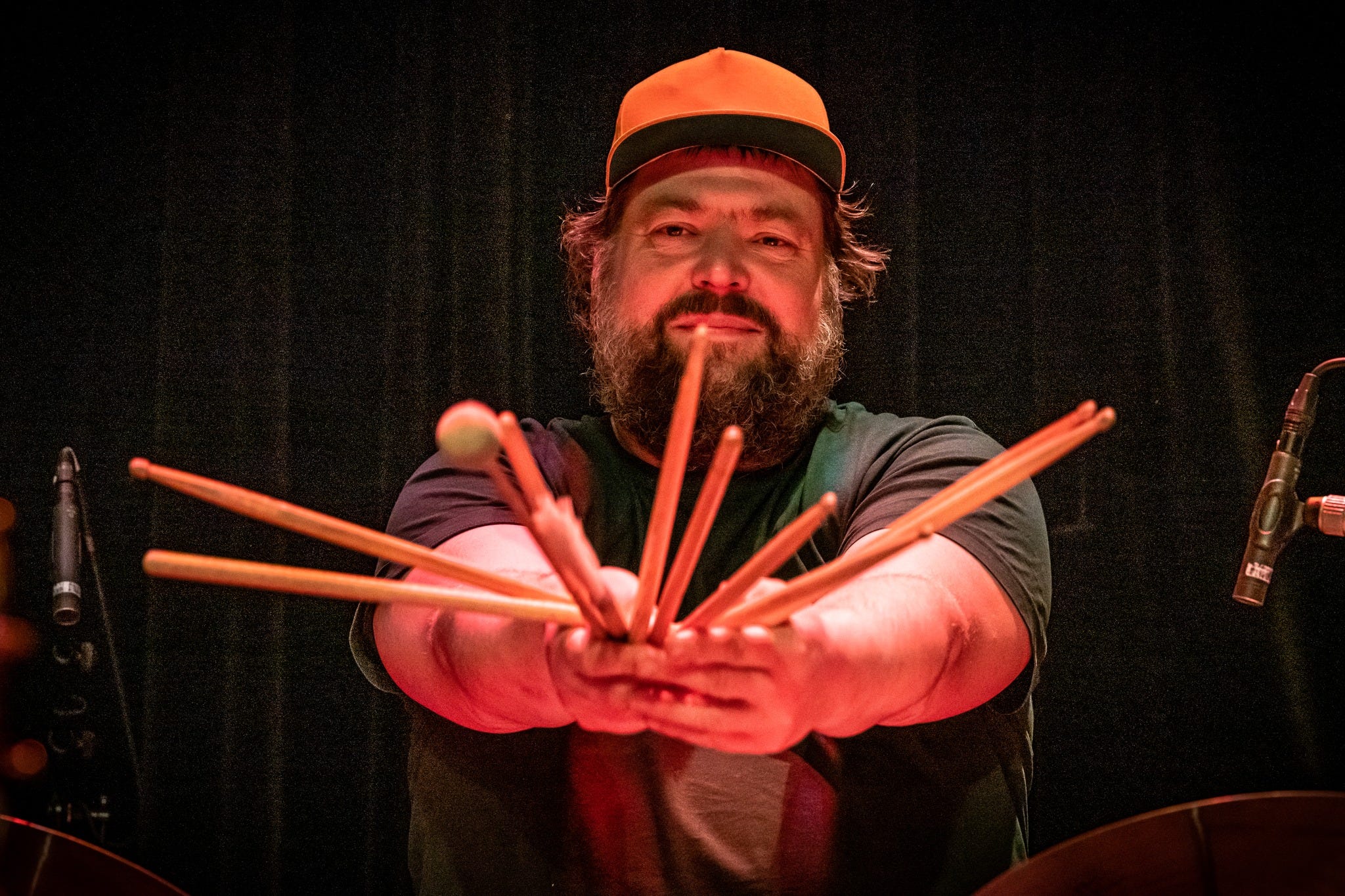
He’s long been a crucial pillar of the Copenhagen jazz scene, both through his playing and his behind the scene roles. Between 2013-2020 he ran a weekly program at 5E, a small, attractively raw space within a repurposed meatpacking district. Every Monday he would program six different sets on the hour, between 7 PM and 1 AM, offering a slot to anyone that requested one. Alas, there was never any funding for the project, and after a while Osgood felt it became a victim of its own success, attracting top-notch international talent who would earn no money at the end of the night due to the number of participants. There was also the inevitable burnout factor of such an endeavor when you’re a working musician. I have super fond memories of visiting in 2016, when I caught a killer set by Maria Faust, among others. Osgood also served as the charismatic host for Dangerous Sounds, an acclaimed eight-part podcast covering the history of Danish jazz, which was brought to American shores by the Philadelphia public radio station WRTI. He’s also an amazing storyteller and a true sage when it comes to aesthetics, as anyone who follows his Facebook posts knows. Over the years he’s worked with many of his biggest heroes, including projects with pianists Paul Bley, Masabumi Kikuchi, and Ran Blake, none of whom suffered fools. He also worked with legendary reedists like Sam Rivers, Oliver Lake, and John Tchicai. The last time I saw Osgood was with the excellent Nacka Forum, the hard-swinging, irreverent quartet with Jonas Kullhammar, Johan Berthling, and Goran Kajfeš.
He’s played on well over 100 albums and while I stand by my claim that bandleading isn’t a priority for him, he has helmed a terrific quintet with trumpeter Erik Kimestad, saxophonist Mads Egetoft, pianist Jeppe Zeeberg, and bassist Matthias Petri for more than a decade. The group’s 2018 ILK debut Kresten Osgood Quintet Plays Jazz delivers on the titular claim, packing in high-energy bebop and hard bop classics by the likes of Eric Dolphy, Randy Weston, Thelonious Monk, Duke Ellington, and Charles Mingus, as well as a handful of tunes by the leader. Osgood’s curiosity isn’t limited by any historical era or stylistic approach, but as solid as that studio debut was, with uniformly strong playing and timeless arrangements (apart from a strange take on “Round Midnight” with chintzy electronic organ in ambient-new age style), it kind of missed the spirit of the band. Of course, I didn’t know that until I heard last year’s Live at H15 Studio (ILK) featuring material recorded over three nights during the Copenhagen Jazz Festival in 2023. As the drummer explains in his liner notes, all of the musicians had other gigs before gathering for these midnight performances so they were “warm and worn.”
The 2018 album captures what the band does quite well, but when a group’s raison d’etre is all about playing live and carrying on a tradition in its own way, a pristine studio recording is likely to lack that essential charge. But the live album is raucous as fuck, a top-flight quintet with no interest in reinventing the wheel. Instead, they just play music they love with go-for-broke intensity and passion—the skill and discipline is baked in. The intense, infectious audience reaction both fills out the picture and provides additional motivation for the band, whose members keep locating a higher gear without losing control of the wheel. The album opens with a scorching take on “Subway,” a tune by trumpeter Kirk Knuffke, a choice which helps illustrate Osgood’s steady engagement with the current jazz community—check it out below. It’s all a continuum for the drummer, part of a big tent that makes room for a tune by the overlooked LA reedist Bert Wilson alongside gems from Clifford Jordan and Elmo Hope. The entire album blazes, and it’s hard not to be jealous of the listeners who were in the room those nights.
But Osgood can do much more than swing ferociously, and despite his deep respect for and embrace of jazz history, the key to all of his music is a commitment to improvisation. That’s what he does on Dissolving Patterns (SFÄR), a terrific trio album with pianist Mathias Landæus and double bassist Nina de Heney from March of this year. There’s no missing the music’s jazz roots, with Osgood helping to underline a palpable if aerated pulse. It’s in this context where his love for the wonderfully draggy, free time sound of Paul Motian is clear, especially with the pianist evoking Paul Bley in a lot of his halting melodic fragments, tender extended runs, and hanging chords. The ten pieces are sequenced in the order they were played during a single studio session. While most of the pieces are inaugurated by a lucid rhythmic pattern or melodic figure, others begin with abstraction, such as the extended gestural bowing of de Heney that initiates “Puddle of Light.” She carves out a space largely on her own for a couple of minutes, as her bandmates listen and size up the situation, eventually building on those sounds to shape a wonderfully lumpy ballad. Osgood pokes and prods at elegiac, post-Bill Evans meditations from Landæus, with the bassist transforming those early sonic blots into shape-shifting lines that hold the piece together. As with his work on just about everything I’ve heard, Osgood serves the ensemble by imparting a peerless, fleet musicality, responding to the action around him with quicksilver alacrity, either drawing things out or going against the grain. The older I get the more I value the sort of deep rapport and heightened listening at work on a record like this more than a drum-tight ensemble ripping through a meticulously rehearsed set. Below you can check out one of my favorite pieces, “Body Rejoice.”
It’s a bit weird to me that Osgood doesn’t seem to play in Berlin very much, but next Sunday, December 14 he’s in town for an afternoon gig at Industriesalon Schöneweide that promised to activate his sweet spot. He’s joined by his old Danish pal Jonas Westergaard on double bass and Berlin treasure Tobias Delius on tenor saxophone and clarinet—kindred souls, all, and a recipe for success.
Seriously, Serious Series!
Evan Parker & Peter Vann Bergen
When I was young and (more) stupid I remember being wildly impressed that Evan Parker had worked with Scott Walker, playing on his 1984 album Climate of the Hunter, a recording that also features Mark Knopfler. It’s still cool that he played with Walker, but these days I fully understand that such factoids obscure the fact that Parker is an artist who has always gotten something from stepping out the boxes he’s usually stuffed in by various gatekeepers. Of course, we know that he’s one of the greatest free improvisers of all time, a saxophonist of pioneering technique, and an intensely curious person, and I wouldn’t identify this openness as any more defining of his work than plenty of other salient factors. Still, in some ways, hearing him in a series of unexpected contexts does provide some rather potent definition of who he is as a saxophonist. I say all of this because Parker will make a rare appearance in Berlin on Friday, as part of the opening night of the revived Serious Series, which will occur in the very ideal setting of Exploratorium, December 12-14. He’ll improvise with Dutch reedist Peter Van Bergen, about which more soon.
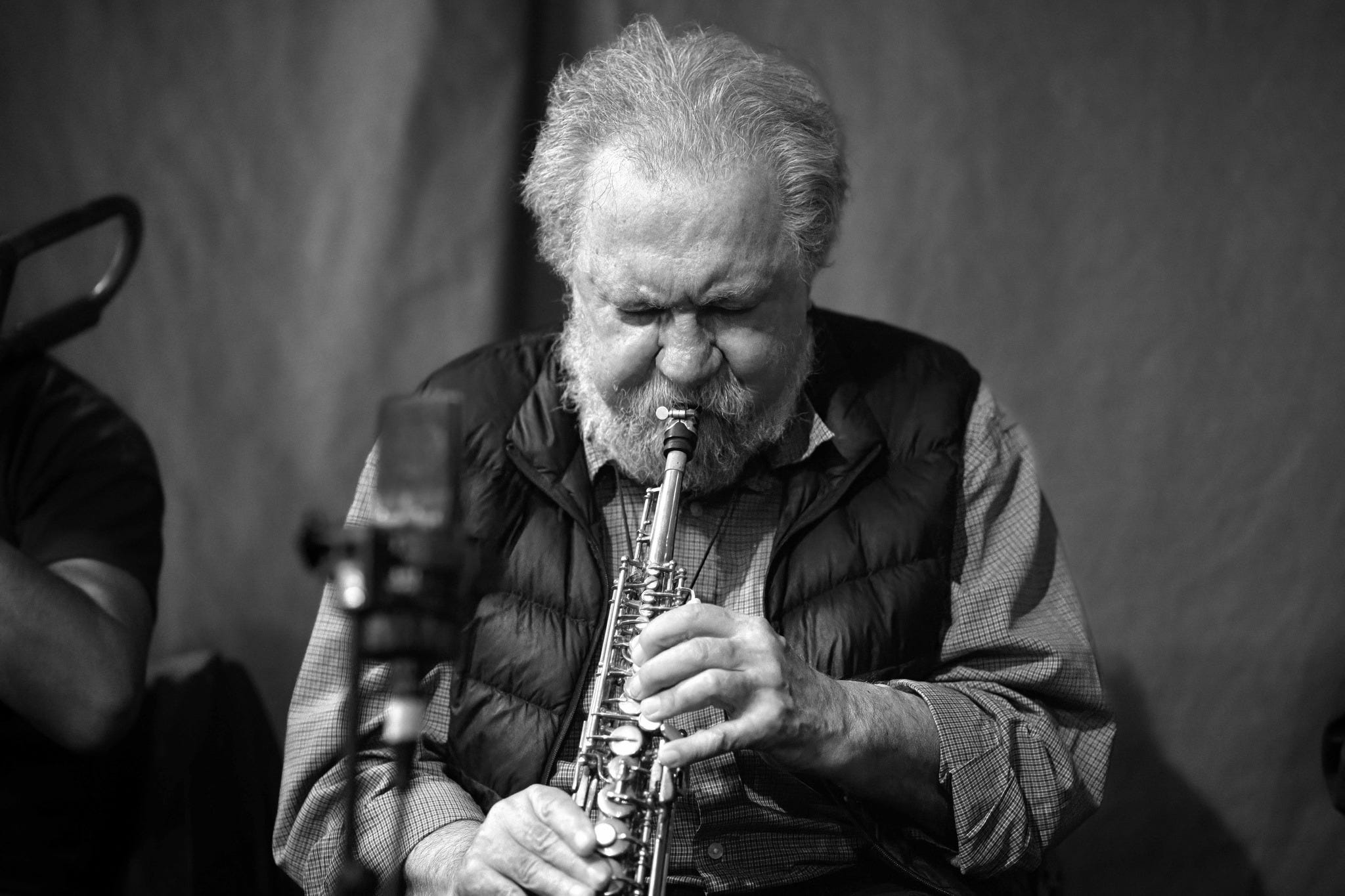
One of my favorite albums this year is Branches (Otoroku/Open Mouth), a searing collaboration with Philadelphia’s Bill Nace. In their first-meeting in May of 2024 Nace hoped Parker would bring his soprano, where the snake-like patterns of his circular breathing practice manifest most profoundly. Nace was prepared, playing an electric 2-string taishōgoto—a very vaguely piano-like Japanese instrument where a series of typewriter-like buttons control attack and pitch. Nace still plays guitar, but he’d rapidly developed a killer language for the instrument, and here he produces a sound somewhere between cycling Steve Reich-esque patterns and an endless series of heavy metal hammer-ons. Yet those particulars are less important than what he does with them, forging a molten-hot line that often functions like an inverse of Parker’s infinite pretzel of sound mastery. Both musicians break the spell to introduce new patterns and rhythms, but the intensity never fades, and it’s not long before your ears start fucking with your brain. I’m sure purists would blanche at the thought of Nace having a sketch for what he might do under the right circumstances, but that’s fucking stupid. I’m not denigrating that ethic, but with a little conceptual push this album nails it straight out the gate, and casts a powerful trance for 40 uninterrupted minutes. Music is for listening to, also. If you’ve got the time you can check out the whole thing, below.
This fall the Belgian duo Poor Issa (which features guitarists Frederik Leroux and Ruben Machtelinckx somewhat perversely limiting their arsenal to banjos and woodblocks) released a beguiling album in collaboration with both Parker and the expansive Norwegian percussionist Ingar Zach. Well before any of the guests arrive the core duo is creating sounds that left my head spinning on “Clearing,” which features both Leroux and Machtelinckx creating highly resonant, liquid harmonium-like tones produced on banjos triggered by e-bows. As Machtelinckx explained in an email to me, “Besides the e-bows we’re playing in our hands, we each have one on a stool next to us with two e-bows (per banjo) on the strings. With our feet we can activate one, two, three, or four e-bows to create chords on the spot.” Eventually Parker enters on tenor, playing a stunning, breathy solo that in conjunction with the fluid banjo tones evokes some kind of pre-dawn sequence in a 70s urban thriller flick. Check it out below. The tenor contribution is a universe away from what he did alongside Nace, yet even when he returns to soprano on “Ply,” amid chime-like banjo chords and an array of clopping woodblock rhythms, his tightly-coiled improvisation also evokes yet another musical complexion: knotty, introspective, and mosaic-like. Over the rambling banjos and brush locomotion of “Two Way” Parker injects a riveting post-bop solo.
Still, Parker’s natural home is in the free improv realm. The interactive lines he unspools alongside French bassist Joëlle Léandre on the recently released Long Bright Summer (RogueArt) captures a performance from August of 2023. There’s no concept, no theme, no prepared material—just two virtuosos listening closely, drawing upon decades of experience, and endlessly retrofitting languages they’ve painstakingly developed over time within shifting, slippery contexts. You can hear “LBS #3,” below, the third among eight sequential tracks. It’s become harder for me to write about the music in some ways because of its familiarity and its recurring vocabulary, however much it’s rejiggered, reinvented, or recontextualized, but that doesn’t mean it’s stale or ineffective. That’s also why I’m particularly psyched to hear Parker connect with Van Bergen, a regular denizen of the Brit’s ever-evolving Electro-Acoustic Ensemble. For most of his career the Dutch reedist and composer has walked a tightrope between free improvisation and contemporary composed music, first as a crucial member of various iterations of the great Maarten Altena Ensemble and later through his own heady ensemble LOOS, which made three stunning albums. But that was all 25 years ago!
He’s never stopped improvising, though, and I’ve been enjoying one of the current projects he’s involved, an Amsterdam quartet called Deconstructed Melodies with sometime Berliner Koen Nutters on bass, Jeroen Kimman on electric guitar, and Gert-Jan Prins—one of the great electronic noise improvisers of our time—on drums. The quartet’s recent eponymous debut features extended readings of compositions by Anthony Braxton, Sun Ra, Carla Bley, Paul Termos, and Nutters, and as the name of the group suggests, they focus on taking apart and reassembling the melodic material inside them. It opens with Braxton’s “Composition 110a,” which I know best from the version recorded by his classic quartet with Marilyn Crispell, Mark Dresser, and Gerry Hemingway on Six Compositions (Quartet) 1984 (Black Saint), but here the melody from that piece is extended and treated with an arresting lyric warmth by Van Bergen, a multireedist who sticks exclusively to tenor saxophone here. Nutters and Kimman also engage in extended melodic elaboration, with Prins pushing it all along with a brush-heavy attack. In some ways it suggests a stripped-down version of Ornette’s Prime Time playing cool jazz, especially when three melodic lines proceed independently of one another. Perhaps because I’ve come across Van Bergen’s playing so infrequently over the last couple of decades I didn’t have his extraction of exquisite beauty from “Ida Lupino” on my 2025 bingo card, but I am not unhappy about it. Check it out below.
Marina Džukljev/Christian Weber/Michael Griener
A little more than a year ago I tried to address my shame at missing out on the stunning work of Serbian keyboardist Marina Džukljev—at the time a name I had encountered often since moving to Berlin in 2019, but not an artist I had spent any time listening to—with a rundown of some of her recordings. My awakening was precipitated by a trio gig she was in town for. Alas, I was predisposed on the evening she played. But I will be ready for the music this Friday, when the collective trio she has with Swiss bassist Christian Weber and Berlin drummer Michael Griener takes the stage on the opening night of Serious Series. The trio first came together in 2022 when the pianist had a residency at the beloved Au Topsi Pohl. Griener had met her previously through bassist Joel Grip—Berlin’s ultimate connector—and since his regular collaborator Weber happened to be in town they debuted the trio on one of the nights. Pleased with the results, they reunited in April of 2023, playing a concert at Industriesalon and making some recordings at Studio Boerne, the fruits of which emerged earlier this year on the stunning Industriesalon (Trouble in the East), a full improvised album of unalloyed power, invention, and range.
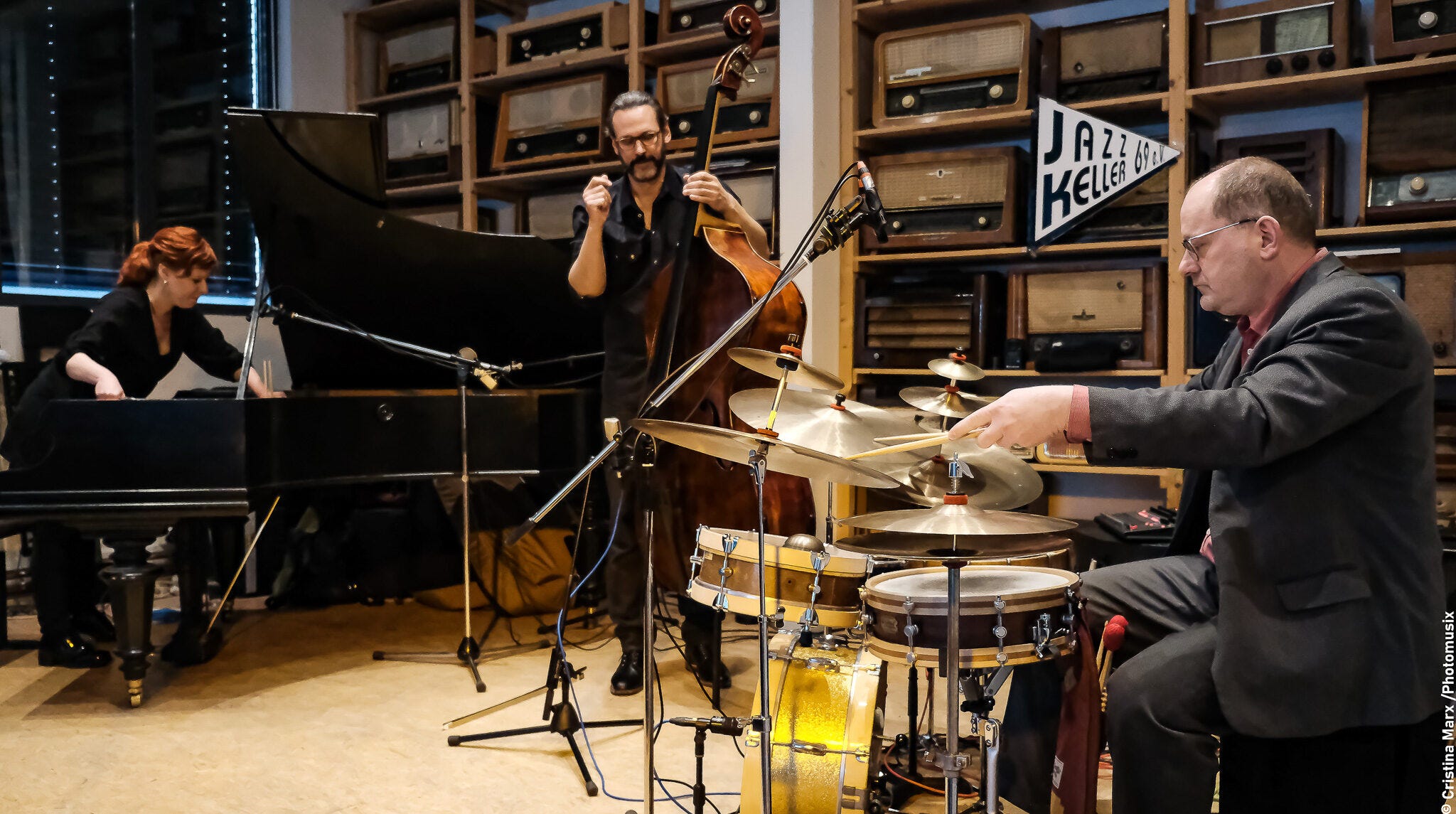
The section I linked to in the above paragraph lays out some of the keyboardist’s nonchalant diversity and curiosity, but in this trio we get unfettered piano trio improvisation on an extremely high level. Across three pieces—including the monumental “Resistor,” which clocks in at 32 minutes—the trio moves through a wide variety of modes and attacks, demonstrating lightning-fast reflexes, timbral invention, and wild shifts in dynamics, tone, and tempo. You can listen below. Džukljev almost can’t help but lead the way, moving from inside of the instrument where she scrapes and plucks, to scampering across the keys like twister, toggling between heady clusters, cycling patterns, and fleet single-note runs. Her playing contains multitudes to say the least, but she never grandstands, and no matter how extroverted she may get, any such machinations are achieved with an inextricable connection to Weber and Griener, who definitely rank as one of improvised music’s most elastic, rugged rhythm sections. It’s all incredibly visceral and frenetic, but the intensity is manifest even in passages of poised reserve and delicate contemplation. Despite its fully spontaneous creation I’m grateful that the recording has allowed me to parse its furious gush of ideas, motifs, and featherstroke interactions. But I’m excited to hear them conjure something altogether different in front of my eyes. The opening night program of Serious Series features a duo performance by bassist Jan Roder and alto saxophonist Anna Kaluza, the event’s new curators, who’ve done a bang-up job. I don’t have space to break down the lineups for Saturday and Sunday nights—you can find that info below in the recommended shows list—the entire program is terrific.
Asterales, a New Kind of Chamber Quartet
Regular readers have likely noticed my abiding appreciation for both Léo Dupleix, the French composer and keyboardist, and Fredrik Rasten, the Norwegian composer and guitarist based in Berlin. Despite disparate aesthetics, their depth of overlapping interests has not only brought them together for various projects, it has enabled each of them benefit from a kind of exponential fusion, none more profoundly than Asterales, a quartet they formed with quarter-tone bass flutist Rebecca Lane and double bassist Jon Heilbron. All four musicians regularly work in just intonation, creating slow-moving music radiant with stunning, enveloping harmony. The ensemble released two superb albums in 2025, and while the sound world plainly ties them together, compositional conceits set them apart. The ensemble will debut a slew of new work when they perform on Saturday, December 13 at KM28.
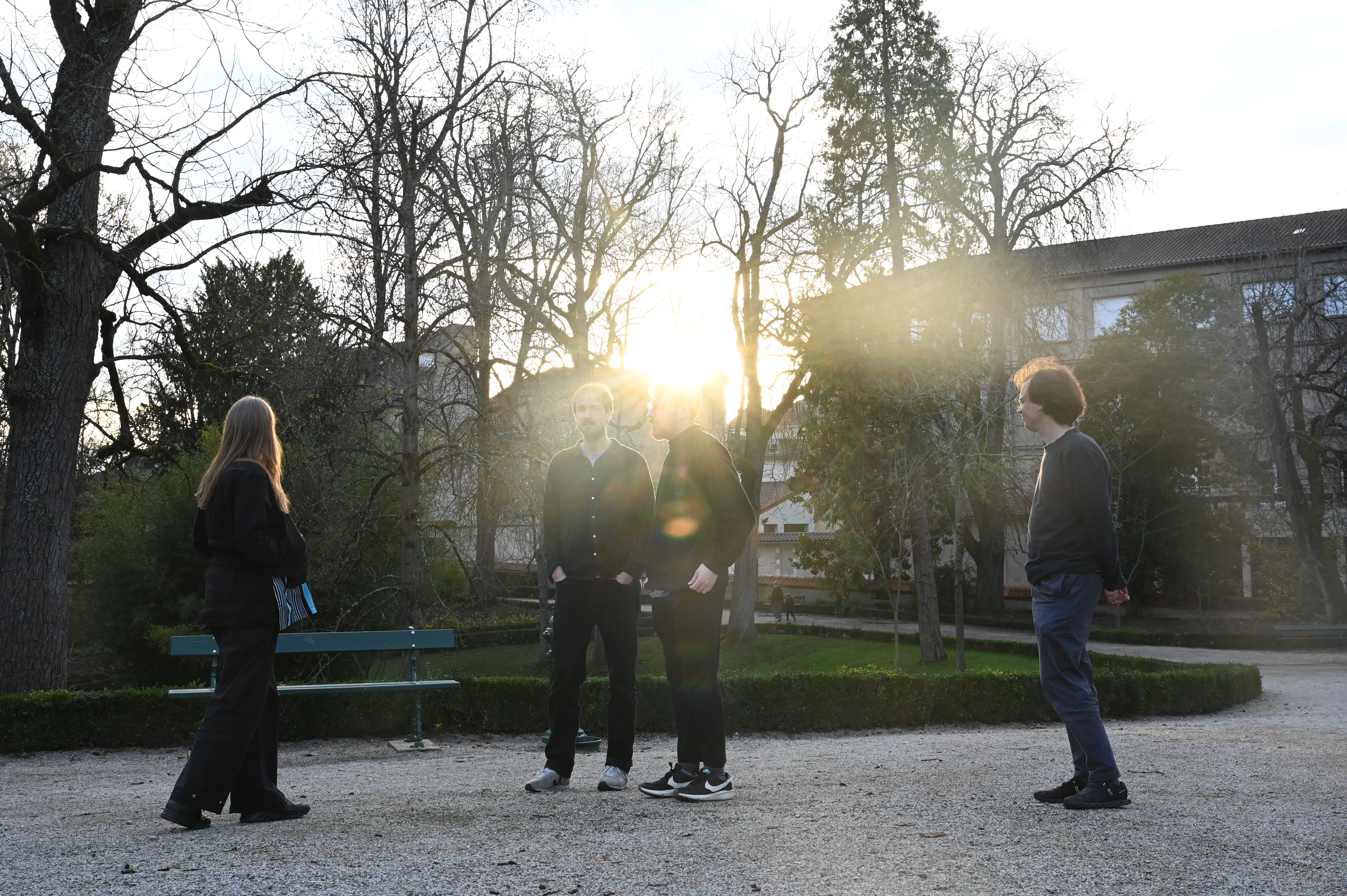
Back in the spring the group made its debut with Fuse Modulations (Thanatosis), a four-movement work of bold minimalism by Rasten that unfolds with ravishing patience. Chords hover like clouds, their internal make-up engaged in a steady but patient churn. The four instrumental voices—with Dupleix sticking exclusively to synthesizer and the composer deploying a fretless electric guitar activated by an e-bow—unfold in ever-shifting combinations, with serene long tones appearing and vanishing in gorgeous blends. Taken as a whole it’s a stunning evocation of the almost psychedelic beauty of just intonation, its unhurried melodies almost frozen in time. That glacial pace allows the listener to either follow along or simply surrender to the gently billowing tones, which seem to vibrate with an undercurrent of electricity. Below you can check out the opening movement of the work. Asterales will perform a bit of the suite,but it will also premiere a new work by the guitarist called “Simultaneities.”
More recently the ensemble released Round Sky (Black Truffle), a stunning collection of Dupleix’s compositions. Like Rasten’s work, Dupleix’s music takes its sweet time, but he draws on a variety of generative sources, such as the music of French medieval composer Guillaume de Machaut on the haunting opening piece “Poème d’air,” an episodic gem that explores the rich sonic possibilities of low-pitched sound that works, in part, thanks to remarkable precision of Heilbron, whose steady hand and sharp ears provide a crucial foundation for the various sections. Each interrelated movement opens up dazzling new vistas, as the composer employs some of the contrapuntal richness Machaut is known for, with the blend of synth, double bass, flute, and Rasten’s steel-string acoustic guitar articulating strikingly beautiful, deliciously fragile melodies that seem to emanate a neon glow thanks to the tuning. The title piece actually features only Dupleix and Rasten overdubbing multiple instruments (spinet, voice, and synth for the former, steel-string guitar and voice for the latter), basking in a series of descending arpeggios masterfully haloed by wordless vocal harmonies. For the Berlin concert Asterales will perform the album’s third piece, “Ghosts,” which you can listen to below. It’s built around a plangent harpsichord melody that keeps adding new details with every cycle, all of them shadowed by weightless long tones produced by the other ensemble members. Perhaps even more exciting, for this performance Asterales will premiere two new works written by the two other ensemble members: “Ring of Syllables” by Lane and “The Golden Hour” by Heilbron.
Short Take
Clarinetist Michael Thieke, a frequent subject of this newsletter, is one of the most remarkable musicians working in improvised music. He’s got strong jazz roots, and you can hear him channel his inner Jimmy Giuffre in the excellent collective trio Der Lange Schatten with pianist Håvard Wiik and bassist Antonio Borghini, but he’s most celebrated for making small, gestural improvised music of peerless sophistication and craft. A couple of weeks ago I wrote about the collective trio Bruine, and here he is again, playing with the Greek percussionist Yorgos Dimitriadis on a sublime recent album called Diaphanies (Granny). They’ll celebrate its release with a performance on Tuesday, December 9 at Richten25. I love improvised music that messes with my perceptions, leaving me to wonder who is doing what. It’s a testament to the imagination and touch of these musicians that percussion might sound like a clarinet or vice versa. The album’s two extended pieces are decidedly hushed, with simple repeated sounds unfolding and gradually shifting into new ones. The structure isn’t especially noteworthy, but the interchange between the musicians is something else. There are mewling long tones produced with bowed cymbals and clarinets that seem to sprout from a single source only to merge and decouple with such mystery that the extravagant grain of the sounds makes the listener wonder where certain granular variations are coming from. Dimitriadis isn’t afraid to play the drums here and there, as you can hear below about six minutes into “Front,” producing some scrambling beats across his kit, while Thieke clouds the terrain by producing a series of snorts that are so intensely sharp and terse that they feel like a drum strike. On its face this is classic Berlin reductionism, but let yourself surrender to it and an entire universe opens up. The pair are also featured on a sublime trio album with pianist Achim Kaufmann called Hiss and Whir (Wide Ear) that I’ll try to cover in the coming weeks.
Recommended Shows in Berlin This Week
December 9: KARM (Michal Wróblewski, alto saxophone, clarinet, and Torsten Papenheim, acoustic guitar, objects); Diapanies (Michael Thieke, clarinet, and Yorgos Dimitriadis, drums, electronics); Ehsan Goreishi, accordion, contact microphones, electronics, 8 PM, Richten25, Gerichtstraße 25, 13347 Berlin
December 9: Ruben Mattia Santorsa, classical and electric guitar, plays Laurence Crane, Giulia Lorusso, Lisa Illean, Lisa Streich, and Ruben Mattia Santorsa, 8 PM, BKA Theater, Mehringdamm 34, 10961 Berlin
December 9: Marta Warelis, prepared piano, and Andy Moor, guitar; CP Unit (Chris Pitsiokos, alto saxophone, Marta Warelis, analog mono bass synth, Yamaha organ, Dan Peter Sundland, electric bass, and Luca Marini, drums), 8:30 PM, Kunstfabrik Schlot, Invalidenstraße 117, 10115 Berlin
December 10: Dylan Kerr and Weston Olencki, 8:30 PM, KM28, Karl Marx Straße 28, 12043 Berlin
December 10: The Return of Knut Thompson (Manuel Miethe, saxophones, Niko Meinhold, piano, Horst Nonnenmacher, double bass, and Wieland Möller, drums, gongs, percussion), 8:30 PM, Panda Theater, Knaackstraße 97, (i.d. Kulturbrauerei, Gebäude 8) 10435, Berlin
December 10: Zeynep Ayşe Hatipoğlu and Ulrike Ruf, cellos; Isabelle Duthouit, clarinet, voice, Andy Moor guitar, and Steve Heather, drums, percussion, 8:30 PM, Ausland, Lychener Str. 60, 10437 Berlin
December 11: Silke Eberhard Trio (Silke Eberhard, alto saxophone, Jan Roder, double bass, and Kay Lübke, drums); Identities Quintett (Mia Dyberg, alto saxophone, Camila Nebbia, tenor saxophone, Roman Stolyar, piano, transverse flute, Horst Nonnenmacher, bass, and Samuel Hall, drums); Kreuzberger Klarinetten Kollektiv (Ines Koch, Eva Kroll, Franz Knörnschild, Jürgen Kupke, Zine Lackner, Alexander Nicolai, Lisa Schubert, Lea Wehde, clarinets, Thorsten Müller, Florian Bergmann, bass clarinets, Alma Neumann, double bass, and Christian Marien, drums), 7 PM, Musikinstrumenten-Museum, Tiergartenstrasse 1, 10785 Berlin
December 11: Hemisphere 4 (Gebhard Ullman, soprano saxophone, bass clarinet, bass flute, looper, electronics, Liz Kosack, keysboards, Silke Lange, accordion, Anna Viechtl, concert harp, electronics, and Taiko Saito, vibraphone, bass drum, sound objects), 8: 30 PM, Kunstfabrik Schlot, Invalidenstraße 117, 10115 Berlin
December 12: John Medeski, piano, 6:30 PM, Zig-Zag Jazz Club, Hauptstraße 89, 12159 Berlin
December 12: Splitter Orchestra (Burkhard Beins, drums, Roy Carroll, electronics, Anat Cohavi, clarinet, Axel Dörner, trumpet, Sabine Ercklentz, trumpet, electronics, Kai Fagaschinski, clarinet, Emilio Gordoa, drums, Robin Hayward, tuba, Steve Heather, drums, Chris Heenan, contrabass clarinet, Mike Majkowsk, double bass, Matthias Müller, trombone, Andrea Neumann, internal piano, Andrea Parkins, electronics, accordion, Michael Thieke, clarinet, Sabine Vogel, flutes, Biliana Voutchkova, violin, Marta Zapparoli, tape machines, antennas), 8 PM, Kuppelhalle, Silent Green, Gerichtstraße 35, 13347 Berlin
December 12: Maurice Louca; Falak, 8 PM, BLOCK1, Blockdammweg, 110317 Berlin
December 12: Anna Kaluza, alto saxophone and Jan Roder, double bass; Marina Džukljev, piano, Christian Weber, double bass, and Michael Griener, drums; Evan Parker, and Peter van Bergen, saxophones, 8 PM, Serious Series, Exploratorium, Zossener Strasse 24, 10961, Berlin
December 12: Chico Mello, voice, guitar; Gibrana Cervantes, violin, electronics, 8:30 PM, Sowieso, Weisestraße 24, 12049 Berlin
December 13: Anil Eraslan, cello, and Michael Thieke, clarinet, 3 PM, Satellit, Weinstraße 11, 10249 Berlin
December 13: Artur Majewski, trumpet, electronics and Kazuhisa Uchihashi, guitar, electronics; Dara Strings (Biliana Voutchkova, violin, Joanna Mattrey, viola, Isidora Edwards, cello, and Vinicius Cajado, double bass); Matthias Schubert, tenor saxophone, Emily Wittbrodt, cello, Ronny Graupe, guitar, and Christian Marien, drums, 8 PM, Serious Series, Exploratorium, Zossener Strasse 24, 10961, Berlin
December 13: Asterales (Léo Dupleix, synthesizer, keyboards, Jon Heilbron, double bass, Rebecca Lane, quarter-tone bass flute, and Fredrik Rasten, guitars), 8:30 PM, KM28, Karl Marx Straße 28, 12043 Berlin
December 14: Tobias Delius, tenor saxophone, clarinet, Jonas Westergaard, double bass, and Kresten Osgood, drums, 3:30 PM, Industriesalon Schöneweide, Reinbeckstraße 10, 12459 Berlin
December 14: Pivot (Liz Allbee, trumpet and Chris Heenan, bass clarinet); Olaf Rupp, guitar; Schlippenbach-Waldorff Quartett (Alexander von Schlippenbach, piano, Henrik Walsdorff, saxophones, Antonio Borghini, double bass, and Jan Leipnitz, drums), 8 PM, Serious Series, Exploratorium, Zossener Strasse 24, 10961, Berlin
Fantastic deep dive on Osgood. The distinction between being a great sideman versus prioritizing bandleadership gets at somthing essential about jazz ecology. What makes Osgood remarkable is how his lack of shtick becomes its own signature, that palpable joy and restlessness lifting every ensemble without imposing a fixed aesthetic. The 5E weekly program detail is striking: six sets every Monday for seven years with no funding, eventually collapsing under its own generosity.
You might mention that he is on my 4 CD set Louis Armstrong' America (ESP) in a key role. Kresten is a genius and a friend to everyone who plays an instrument.